THE ADVENTURE COLLECTIVE® · Independent discovery and booking for outdoor travel

A compact private tour that pairs Jakarta’s colonial and national landmarks with Bandung’s volcanic highlands. Expect city museums, historic harbors, crater views and one night in Bandung with private transport and guided commentary.
A compact private tour that pairs Jakarta’s colonial and national landmarks with Bandung’s volcanic highlands. Expect city museums, historic harbors, crater views and one night in Bandung with private transport and guided commentary.
You leave Jakarta at first light, the city’s concrete edges blurring into a ribbon of toll road and then folding into tea-green hills. By mid-afternoon the air changes: a sulfurous breath from Tangkuban Perahu nudges your mask, and Kawah Putih’s pale lake sits like a cooled ember, steam thinning into the highland air.
Verified experiences and guided adventures in the surrounding area.
Operated by Kiran Transportation · Bandung, West Java
You leave Jakarta at first light, the city’s concrete edges blurring into a ribbon of toll road and then folding into tea-green hills. By mid-afternoon the air changes: a sulfurous breath from Tangkuban Perahu nudges your mask, and Kawah Putih’s pale lake sits like a cooled ember, steam thinning into the highland air.
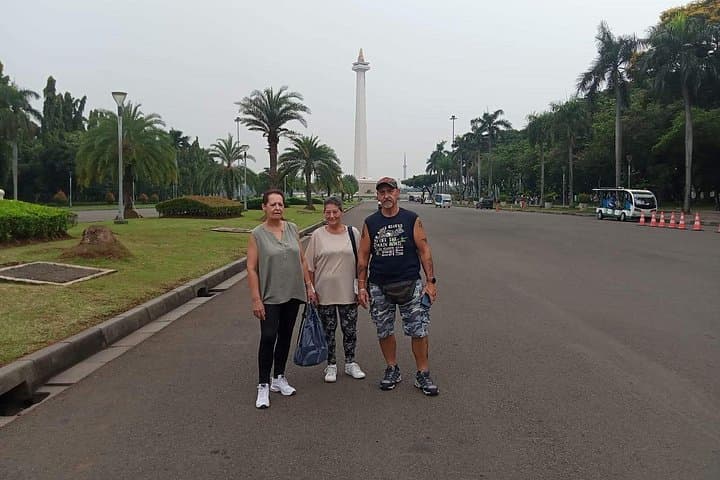
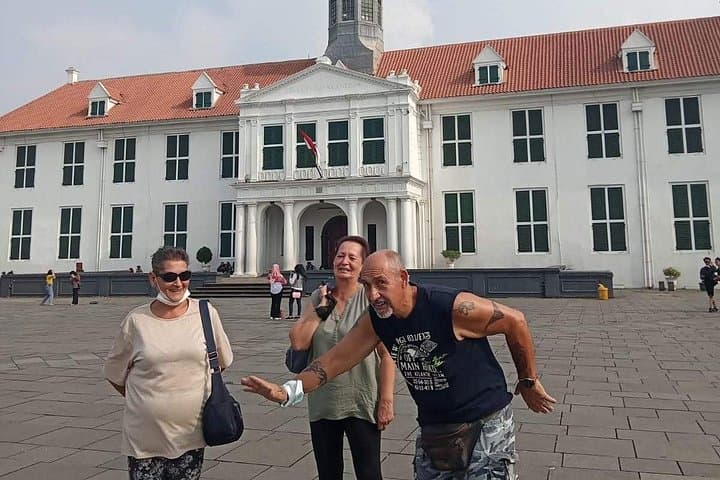
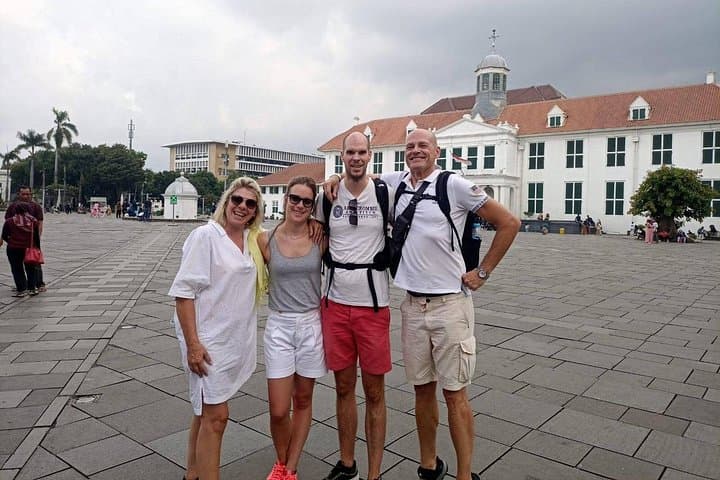
This two-day loop pairs Jakarta’s political and colonial landmarks—Monas, Istiqlal Mosque and Kota Tua—with Bandung’s Dutch-era architecture, the Asian–African Conference history at Gedung Sate, and volcanic geology in Lembang and Ciwidey. Tangkuban Perahu (≈2,084 m) and Kawah Putih (≈2,430 m) are products of Patuha’s eruptions; the white mineral soils and fluctuating lake color owe their drama to sulfur and shifting temperatures.
Culturally, Bandung’s Braga Street cafes and wayang golek puppetry link colonial trade routes with Sundanese craft traditions; Sunda Kelapa in Jakarta preserves the wooden phinisi boats that once threaded the archipelago.
Practical guidance: the tour includes private, air-conditioned transport, one night in a 3-star Bandung hotel, guide, lunch and bottled water. Expect 2–3 hours of driving each way (traffic-dependent), short uphill walks at crater viewpoints and lingering smells of sulfur—bring a disposable mask. Start early to avoid Jakarta rush hour, carry a light layer for cooler highland temperatures, and allow time for photography and brief market stops. The itinerary is low-impact on fitness but high on sensory variety—city plazas, harbor breeze, and the hush of crater rims.
easy.
2 days (approx. 8–9 hours/day).
Suitable for all fitness levels; involves short walks, stairs and standing at viewpoints.
Pickup location is flexible within Jakarta; provide an exact hotel or meeting point when booking to confirm timing.
The itinerary lists admissions and lunch as included for the named attractions; confirm any optional extras with the guide on the day.
Yes—physical demands are minimal, but crater areas have uneven ground and mild sulfur fumes; bring a mask for children or those with respiratory sensitivity.
Private guides typically speak Indonesian and English; request specific language needs during booking to confirm availability.
Bandung’s urban core preserves Dutch colonial architecture and hosted the 1955 Asian–African Conference, a key moment in postcolonial diplomacy; Jakarta’s Sunda Kelapa harbor recalls pre-colonial maritime trade.
Crater shores and highland peat areas are sensitive—stick to marked paths, avoid feeding wildlife and carry out trash; supporting local guides helps minimize visitor impact.
Kiran Transportation operates guided outdoor trips and adventures with an emphasis on safety, stewardship, and memorable experiences.
You leave Jakarta at first light, the city’s concrete edges blurring into a ribbon of toll road and then folding into tea-green hills. By mid-afternoon the air changes: a sulfurous breath from Tangkuban Perahu nudges your mask, and Kawah Putih’s pale lake sits like a cooled ember, steam thinning into the highland air.
You leave Jakarta at first light, the city’s concrete edges blurring into a ribbon of toll road and then folding into tea-green hills. By mid-afternoon the air changes: a sulfurous breath from Tangkuban Perahu nudges your mask, and Kawah Putih’s pale lake sits like a cooled ember, steam thinning into the highland air.
This two-day loop pairs Jakarta’s political and colonial landmarks—Monas, Istiqlal Mosque and Kota Tua—with Bandung’s Dutch-era architecture, the Asian–African Conference history at Gedung Sate, and volcanic geology in Lembang and Ciwidey. Tangkuban Perahu (≈2,084 m) and Kawah Putih (≈2,430 m) are products of Patuha’s eruptions; the white mineral soils and fluctuating lake color owe their drama to sulfur and shifting temperatures.
Culturally, Bandung’s Braga Street cafes and wayang golek puppetry link colonial trade routes with Sundanese craft traditions; Sunda Kelapa in Jakarta preserves the wooden phinisi boats that once threaded the archipelago.
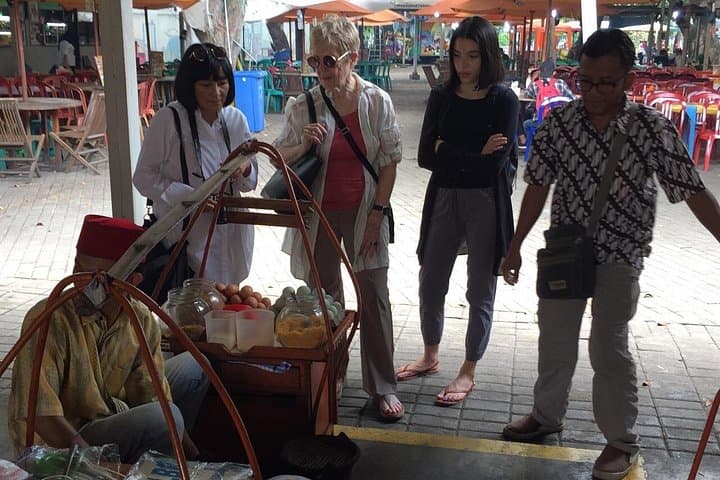
Practical guidance: the tour includes private, air-conditioned transport, one night in a 3-star Bandung hotel, guide, lunch and bottled water. Expect 2–3 hours of driving each way (traffic-dependent), short uphill walks at crater viewpoints and lingering smells of sulfur—bring a disposable mask. Start early to avoid Jakarta rush hour, carry a light layer for cooler highland temperatures, and allow time for photography and brief market stops. The itinerary is low-impact on fitness but high on sensory variety—city plazas, harbor breeze, and the hush of crater rims.