THE ADVENTURE COLLECTIVE® · Independent discovery and booking for outdoor travel

Spend an intimate night on the Thar’s sand ridges—camel ride at sunset, campfire-cooked Rajasthani dinner, then stargazing beneath an expansive desert sky. This non-touristic overnight blends simple local hospitality with classic desert views.
Spend an intimate night on the Thar’s sand ridges—camel ride at sunset, campfire-cooked Rajasthani dinner, then stargazing beneath an expansive desert sky. This non-touristic overnight blends simple local hospitality with classic desert views.
The sun tilts low over rippling ochre dunes as a jeep leaves Jaisalmer and a caravan of camels waits at the sandy edge—this is where the city’s sandstone hush gives way to wind-sculpted dunes and wide, open sky.
Verified experiences and guided adventures in the surrounding area.
Operated by The Thar Saga · Jaisalmer, Rajasthan
The sun tilts low over rippling ochre dunes as a jeep leaves Jaisalmer and a caravan of camels waits at the sandy edge—this is where the city’s sandstone hush gives way to wind-sculpted dunes and wide, open sky.
The route passes Jasery Lake, a local-made oasis, then Khaba Fort, a western outpost with broad desert views; both are anchors in an area shaped by wind, seasonal rivers and centuries of caravan trade across the Thar. The dunes themselves are recent geologic work—loose sand pushed into ridges by prevailing winds—while the night sky above the Thar delivers classic desert astronomy: low light pollution means bright Milky Way arcs and slow-moving meteor streaks.
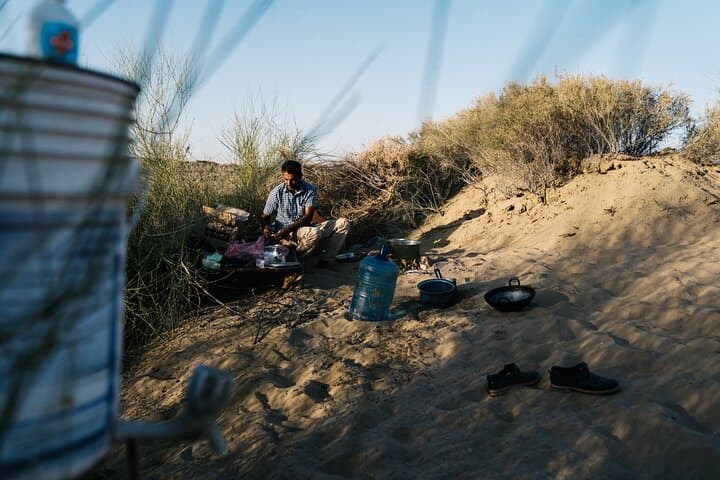
Culturally, the trip touches rural Rajasthani rhythms: camel drivers’ songs, simple dal-and-chapati cooking over coals, and sleeping under open sky like travelers of old. Guides aim for a non-touristic feel—smaller groups, individual camels, and a campfire dinner prepared in front of guests.
Practically, expect an afternoon jeep transfer from Jaisalmer, a 60–90 minute camel ride to camp, campfire dinner, and an overnight on padded bedding with blankets and pillows supplied; breakfast and an optional morning camel ride return you to the city by midmorning. There are no formal toilets in the dunes, and temperatures swing widely from hot afternoons to cool nights, so layer and bring water. This is an accessible, low-technical overnight that rewards those who want quiet desert night skies and a hands-on local camp experience.
easy.
Overnight, ~20–22 hours.
Suitable for most fitness levels; must be able to mount/dismount a camel and walk short distances on sand
The camel trek into the dunes typically lasts about 60–90 minutes depending on the camel pace and chosen camp location.
No permanent toilets are provided in the dunes; guests should be prepared for natural toileting and use provided sanitation wipes and hand sanitizer.
Yes—this tour is low technical difficulty, but mounting camels and sleeping on padded beds in the open may be uncomfortable for some; check health restrictions beforehand.
Camp meals are simple Rajasthani-style dishes cooked over a fire—dal, mixed vegetables, rice, chapati and tea/coffee; vegetarian options are standard.
The route skirts sites tied to traditional desert life and caravan movement; forts like Khaba served as lookout points for village clusters and trade routes across the Thar.
Travelers should pack out all trash, avoid disturbing native shrubs that stabilize dunes, and follow guides’ instructions to minimize impact on fragile desert soils and nocturnal wildlife.
The Thar Saga operates guided outdoor trips and adventures with an emphasis on safety, stewardship, and memorable experiences.


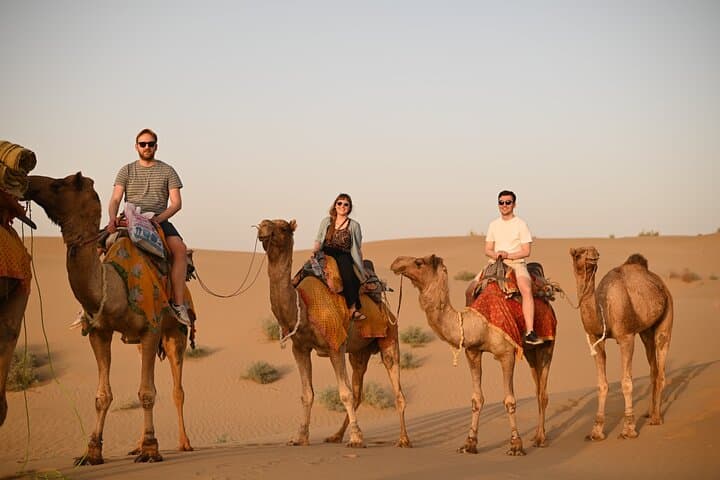
The sun tilts low over rippling ochre dunes as a jeep leaves Jaisalmer and a caravan of camels waits at the sandy edge—this is where the city’s sandstone hush gives way to wind-sculpted dunes and wide, open sky.
The sun tilts low over rippling ochre dunes as a jeep leaves Jaisalmer and a caravan of camels waits at the sandy edge—this is where the city’s sandstone hush gives way to wind-sculpted dunes and wide, open sky.
The route passes Jasery Lake, a local-made oasis, then Khaba Fort, a western outpost with broad desert views; both are anchors in an area shaped by wind, seasonal rivers and centuries of caravan trade across the Thar. The dunes themselves are recent geologic work—loose sand pushed into ridges by prevailing winds—while the night sky above the Thar delivers classic desert astronomy: low light pollution means bright Milky Way arcs and slow-moving meteor streaks.
Culturally, the trip touches rural Rajasthani rhythms: camel drivers’ songs, simple dal-and-chapati cooking over coals, and sleeping under open sky like travelers of old. Guides aim for a non-touristic feel—smaller groups, individual camels, and a campfire dinner prepared in front of guests.
Practically, expect an afternoon jeep transfer from Jaisalmer, a 60–90 minute camel ride to camp, campfire dinner, and an overnight on padded bedding with blankets and pillows supplied; breakfast and an optional morning camel ride return you to the city by midmorning. There are no formal toilets in the dunes, and temperatures swing widely from hot afternoons to cool nights, so layer and bring water. This is an accessible, low-technical overnight that rewards those who want quiet desert night skies and a hands-on local camp experience.