THE ADVENTURE COLLECTIVE® · Independent discovery and booking for outdoor travel

A full-day private drive from Jaipur to the Taj Mahal that pairs guided history, Agra Fort exploration, and a rooftop 5-star lunch—ideal for travelers who want maximum monuments in a single, well-planned day.
A full-day private drive from Jaipur to the Taj Mahal that pairs guided history, Agra Fort exploration, and a rooftop 5-star lunch—ideal for travelers who want maximum monuments in a single, well-planned day.
Morning light finds the road out of Jaipur cutting through scrub and fields, the city’s pink walls shrinking in the rearview as the highway carries you toward Agra. The Taj Mahal appears at the end of a four-hour drive like an impossible white horizon—its marble catching the sun and demanding a slow, respectful approach.
Verified experiences and guided adventures in the surrounding area.
Operated by Akbran Tour · Agra, Uttar Pradesh
Morning light finds the road out of Jaipur cutting through scrub and fields, the city’s pink walls shrinking in the rearview as the highway carries you toward Agra. The Taj Mahal appears at the end of a four-hour drive like an impossible white horizon—its marble catching the sun and demanding a slow, respectful approach.
The tour follows a tightly paced cultural route: a guided visit to the Taj Mahal (commissioned by Shah Jahan in 1631 for Mumtaz Mahal and completed over two decades), a walk through Agra Fort’s red-sandstone courts, then a rooftop fine-dining lunch showcasing Mughlai and contemporary Indian flavors before a relaxed return to Jaipur. Geologically, the Yamuna plain’s alluvial soils provided the soft bed for these monuments; architecturally the sites display Mughal symmetry, inlay work, and red-sandstone ramparts.
Locals still sell marble inlay and hand-block prints near the Fort; bargaining is part of the rhythm. Cultural norms—modest dress at religious sites, quiet in mausoleum chambers—make visits smoother.
Practical guidance: expect a 12–14 hour day with long stretches in a private vehicle and several hours on foot across paved and uneven surfaces. Carry ID for entry, pack sunscreen and a refillable water bottle, and wear shoes suited to both walking and removing quickly for the Taj’s marble terrace. If you chose skip-the-line tickets, your time at each site tightens—plan photos and questions with your guide to make the most of the visit.
easy.
12–14 hours.
Suitable for travelers with basic stamina for several hours of walking and standing; minimal elevation change.
The drive is typically about 3.5–4.5 hours one way depending on traffic; expect a full 12–14 hour round trip for the complete itinerary.
Options vary by booking: skip-the-line Taj or Agra Fort tickets and 5-star lunch can be included if selected—confirm inclusions when you book.
The Taj Mahal is closed to visitors on Fridays for congregational prayers; plan your tour for another weekday or Saturday/Sunday when open.
Many areas are paved and the tour notes wheelchair-accessible transport, but some marble platforms and Fort sections have steps—check accessibility details with the operator before booking.
The Taj Mahal was commissioned in 1631 by Emperor Shah Jahan and completed roughly two decades later; Agra Fort predates it, expanded by subsequent Mughal rulers into a fortified imperial city.
Visitor pressure and air pollution are monitored by local authorities; follow rules about no tobacco or food on monument grounds and use designated walkways to reduce wear.
Akbran Tour operates guided outdoor trips and adventures with an emphasis on safety, stewardship, and memorable experiences.
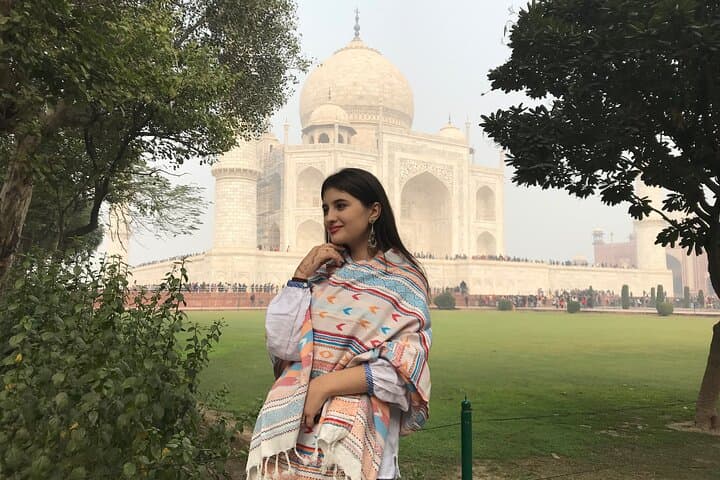
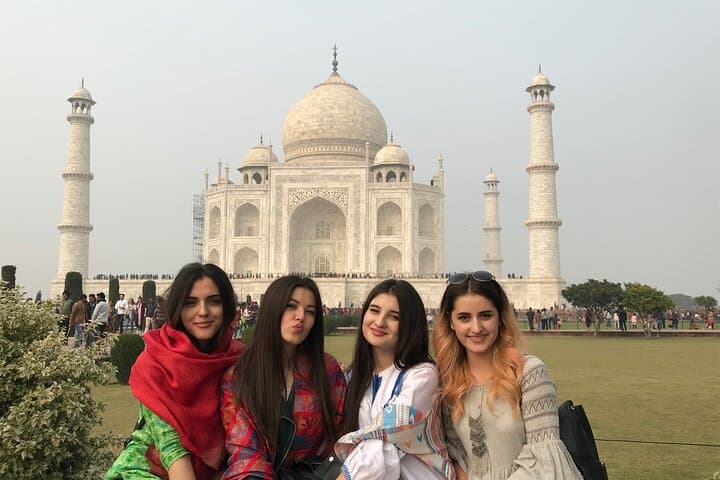


Morning light finds the road out of Jaipur cutting through scrub and fields, the city’s pink walls shrinking in the rearview as the highway carries you toward Agra. The Taj Mahal appears at the end of a four-hour drive like an impossible white horizon—its marble catching the sun and demanding a slow, respectful approach.
Morning light finds the road out of Jaipur cutting through scrub and fields, the city’s pink walls shrinking in the rearview as the highway carries you toward Agra. The Taj Mahal appears at the end of a four-hour drive like an impossible white horizon—its marble catching the sun and demanding a slow, respectful approach.
The tour follows a tightly paced cultural route: a guided visit to the Taj Mahal (commissioned by Shah Jahan in 1631 for Mumtaz Mahal and completed over two decades), a walk through Agra Fort’s red-sandstone courts, then a rooftop fine-dining lunch showcasing Mughlai and contemporary Indian flavors before a relaxed return to Jaipur. Geologically, the Yamuna plain’s alluvial soils provided the soft bed for these monuments; architecturally the sites display Mughal symmetry, inlay work, and red-sandstone ramparts.
Locals still sell marble inlay and hand-block prints near the Fort; bargaining is part of the rhythm. Cultural norms—modest dress at religious sites, quiet in mausoleum chambers—make visits smoother.
Practical guidance: expect a 12–14 hour day with long stretches in a private vehicle and several hours on foot across paved and uneven surfaces. Carry ID for entry, pack sunscreen and a refillable water bottle, and wear shoes suited to both walking and removing quickly for the Taj’s marble terrace. If you chose skip-the-line tickets, your time at each site tightens—plan photos and questions with your guide to make the most of the visit.