THE ADVENTURE COLLECTIVE® · Independent discovery and booking for outdoor travel

Escape Jaipur for a full-day safari to Ranthambore National Park—home to Bengal tigers, leopards and dramatic dry-forest scenery. This practical guide explains what to expect on the drive, the safari, and how to prepare for a long day in the reserve.
Escape Jaipur for a full-day safari to Ranthambore National Park—home to Bengal tigers, leopards and dramatic dry-forest scenery. This practical guide explains what to expect on the drive, the safari, and how to prepare for a long day in the reserve.
The morning air on the Jaipur highway tastes of diesel and dust as the city gives way to scrub forest and granite outcrops. By late morning the landscape flattens into the dry deciduous woodlands of Ranthambore, where scattered lakes and rocky ridgelines puncture the horizon and the first langurs warn of your arrival.
Verified experiences and guided adventures in the surrounding area.
Operated by The Pinkcity Holidays - Private Day Tours · Sawai Madhopur, Rajasthan
The morning air on the Jaipur highway tastes of diesel and dust as the city gives way to scrub forest and granite outcrops. By late morning the landscape flattens into the dry deciduous woodlands of Ranthambore, where scattered lakes and rocky ridgelines puncture the horizon and the first langurs warn of your arrival.
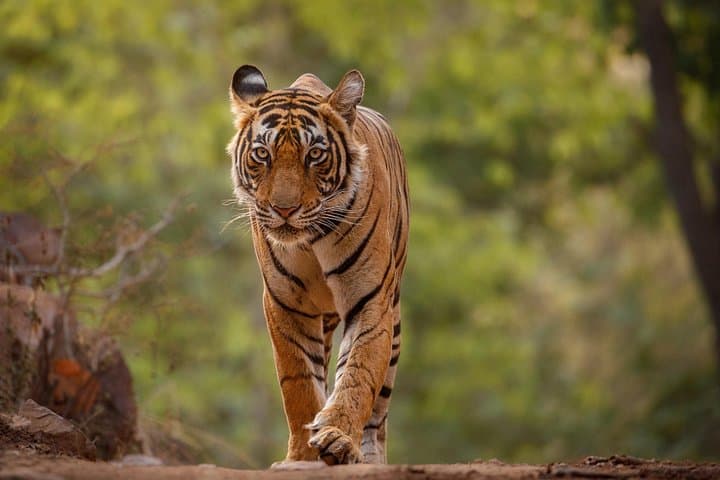
Ranthambore was once a royal hunting reserve for the Maharajas of Jaipur; today it’s one of India’s best places to watch wild Bengal tigers in an open, semi-arid habitat shaped by ancient Vindhya formations. The park’s talaos (seasonal lakes) and ruined fortifications—Ranthambore Fort looms over the reserve—add cultural layers to the wildlife spectacle. Local villages outside the core offer a glimpse of Rajasthani life: roadside tea stalls, cattle tracks, and carved stone wells.
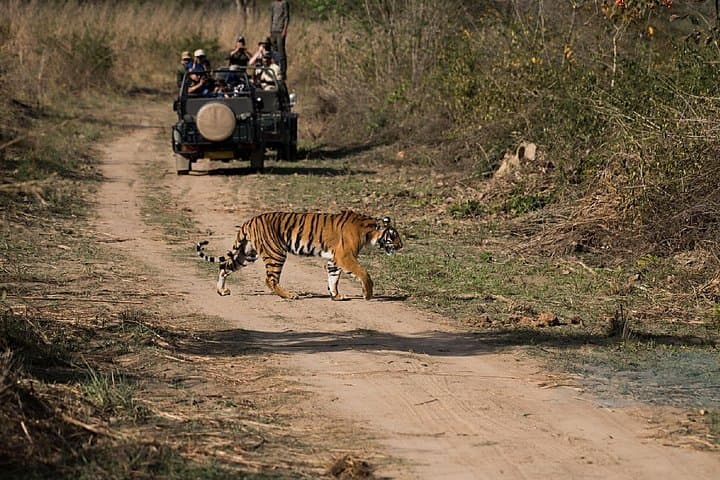
Practically, a day trip from Jaipur is a long but feasible outing: expect roughly three hours each way and a 3–4 hour guided jeep or canter safari inside the reserve. Terrain is uneven but low-altitude; sightlines vary from wide-open grasslands to shaded ravines where predators hide. Carry valid ID for park entry; note the park typically closes during the monsoon (July–September).
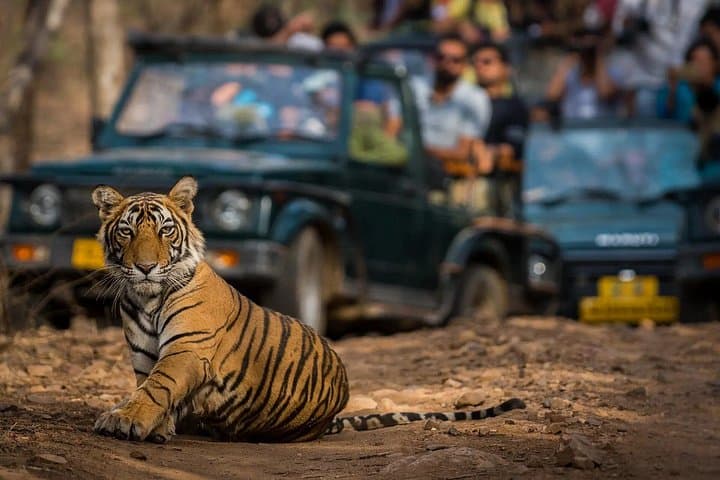
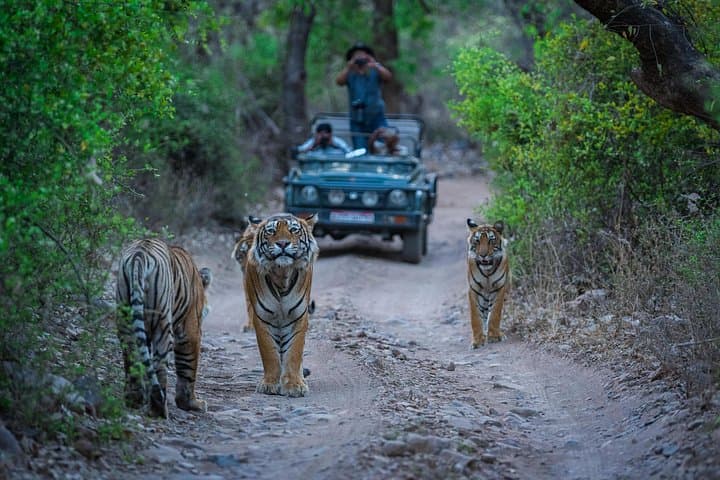
Plan for heat and dust—neutral clothing, a good telephoto or binoculars, and plenty of water. Respect park rules, keep noise and flash photography to a minimum, and follow your guide’s instructions to maximize both safety and sightings. The reward is straightforward: watching a tiger move through deciduous forest, an encounter that turns a long day into an unforgettable one.
moderate.
13–14 hours.
Suitable for travelers who can sit for long periods and handle short walks on uneven ground; not physically strenuous.
Driving time is roughly three hours each way depending on traffic and pickup location—expect a long day with early pickup and late return.
No—sightings depend on animal movements, season, and luck; experienced guides increase the odds but sightings aren’t guaranteed.
Ranthambore typically closes during the monsoon (around July–September); the exact closure can vary, so check current park notices before booking.
A government-issued photo ID (passport for foreign nationals) is required for all visitors and must be presented at entry.
Ranthambore began as royal hunting grounds for the Jaipur maharajas; later designated a wildlife sanctuary and incorporated into Project Tiger efforts to protect imperiled tiger populations.
Tourism supports local conservation but also brings pressure—stick to marked roads, avoid littering, and use licensed guides to minimize disturbance to wildlife.
The Pinkcity Holidays - Private Day Tours operates guided outdoor trips and adventures with an emphasis on safety, stewardship, and memorable experiences.
The morning air on the Jaipur highway tastes of diesel and dust as the city gives way to scrub forest and granite outcrops. By late morning the landscape flattens into the dry deciduous woodlands of Ranthambore, where scattered lakes and rocky ridgelines puncture the horizon and the first langurs warn of your arrival.
The morning air on the Jaipur highway tastes of diesel and dust as the city gives way to scrub forest and granite outcrops. By late morning the landscape flattens into the dry deciduous woodlands of Ranthambore, where scattered lakes and rocky ridgelines puncture the horizon and the first langurs warn of your arrival.
Ranthambore was once a royal hunting reserve for the Maharajas of Jaipur; today it’s one of India’s best places to watch wild Bengal tigers in an open, semi-arid habitat shaped by ancient Vindhya formations. The park’s talaos (seasonal lakes) and ruined fortifications—Ranthambore Fort looms over the reserve—add cultural layers to the wildlife spectacle. Local villages outside the core offer a glimpse of Rajasthani life: roadside tea stalls, cattle tracks, and carved stone wells.
Practically, a day trip from Jaipur is a long but feasible outing: expect roughly three hours each way and a 3–4 hour guided jeep or canter safari inside the reserve. Terrain is uneven but low-altitude; sightlines vary from wide-open grasslands to shaded ravines where predators hide. Carry valid ID for park entry; note the park typically closes during the monsoon (July–September).
Plan for heat and dust—neutral clothing, a good telephoto or binoculars, and plenty of water. Respect park rules, keep noise and flash photography to a minimum, and follow your guide’s instructions to maximize both safety and sightings. The reward is straightforward: watching a tiger move through deciduous forest, an encounter that turns a long day into an unforgettable one.