THE ADVENTURE COLLECTIVE® · Independent discovery and booking for outdoor travel

Ride Jaipur’s narrow heritage lanes at dawn on a 2–3 hour bike and rickshaw tour that reaches palaces, temple ceremonies and a family-served breakfast. Expect tight alleys, artisan workshops and early-market energy.
Ride Jaipur’s narrow heritage lanes at dawn on a 2–3 hour bike and rickshaw tour that reaches palaces, temple ceremonies and a family-served breakfast. Expect tight alleys, artisan workshops and early-market energy.
Dawn softens the pink façades as the tour gathers at Ram Niwas Bagh. Cyclists mount bikes while small rickshaws idle, ready to thread the city’s tight lanes that cars can’t reach. The air tastes of tea and frying paratha; a temple bell and early-market chatter set the tempo.
Verified experiences and guided adventures in the surrounding area.
Operated by Pinkcity Ride · Jaipur, Rajasthan
Dawn softens the pink façades as the tour gathers at Ram Niwas Bagh. Cyclists mount bikes while small rickshaws idle, ready to thread the city’s tight lanes that cars can’t reach. The air tastes of tea and frying paratha; a temple bell and early-market chatter set the tempo.
Jaipur was laid out by Maharaja Sawai Jai Singh II in the early 18th century as a planned capital; its streets still follow that grid and its buildings show the ochre-pink sandstone that gives the city its nickname. Geologically this is the plains edge of the Aravalli range—hard rock outcrops rise to the west, but the city itself sits on flatter ground where bazaars and havelis opened onto courtyards and alleys.
Cultural life is visible at a glance: artisans at block-print stalls, brassworkers in narrow courtyards, and the morning ceremony at Govind Dev Ji Temple where priests and worshippers gather. The ride alternates between gentle pedaling and brief rickshaw hops to reach palaces, flower markets and artisan lanes. The final stop is a local family home for a simple breakfast—paratha, poha, curd and chai—an immediate reminder that food is how many Jaipur residents greet the day.
Practical guidance: start early to avoid heat and midday traffic, bring sunscreen and a reusable water bottle, and wear comfortable shoes for short walks in alleys. Expect uneven paving and occasional crowds; listen to guides about safe places to stop and to ask before photographing people. Tipping local hosts and artisans helps keep small businesses viable and preserves the neighborhoods you’ll explore.
easy.
2–3 hours.
Suitable for most fitness levels; you should be comfortable cycling short distances and walking brief stretches.
Yes; guides lead the group through quieter lanes and handle rickshaw transfers where cycling is impractical, making it accessible for riders with basic skills.
Yes; the itinerary includes the temple morning ceremony when available—remember to dress modestly and follow temple rules.
Yes; the tour includes a traditional breakfast in a local family home featuring paratha, poha, curd and tea.
Always ask permission before photographing artisans or inside homes; your guide can help with introductions and cultural context.
Jaipur was founded in 1727 by Maharaja Sawai Jai Singh II as one of India’s earliest planned cities, laid out on a grid and painted pink for a royal visit in the 19th century.
Support local artisans by buying directly and avoid single-use plastics; heritage lanes are fragile so stay on paths and leave no trace.
Pinkcity Ride operates guided outdoor trips and adventures with an emphasis on safety, stewardship, and memorable experiences.
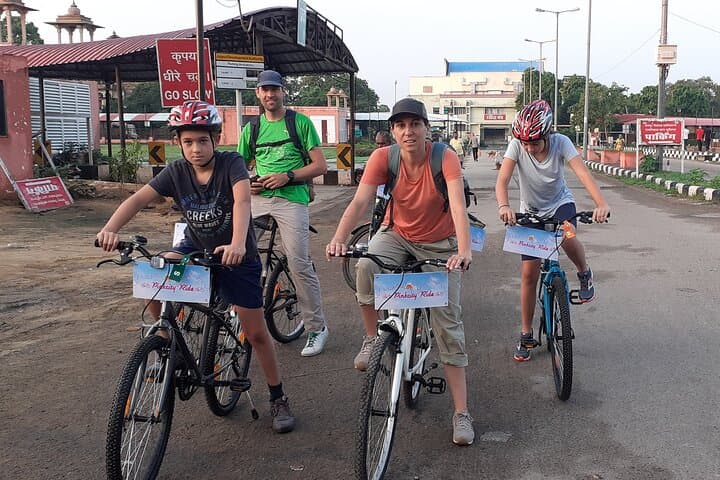
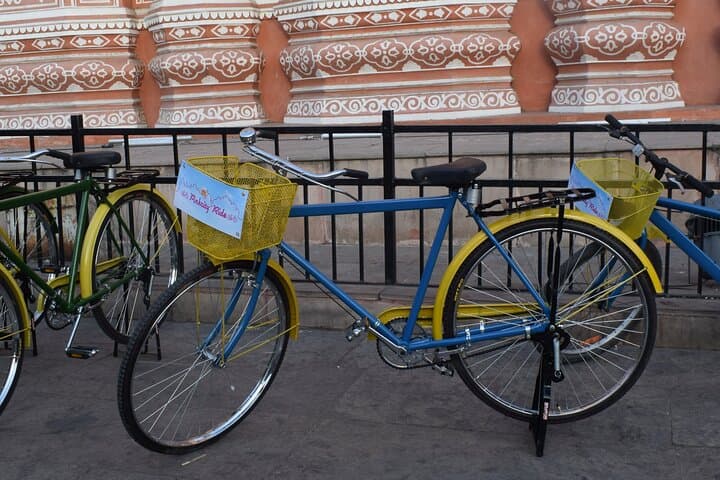
Dawn softens the pink façades as the tour gathers at Ram Niwas Bagh. Cyclists mount bikes while small rickshaws idle, ready to thread the city’s tight lanes that cars can’t reach. The air tastes of tea and frying paratha; a temple bell and early-market chatter set the tempo.
Dawn softens the pink façades as the tour gathers at Ram Niwas Bagh. Cyclists mount bikes while small rickshaws idle, ready to thread the city’s tight lanes that cars can’t reach. The air tastes of tea and frying paratha; a temple bell and early-market chatter set the tempo.
Jaipur was laid out by Maharaja Sawai Jai Singh II in the early 18th century as a planned capital; its streets still follow that grid and its buildings show the ochre-pink sandstone that gives the city its nickname. Geologically this is the plains edge of the Aravalli range—hard rock outcrops rise to the west, but the city itself sits on flatter ground where bazaars and havelis opened onto courtyards and alleys.
Cultural life is visible at a glance: artisans at block-print stalls, brassworkers in narrow courtyards, and the morning ceremony at Govind Dev Ji Temple where priests and worshippers gather. The ride alternates between gentle pedaling and brief rickshaw hops to reach palaces, flower markets and artisan lanes. The final stop is a local family home for a simple breakfast—paratha, poha, curd and chai—an immediate reminder that food is how many Jaipur residents greet the day.
Practical guidance: start early to avoid heat and midday traffic, bring sunscreen and a reusable water bottle, and wear comfortable shoes for short walks in alleys. Expect uneven paving and occasional crowds; listen to guides about safe places to stop and to ask before photographing people. Tipping local hosts and artisans helps keep small businesses viable and preserves the neighborhoods you’ll explore.