THE ADVENTURE COLLECTIVE® · Independent discovery and booking for outdoor travel

Spend a long but rewarding day driving from Delhi to Jaipur to see Amber Fort, Hawa Mahal, City Palace, Jantar Mantar and Jal Mahal. This private AC car tour covers major sights in a single 15‑hour day—ideal for travelers who want concentrated history and architecture in one trip.
Spend a long but rewarding day driving from Delhi to Jaipur to see Amber Fort, Hawa Mahal, City Palace, Jantar Mantar and Jal Mahal. This private AC car tour covers major sights in a single 15‑hour day—ideal for travelers who want concentrated history and architecture in one trip.
The day begins before sunrise on the Delhi–Jaipur highway: headlights cut through dust, the air cool, and the terrain of the Aravalli foothills slowly rises as the cityscape gives way to ochre fields. A private AC car pulls into Amber Fort while the first light strikes its sandstone walls; later the Hawa Mahal’s honeycomb façade glows pink against a clear sky. The rhythm of the day is driven by road miles and monuments—history arriving in measured, cinematic chapters.
Verified experiences and guided adventures in the surrounding area.
Operated by Chaman Duggal Private Tours · Jaipur, Rajasthan
The day begins before sunrise on the Delhi–Jaipur highway: headlights cut through dust, the air cool, and the terrain of the Aravalli foothills slowly rises as the cityscape gives way to ochre fields. A private AC car pulls into Amber Fort while the first light strikes its sandstone walls; later the Hawa Mahal’s honeycomb façade glows pink against a clear sky. The rhythm of the day is driven by road miles and monuments—history arriving in measured, cinematic chapters.
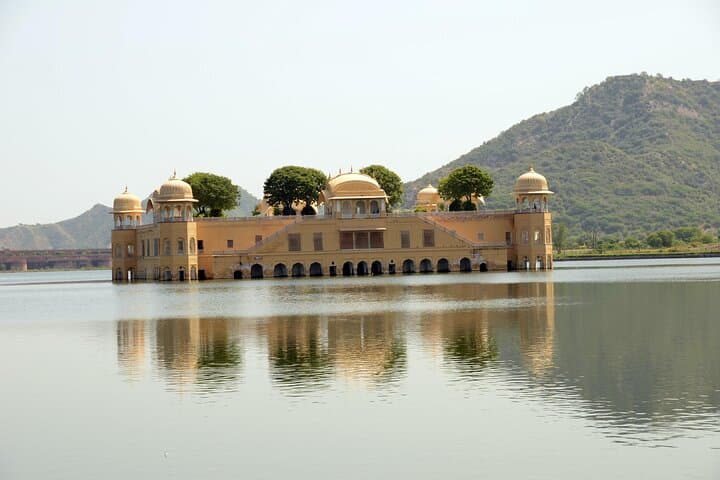
Jaipur was founded in 1727 by Maharaja Sawai Jai Singh II and planned as one of India’s early grid cities; its architecture blends Rajput palaces, Mughal motifs and local sandstone shaped by the ancient Aravalli Range. Visitors spend hours moving between courtyards, astronomical instruments at Jantar Mantar and the water-sitting Jal Mahal—where the lake edges push and pull at the palace base. Culture here is tactile: markets selling block-printed textiles, vendors calling out spice blends, and peacocks threading city gardens.
Practically, this is a long, full-day door-to-door trip—expect roughly 4–5 hours each way from Delhi (approximately 270–280 km), with about 15 hours total on your itinerary. Admissions to several monuments are typically paid on site; the private car, driver, fuel, parking and bottled water are included with this tour. Start early to avoid traffic, wear comfortable shoes for steps at forts, carry sun protection and local currency for entry fees and tips. The pace is brisk but manageable: pack patience, a camera, and a readiness to trade highway hours for concentrated hours of Rajasthan’s most immediate history.
easy.
15 hours (door‑to‑door).
Low; suitable for most travelers comfortable with a long day and some stair‑climbing
Expect about 4–5 hours each way depending on traffic; the tour is about 15 hours total door‑to‑door.
Most major admissions (Amber Fort, City Palace, Jantar Mantar) are typically not included and are paid on site unless stated otherwise.
The tour notes wheelchair‑accessible transportation, but some historic sites have steps and uneven surfaces—access can be limited on site.
Yes—there are brief stops at markets or nearby cafés, but the schedule is tight; communicate priorities with your guide to allocate extra time where desired.
Jaipur was laid out in a grid by Maharaja Sawai Jai Singh II in 1727; its uniform pink façades were later popularized when the city was painted for a royal visit in 1876.
Water levels at Jal Mahal and preservation of monuments are ongoing concerns—stick to marked paths, avoid littering, and support local guides who practice sustainable tourism.
Chaman Duggal Private Tours operates guided outdoor trips and adventures with an emphasis on safety, stewardship, and memorable experiences.
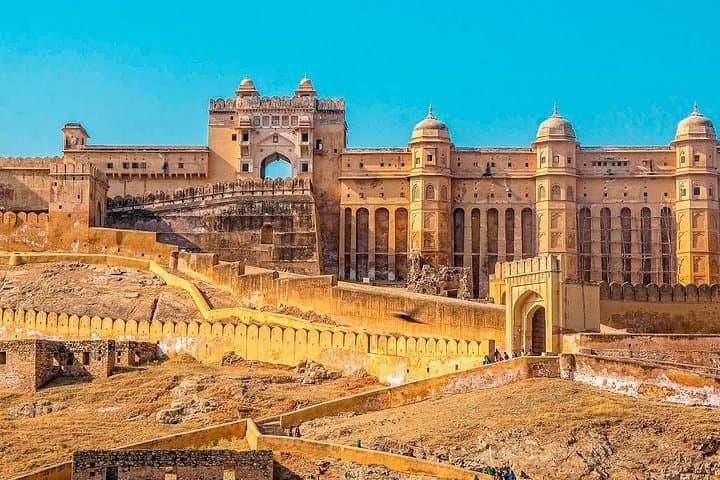
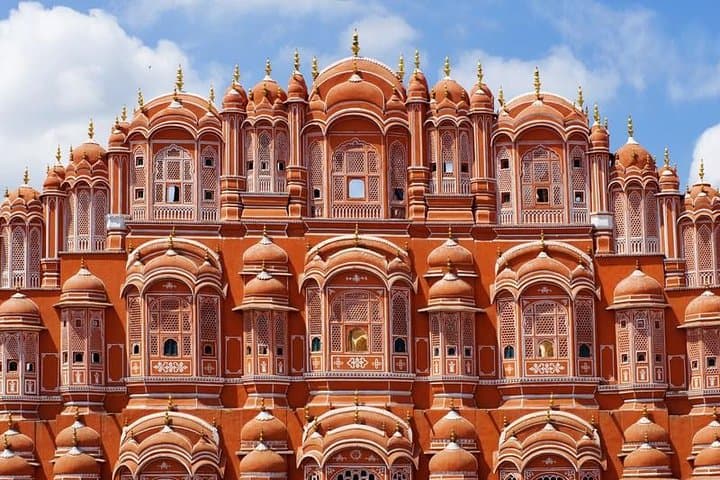
The day begins before sunrise on the Delhi–Jaipur highway: headlights cut through dust, the air cool, and the terrain of the Aravalli foothills slowly rises as the cityscape gives way to ochre fields. A private AC car pulls into Amber Fort while the first light strikes its sandstone walls; later the Hawa Mahal’s honeycomb façade glows pink against a clear sky. The rhythm of the day is driven by road miles and monuments—history arriving in measured, cinematic chapters.
The day begins before sunrise on the Delhi–Jaipur highway: headlights cut through dust, the air cool, and the terrain of the Aravalli foothills slowly rises as the cityscape gives way to ochre fields. A private AC car pulls into Amber Fort while the first light strikes its sandstone walls; later the Hawa Mahal’s honeycomb façade glows pink against a clear sky. The rhythm of the day is driven by road miles and monuments—history arriving in measured, cinematic chapters.
Jaipur was founded in 1727 by Maharaja Sawai Jai Singh II and planned as one of India’s early grid cities; its architecture blends Rajput palaces, Mughal motifs and local sandstone shaped by the ancient Aravalli Range. Visitors spend hours moving between courtyards, astronomical instruments at Jantar Mantar and the water-sitting Jal Mahal—where the lake edges push and pull at the palace base. Culture here is tactile: markets selling block-printed textiles, vendors calling out spice blends, and peacocks threading city gardens.
Practically, this is a long, full-day door-to-door trip—expect roughly 4–5 hours each way from Delhi (approximately 270–280 km), with about 15 hours total on your itinerary. Admissions to several monuments are typically paid on site; the private car, driver, fuel, parking and bottled water are included with this tour. Start early to avoid traffic, wear comfortable shoes for steps at forts, carry sun protection and local currency for entry fees and tips. The pace is brisk but manageable: pack patience, a camera, and a readiness to trade highway hours for concentrated hours of Rajasthan’s most immediate history.