THE ADVENTURE COLLECTIVE® · Independent discovery and booking for outdoor travel

Ride an early express from Delhi to Jaipur for a focused day among Amber Fort, the City Palace and the astronomical instruments of Jantar Mantar. This train-backed private tour packs culture, architecture and efficient transport into one long, manageable day.
Ride an early express from Delhi to Jaipur for a focused day among Amber Fort, the City Palace and the astronomical instruments of Jantar Mantar. This train-backed private tour packs culture, architecture and efficient transport into one long, manageable day.
The train whistle cuts through pre-dawn Delhi as you settle into an air-conditioned carriage, the city’s edge sliding into cotton fields and small towns. By midmorning the pinkish silhouette of Jaipur appears: ramparts, domes and the honeyed stone of Amer Fort rising above a ring of scrub and water.
Verified experiences and guided adventures in the surrounding area.
Operated by Histo Yatra · Jaipur, Rajasthan
The train whistle cuts through pre-dawn Delhi as you settle into an air-conditioned carriage, the city’s edge sliding into cotton fields and small towns. By midmorning the pinkish silhouette of Jaipur appears: ramparts, domes and the honeyed stone of Amer Fort rising above a ring of scrub and water.
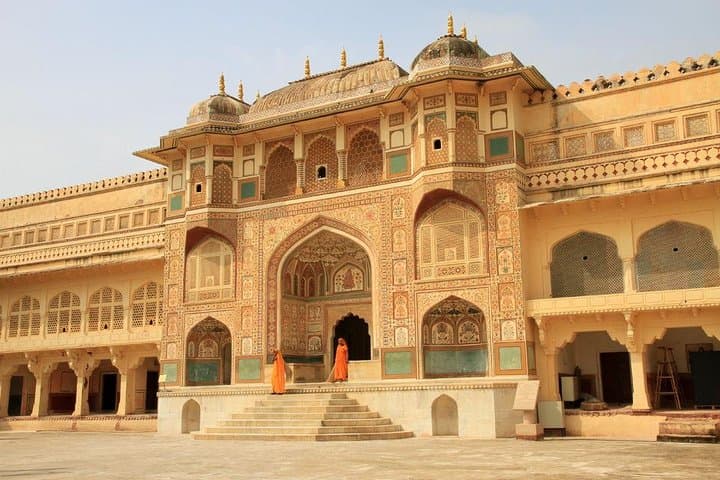
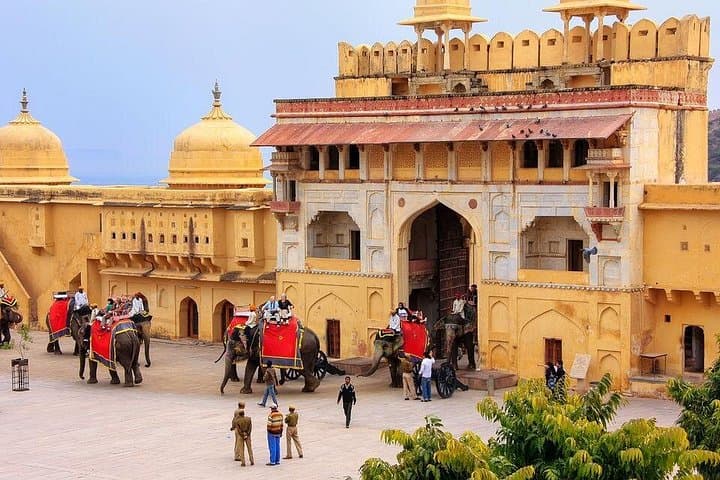
Jaipur was laid out in a strict grid in 1727 by Maharaja Sawai Jai Singh II; its Ramgarh hills and pink sandstone buildings reflect both strategic need and local geology. Amer (Amber) Fort predates the planned city and reveals Rajput fortress architecture—bastions, courtyards and carved jali screens. Hawa Mahal’s latticed façade speaks to courtly culture and normas of visibility, while Jantar Mantar is an 18th-century open-air observatory built from masonry instruments calibrated for precise solar and stellar readings.
The day is sensory: hand-carved stone, the aroma of street snacks, the chatter of market lanes. The guide threads history with practical pacing—skip-the-line options, where to photograph without crowds, and how much time to allow at each site.
Plan for long circuits and many stairs: comfortable shoes and sun protection are essential, and budget extra time for platform transfers at both railway stations. Many monuments offer wheelchair access in parts, but expect cobbled ramps and some uneven steps. Bring cash for small purchases and tipping, carry a refillable water bottle (water is often available), and time your visit for morning or late afternoon light to avoid the midday heat. This is a packed, full-day cultural trek that rewards curious travelers with layered history and striking urban geometry.
easy.
14 hours.
Suitable for most fitness levels; expect prolonged walking, stair climbs, and a full day out.
The express trip typically takes about 4–5 hours each way; this itinerary uses an early departure and an evening return to maximize daylight in Jaipur.
Some tour options include monument entrance; confirm at booking—otherwise plan to pay entry on site, often by cash or card where accepted.
Parts of the itinerary and transport are wheelchair accessible, but some forts and older monuments have uneven steps or limited ramp access; advise your operator in advance.
Yes—this tour includes a sit-down lunch at an air-conditioned restaurant and meals on the train, but bring snacks if you have dietary needs.
Jaipur was founded in 1727 by Maharaja Sawai Jai Singh II as one of India’s earliest planned cities; Jantar Mantar is his large-scale astronomical complex.
Heritage sites manage visitor flow to limit erosion of stonework—respect barriers, avoid feeding wildlife, and use refillable bottles to reduce plastic waste.
Histo Yatra operates guided outdoor trips and adventures with an emphasis on safety, stewardship, and memorable experiences.
The train whistle cuts through pre-dawn Delhi as you settle into an air-conditioned carriage, the city’s edge sliding into cotton fields and small towns. By midmorning the pinkish silhouette of Jaipur appears: ramparts, domes and the honeyed stone of Amer Fort rising above a ring of scrub and water.
The train whistle cuts through pre-dawn Delhi as you settle into an air-conditioned carriage, the city’s edge sliding into cotton fields and small towns. By midmorning the pinkish silhouette of Jaipur appears: ramparts, domes and the honeyed stone of Amer Fort rising above a ring of scrub and water.
Jaipur was laid out in a strict grid in 1727 by Maharaja Sawai Jai Singh II; its Ramgarh hills and pink sandstone buildings reflect both strategic need and local geology. Amer (Amber) Fort predates the planned city and reveals Rajput fortress architecture—bastions, courtyards and carved jali screens. Hawa Mahal’s latticed façade speaks to courtly culture and normas of visibility, while Jantar Mantar is an 18th-century open-air observatory built from masonry instruments calibrated for precise solar and stellar readings.
The day is sensory: hand-carved stone, the aroma of street snacks, the chatter of market lanes. The guide threads history with practical pacing—skip-the-line options, where to photograph without crowds, and how much time to allow at each site.
Plan for long circuits and many stairs: comfortable shoes and sun protection are essential, and budget extra time for platform transfers at both railway stations. Many monuments offer wheelchair access in parts, but expect cobbled ramps and some uneven steps. Bring cash for small purchases and tipping, carry a refillable water bottle (water is often available), and time your visit for morning or late afternoon light to avoid the midday heat. This is a packed, full-day cultural trek that rewards curious travelers with layered history and striking urban geometry.