THE ADVENTURE COLLECTIVE® · Independent discovery and booking for outdoor travel

Explore Jaipur’s Pink City in a single day: from the latticed Hawa Mahal and stone instruments at Jantar Mantar to the hilltop Amber Fort and hands-on block printing demonstrations. Practical tips for timing, heat, and photography included.
Explore Jaipur’s Pink City in a single day: from the latticed Hawa Mahal and stone instruments at Jantar Mantar to the hilltop Amber Fort and hands-on block printing demonstrations. Practical tips for timing, heat, and photography included.
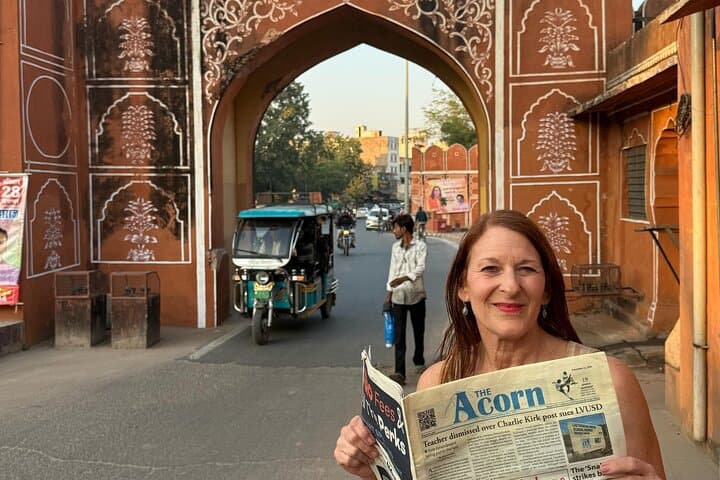
A morning in Jaipur unfolds with the city painting itself pink as first light slides across sandstone facades. You step from an air-conditioned vehicle onto a street where the Hawa Mahal’s stacked windows watch the city awake, while tuk-tuks and vendors begin their rhythmic commerce. The Aravalli ridge keeps a steady, low profile to the west, and the hill road to Amber rises like a challenge you can read from below.
Verified experiences and guided adventures in the surrounding area.
Operated by Max Jaipur Tour · Jaipur, Rajasthan
A morning in Jaipur unfolds with the city painting itself pink as first light slides across sandstone facades. You step from an air-conditioned vehicle onto a street where the Hawa Mahal’s stacked windows watch the city awake, while tuk-tuks and vendors begin their rhythmic commerce. The Aravalli ridge keeps a steady, low profile to the west, and the hill road to Amber rises like a challenge you can read from below.
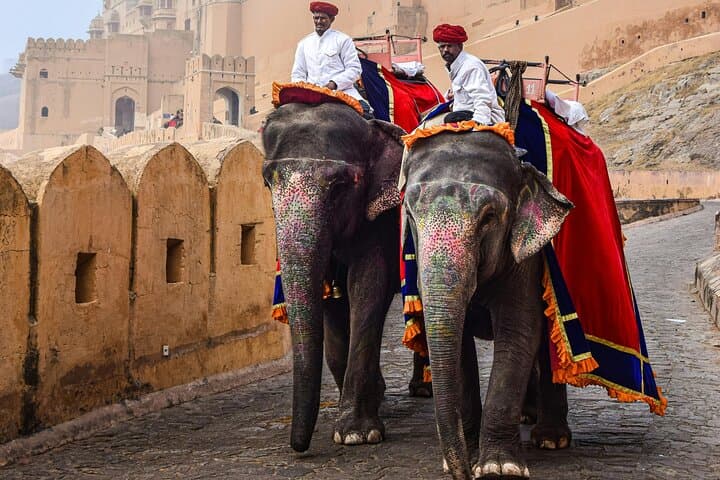
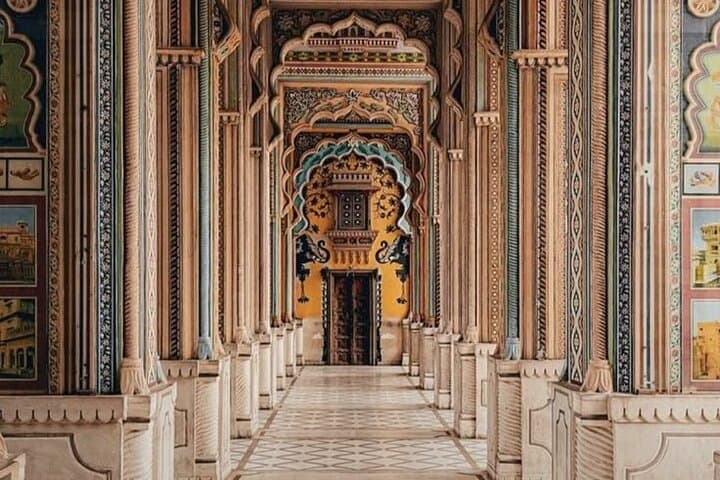
The route follows a compact map of Rajasthan’s royal past: Hawa Mahal (1799) for its perforated façade, Jantar Mantar’s astronomical instruments that measure time in stone, and City Palace where Rajput and Mughal influences interlock in carved gates and courtyards. Amber Fort crowns the day with mirror-walled halls and ramparts that look out over Mansagar Lake, where the Jal Mahal sits halfway to the sky. Along the way, craftsmen at small workshops demonstrate Jaipur’s centuries-old block-printing, hand-carving wooden blocks to stamp intricate designs onto cotton.
Expect a mix of easy city walking, some stair climbing at forts and stepwells such as Panna Meena Kund, and short drives between sites. Midday heat can push the pace; plan for early starts, sunscreen, and short breaks in shaded cafés. Wear closed-toe shoes for fort paths and bring a scarf for temple entrances and sun protection. If you want sharper photos, schedule Amber for late afternoon light and Hawa Mahal at sunrise.
Practicalities: pockets for small-entry fees, local cash for markets, and a guide who can clear lines and narrate the architecture will make a compact day feel effortless and rich in detail.
easy.
4–8 hours.
Suitable for most travelers with basic mobility; involves walking on uneven stone, stairs, and short climbs at forts.
Most standard city tours do not include monument entrance fees; expect to pay separately at major sites like Amber Fort and City Palace unless the operator specifies otherwise.
The booking lists wheelchair accessibility for transport and many surfaces, but some historic sites have stairs and uneven surfaces—check with the operator about specific access at Amber Fort and stepwells.
Yes—itineraries usually include short photo stops at Jal Mahal and Panna Meena Kund and time at a block-printing workshop; if you want extended shopping, request adjustments when booking.
Visit Hawa Mahal at sunrise and schedule Amber Fort for early morning or late afternoon; a private guide can also route you through quieter entrances and suggest off-peak timing.
Jaipur was founded in 1727 by Maharaja Sawai Jai Singh II as a planned capital; its grid layout and pink-painted facades date to later civic choices to welcome a visiting prince.
Water levels in Mansagar Lake and heritage stonework at forts require ongoing conservation; choose tours that respect site entry rules and avoid feeding wildlife.
Max Jaipur Tour operates guided outdoor trips and adventures with an emphasis on safety, stewardship, and memorable experiences.

A morning in Jaipur unfolds with the city painting itself pink as first light slides across sandstone facades. You step from an air-conditioned vehicle onto a street where the Hawa Mahal’s stacked windows watch the city awake, while tuk-tuks and vendors begin their rhythmic commerce. The Aravalli ridge keeps a steady, low profile to the west, and the hill road to Amber rises like a challenge you can read from below.
A morning in Jaipur unfolds with the city painting itself pink as first light slides across sandstone facades. You step from an air-conditioned vehicle onto a street where the Hawa Mahal’s stacked windows watch the city awake, while tuk-tuks and vendors begin their rhythmic commerce. The Aravalli ridge keeps a steady, low profile to the west, and the hill road to Amber rises like a challenge you can read from below.
The route follows a compact map of Rajasthan’s royal past: Hawa Mahal (1799) for its perforated façade, Jantar Mantar’s astronomical instruments that measure time in stone, and City Palace where Rajput and Mughal influences interlock in carved gates and courtyards. Amber Fort crowns the day with mirror-walled halls and ramparts that look out over Mansagar Lake, where the Jal Mahal sits halfway to the sky. Along the way, craftsmen at small workshops demonstrate Jaipur’s centuries-old block-printing, hand-carving wooden blocks to stamp intricate designs onto cotton.
Expect a mix of easy city walking, some stair climbing at forts and stepwells such as Panna Meena Kund, and short drives between sites. Midday heat can push the pace; plan for early starts, sunscreen, and short breaks in shaded cafés. Wear closed-toe shoes for fort paths and bring a scarf for temple entrances and sun protection. If you want sharper photos, schedule Amber for late afternoon light and Hawa Mahal at sunrise.
Practicalities: pockets for small-entry fees, local cash for markets, and a guide who can clear lines and narrate the architecture will make a compact day feel effortless and rich in detail.