THE ADVENTURE COLLECTIVE® · Independent discovery and booking for outdoor travel

Walk the actual routes tied to the 1888 Whitechapel murders with a veteran ‘Ripperologist’ in period costume. This 2.5-hour, research-driven tour blends primary-source storytelling with on-street interpretation—ideal for history-minded travelers.
Walk the actual routes tied to the 1888 Whitechapel murders with a veteran ‘Ripperologist’ in period costume. This 2.5-hour, research-driven tour blends primary-source storytelling with on-street interpretation—ideal for history-minded travelers.
The evening fog curls through narrow lanes as your guide—dressed in period costume—casts a lantern glow across cobbles and doorways. You stand outside St Botolph's Church and the city feels older than its skyline: the air is edged with coal smoke and the murmurs of a Victorian East End.
Verified experiences and guided adventures in the surrounding area.
Operated by Jack the Ripper Walks · London, Greater London
The evening fog curls through narrow lanes as your guide—dressed in period costume—casts a lantern glow across cobbles and doorways. You stand outside St Botolph's Church and the city feels older than its skyline: the air is edged with coal smoke and the murmurs of a Victorian East End.
The walk traces the 1888 murders across Whitechapel and Spitalfields, following police routes, crime scenes and landmarks tied to victims such as Mary Ann Nichols, Annie Chapman and Mary Kelly. Whitechapel’s streets tell a story of industrial migration, overcrowded housing and competing jurisdictions—the City police versus the Metropolitan force—factors that shaped the investigation. Geology here is urban: reclaimed marshland, compacted clay and cobbles that still echo hoofbeats and boots. Cultural notes surface in market stalls, the Ten Bells pub and brick-lined courtyards where poverty and community coexisted.
Expect a measured, research-led narration from a guide with decades of study; photographs and documents are shown on a backlit tablet to clarify names and scenes. Practically, the route covers roughly 2–3 kilometers at a slow pace over 2.5 hours, on flat but uneven surfaces including cobbles and narrow alleys. The tour handles accessibility well but requires standing and walking for extended periods; it’s not suitable for children under 15. Finish points near Liverpool Street Station provide easy transit links.
Bring a warm layer, sturdy shoes and an inquisitive mind: the city’s architecture and plaques reward attention, and the guide steers a careful balance between grim detail and historical context.
moderate.
2–3 hours.
Moderate fitness; participants should be able to stand and walk for 2+ hours on uneven pavement.
The tour lasts about 2.5 hours and covers roughly 2–3 kilometers at a slow, interpretive pace with multiple stops.
The operator lists the route as wheelchair and stroller accessible, but participants must be able to remain mobile for extended periods—check with the provider about specific access needs.
Children under 15 are not permitted; 16–17 year-olds must be accompanied by an adult due to graphic subject matter.
Tours run in most weather; the cancellation policy allows refunds if you cancel at least 24 hours before the start. Wear weather-appropriate clothing.
Whitechapel was a densely populated, industrial neighborhood in the late 19th century; jurisdictional divisions between the City and Metropolitan police affected the investigation.
Respect signage, private property and memorials; large tour groups should stay on sidewalks and avoid blocking market activity to reduce impact.
Jack the Ripper Walks operates guided outdoor trips and adventures with an emphasis on safety, stewardship, and memorable experiences.


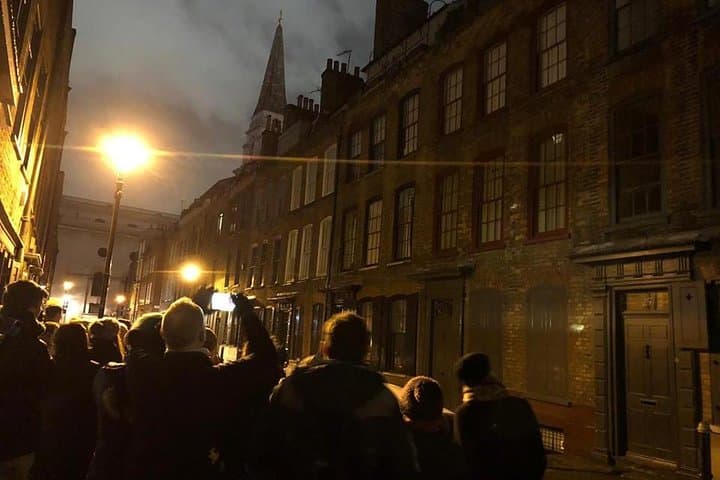
The evening fog curls through narrow lanes as your guide—dressed in period costume—casts a lantern glow across cobbles and doorways. You stand outside St Botolph's Church and the city feels older than its skyline: the air is edged with coal smoke and the murmurs of a Victorian East End.
The evening fog curls through narrow lanes as your guide—dressed in period costume—casts a lantern glow across cobbles and doorways. You stand outside St Botolph's Church and the city feels older than its skyline: the air is edged with coal smoke and the murmurs of a Victorian East End.
The walk traces the 1888 murders across Whitechapel and Spitalfields, following police routes, crime scenes and landmarks tied to victims such as Mary Ann Nichols, Annie Chapman and Mary Kelly. Whitechapel’s streets tell a story of industrial migration, overcrowded housing and competing jurisdictions—the City police versus the Metropolitan force—factors that shaped the investigation. Geology here is urban: reclaimed marshland, compacted clay and cobbles that still echo hoofbeats and boots. Cultural notes surface in market stalls, the Ten Bells pub and brick-lined courtyards where poverty and community coexisted.
Expect a measured, research-led narration from a guide with decades of study; photographs and documents are shown on a backlit tablet to clarify names and scenes. Practically, the route covers roughly 2–3 kilometers at a slow pace over 2.5 hours, on flat but uneven surfaces including cobbles and narrow alleys. The tour handles accessibility well but requires standing and walking for extended periods; it’s not suitable for children under 15. Finish points near Liverpool Street Station provide easy transit links.
Bring a warm layer, sturdy shoes and an inquisitive mind: the city’s architecture and plaques reward attention, and the guide steers a careful balance between grim detail and historical context.