THE ADVENTURE COLLECTIVE® · Independent discovery and booking for outdoor travel

Walk Whitechapel with a 3D-audio narrator who reconstructs the 1888 Jack the Ripper events. This self-guided route from Mitre Square to the Ten Bells blends historical detail with offline maps for your own paced exploration.
Walk Whitechapel with a 3D-audio narrator who reconstructs the 1888 Jack the Ripper events. This self-guided route from Mitre Square to the Ten Bells blends historical detail with offline maps for your own paced exploration.
You step out onto Mitre Square and the city narrows: cobbled alleys, old brick facades, and the low hum of modern London pressing around a very different past.
Verified experiences and guided adventures in the surrounding area.
Operated by SOUNDWALKRS · London, England
You step out onto Mitre Square and the city narrows: cobbled alleys, old brick facades, and the low hum of modern London pressing around a very different past.
This self-guided audio walk uses 3D sound and a police-inspector narrator to lead you through Whitechapel’s late‑Victorian streets, from Mitre Square past Goulston Street’s graffiti to the Ten Bells on Commercial Street. The script threads history — the 1888 murders and the social conditions of East End London — with place-based detail, pointing out corners where victims were found and stories tied to specific lanes.
Geology plays a minor role here; the route sits on reclaimed marshy ground along the River Thames’ former tidal flats, shaping narrow streets and irregular building lines. Cultural context matters more: this was an area of overcrowded housing, immigrant communities, and rapid industrial change — all factors in the crime’s enduring notoriety.
Practical guidance: download the chapters and offline maps before you leave, carry headphones that block outside noise, and allow 45–100 minutes depending on how many stops you pause at. Wear sturdy shoes—pavements and alleys are uneven—and choose daylight if you prefer clearer context and safer navigation.
Respect the neighborhoods you pass through; many sites are adjacent to private residences, active businesses, and commemorative plaques. The experience combines atmospheric storytelling with factual orientation, letting you move at your own pace through one of London’s most infamous historical corridors.
easy.
45–100 minutes.
Suitable for most fitness levels; requires steady walking on urban pavement for up to 1.5 hours.
No — it’s a self-guided audio experience delivered through the app; follow the narrator and map at your own pace.
Content includes discussion of violent historical crimes; judgment about suitability for children is recommended and parental discretion advised.
Yes — Mitre Square and Whitechapel are well served by London Underground and buses; consult the app’s map for nearest stops.
The provider lists the route as wheelchair and stroller accessible, but expect some narrow sidewalks and occasional cobbles; plan accordingly.
The Whitechapel murders occurred in 1888 amid overcrowding and poverty in London’s East End; the crimes were widely reported and shaped policing and social reform debates.
This route passes residential and commemorative sites; avoid trampling small green spaces, keep noise low, and follow local signage to preserve memorials and sensitive areas.
SOUNDWALKRS operates guided outdoor trips and adventures with an emphasis on safety, stewardship, and memorable experiences.
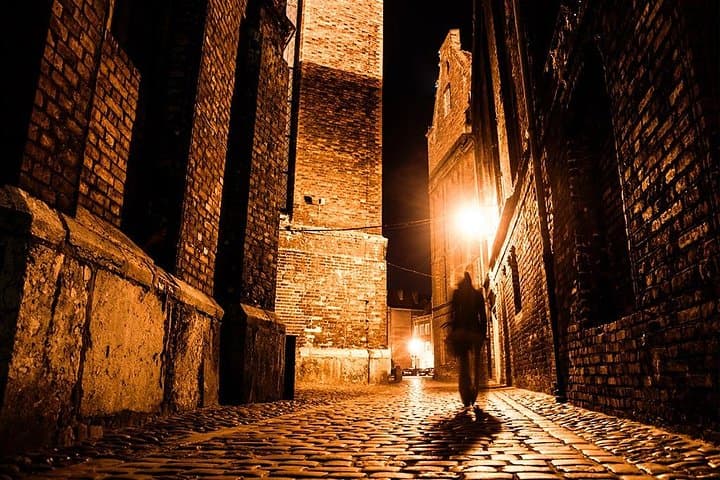
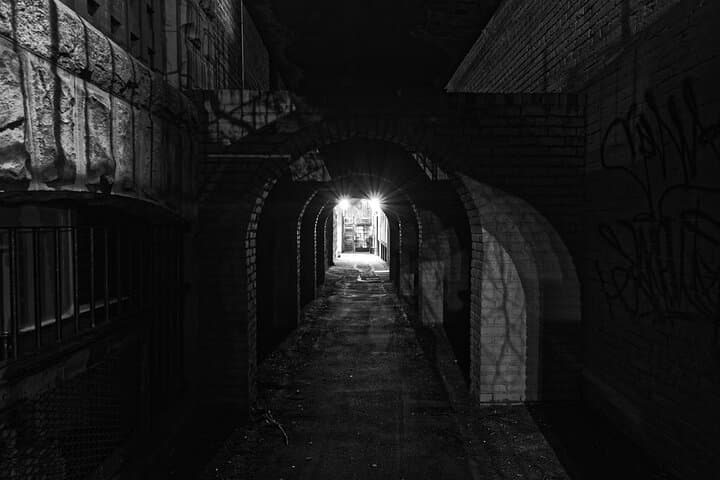


You step out onto Mitre Square and the city narrows: cobbled alleys, old brick facades, and the low hum of modern London pressing around a very different past.
You step out onto Mitre Square and the city narrows: cobbled alleys, old brick facades, and the low hum of modern London pressing around a very different past.
This self-guided audio walk uses 3D sound and a police-inspector narrator to lead you through Whitechapel’s late‑Victorian streets, from Mitre Square past Goulston Street’s graffiti to the Ten Bells on Commercial Street. The script threads history — the 1888 murders and the social conditions of East End London — with place-based detail, pointing out corners where victims were found and stories tied to specific lanes.
Geology plays a minor role here; the route sits on reclaimed marshy ground along the River Thames’ former tidal flats, shaping narrow streets and irregular building lines. Cultural context matters more: this was an area of overcrowded housing, immigrant communities, and rapid industrial change — all factors in the crime’s enduring notoriety.
Practical guidance: download the chapters and offline maps before you leave, carry headphones that block outside noise, and allow 45–100 minutes depending on how many stops you pause at. Wear sturdy shoes—pavements and alleys are uneven—and choose daylight if you prefer clearer context and safer navigation.
Respect the neighborhoods you pass through; many sites are adjacent to private residences, active businesses, and commemorative plaques. The experience combines atmospheric storytelling with factual orientation, letting you move at your own pace through one of London’s most infamous historical corridors.