THE ADVENTURE COLLECTIVE® · Independent discovery and booking for outdoor travel

Attend a private Mayan ceremony at Iximché and walk the plazas of Guatemala’s first capital with a Kaqchikel priest. This 5-hour experience combines archaeology, living ritual and practical guidance for travelers.
Attend a private Mayan ceremony at Iximché and walk the plazas of Guatemala’s first capital with a Kaqchikel priest. This 5-hour experience combines archaeology, living ritual and practical guidance for travelers.
You step from a minivan onto packed-earth paths where wind cuts across low volcanic ridges and the plaza opens like a held breath. Stone platforms rise in stepped squares; the smell of copal and wet earth moves through the air as the priest arranges cloths, candles and offerings. At Iximché, the first capital of the Kaqchikel Maya, a private ceremony can feel deliberate and immediate—ancestral language, gestures toward the four cardinal directions, and an explanation of glyphic and colonial layers woven into the ruined walls.
Verified experiences and guided adventures in the surrounding area.
Operated by ASH TRAVEL · Tecpán Guatemala, Chimaltenango
You step from a minivan onto packed-earth paths where wind cuts across low volcanic ridges and the plaza opens like a held breath. Stone platforms rise in stepped squares; the smell of copal and wet earth moves through the air as the priest arranges cloths, candles and offerings. At Iximché, the first capital of the Kaqchikel Maya, a private ceremony can feel deliberate and immediate—ancestral language, gestures toward the four cardinal directions, and an explanation of glyphic and colonial layers woven into the ruined walls.
Iximché dates to the late 15th century and sits on volcanic highlands west of Antigua. The site’s terraces and defensive earthworks reflect a Postclassic capital later touched by Spanish conquest in the 1520s. Geologically, the highland soils are volcanic and well drained; culturally, the living Kaqchikel community maintains ritual continuity even as guides and archaeologists interpret the stones.
Practically: expect a 5-hour round trip from Antigua or a short drive from Tecpán, with modest walking on uneven surfaces and a few steps to access platforms. Ceremonies are intimate—follow the priest’s lead, ask permission before photographing rituals or offerings, and wear respectful, comfortable clothing (no revealing outfits). Bring water, sun protection, small cash for park fees and priestly offerings, and confirm your pickup the day before. The experience combines archaeology, living tradition and landscape—arrive ready to listen, stand on the margins of action, and leave with clearer context for the rites you witnessed.
easy.
5 hours.
Suitable for most visitors; requires short walks on uneven ground and standing during the ceremony.
No; ceremonies are guided by the priest and an English-speaking guide is usually present to translate key points.
Ask permission before photographing the ceremony—some elements or offerings may be private and off-limits.
The tour lists wheelchair accessibility for main areas, but some platforms and uneven paths may still be challenging—contact the operator ahead of time to discuss needs.
Iximché is roughly a 1–1.5 hour drive from Antigua depending on traffic; the experience is typically a 5-hour activity including transport.
Iximché was established by the Kaqchikel in the late 15th century as a capital; it was a center of conflict during early Spanish conquest in the 1520s.
The site is managed by national authorities—stay on marked paths, avoid leaving offerings in unsuitable places, and respect local ceremonial spaces to minimize impact.
ASH TRAVEL operates guided outdoor trips and adventures with an emphasis on safety, stewardship, and memorable experiences.
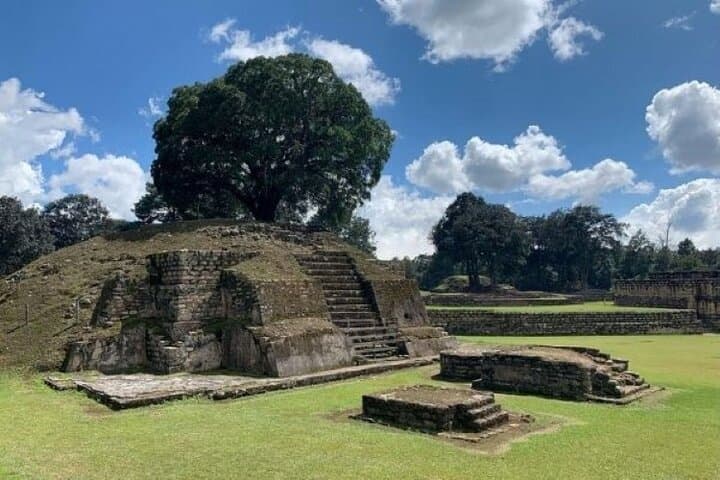
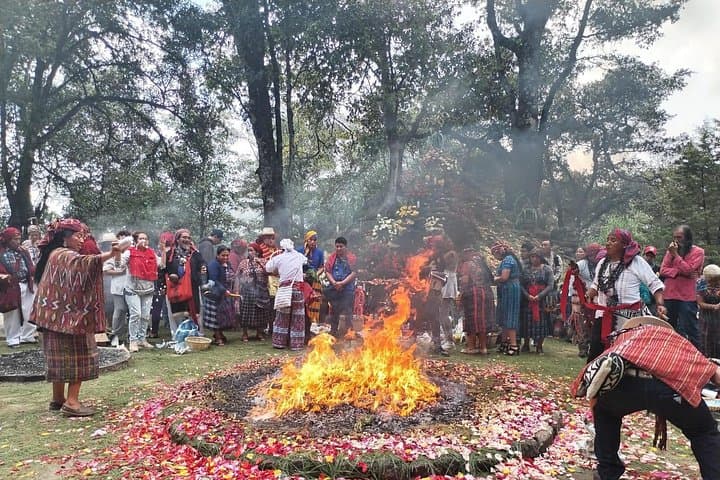
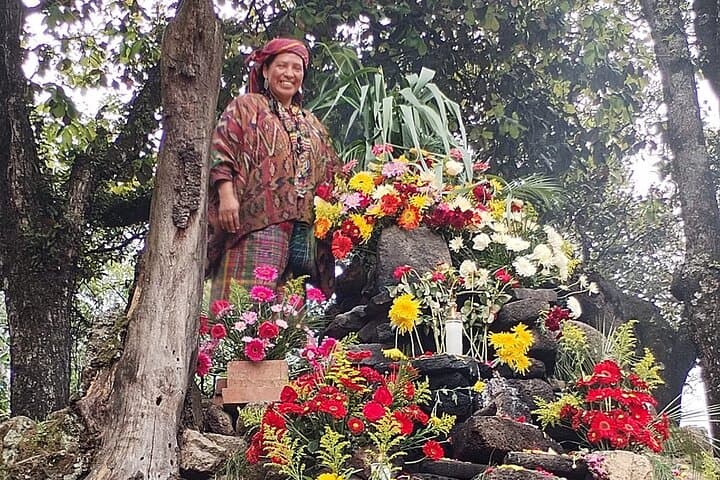
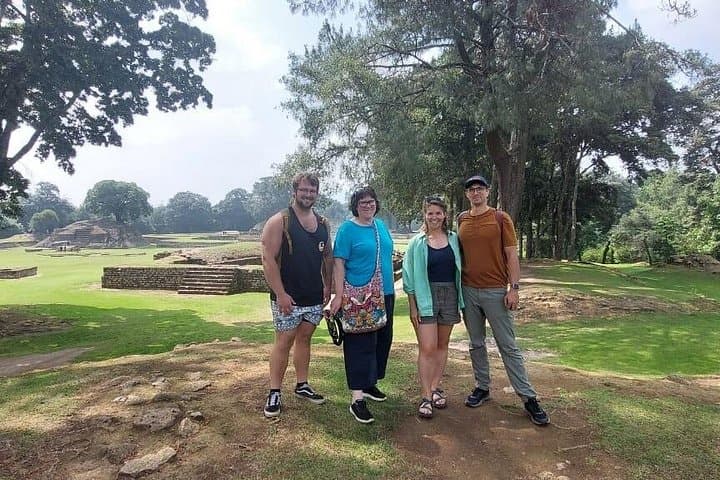
You step from a minivan onto packed-earth paths where wind cuts across low volcanic ridges and the plaza opens like a held breath. Stone platforms rise in stepped squares; the smell of copal and wet earth moves through the air as the priest arranges cloths, candles and offerings. At Iximché, the first capital of the Kaqchikel Maya, a private ceremony can feel deliberate and immediate—ancestral language, gestures toward the four cardinal directions, and an explanation of glyphic and colonial layers woven into the ruined walls.
You step from a minivan onto packed-earth paths where wind cuts across low volcanic ridges and the plaza opens like a held breath. Stone platforms rise in stepped squares; the smell of copal and wet earth moves through the air as the priest arranges cloths, candles and offerings. At Iximché, the first capital of the Kaqchikel Maya, a private ceremony can feel deliberate and immediate—ancestral language, gestures toward the four cardinal directions, and an explanation of glyphic and colonial layers woven into the ruined walls.
Iximché dates to the late 15th century and sits on volcanic highlands west of Antigua. The site’s terraces and defensive earthworks reflect a Postclassic capital later touched by Spanish conquest in the 1520s. Geologically, the highland soils are volcanic and well drained; culturally, the living Kaqchikel community maintains ritual continuity even as guides and archaeologists interpret the stones.
Practically: expect a 5-hour round trip from Antigua or a short drive from Tecpán, with modest walking on uneven surfaces and a few steps to access platforms. Ceremonies are intimate—follow the priest’s lead, ask permission before photographing rituals or offerings, and wear respectful, comfortable clothing (no revealing outfits). Bring water, sun protection, small cash for park fees and priestly offerings, and confirm your pickup the day before. The experience combines archaeology, living tradition and landscape—arrive ready to listen, stand on the margins of action, and leave with clearer context for the rites you witnessed.