THE ADVENTURE COLLECTIVE® · Independent discovery and booking for outdoor travel

Walk the amphitheater steps where Game of Thrones filmed and explore Itálica’s Roman streets just 10 minutes from Seville. This four-hour guided tour pairs imperial history with medieval art at the Monastery of San Isidoro del Campo.
Walk the amphitheater steps where Game of Thrones filmed and explore Itálica’s Roman streets just 10 minutes from Seville. This four-hour guided tour pairs imperial history with medieval art at the Monastery of San Isidoro del Campo.
You step out of the minivan and the air changes—stone and dust, the dry hum of cicadas, and an amphitheater that still remembers applause. The arena’s worn steps slope underfoot; where dragons once stood on screen, you now stand in a Roman city that watched emperors grow into power. The guide gestures to a corridor and the past clicks into place.
Verified experiences and guided adventures in the surrounding area.
Operated by INTURCITY TOURISM GROUP S.L · Santiponce, Andalusia
You step out of the minivan and the air changes—stone and dust, the dry hum of cicadas, and an amphitheater that still remembers applause. The arena’s worn steps slope underfoot; where dragons once stood on screen, you now stand in a Roman city that watched emperors grow into power. The guide gestures to a corridor and the past clicks into place.
Itálica was founded in the aftermath of the Second Punic War and later became the childhood home of emperors Trajan and Hadrian. Its footprint—streets, domus, thermal baths and one of the largest amphitheaters in the Roman world—tells a layered story of Roman urban planning set on the Guadalquivir’s fertile plain. Nearby, the Monastery of San Isidoro del Campo shifts the lens forward to medieval Andalusia, with Mudejar tilework and Gothic vaults that show how cultures folded into each other here.
On the tour you’ll traverse hard-packed Roman avenues, peer at mosaics protected beneath low light, and enter the amphitheater vomitoria that doubled as a TV set. Expect uneven stone underfoot, sudden sun on open terraces, and interpretive stops explaining architecture and filming choices.
Practical guidance: arrive early (meeting in central Seville), bring sun protection and a refillable water bottle, and wear sturdy shoes for cobbled lanes and archaeological surfaces. Photography is allowed in most areas but respect barriers—some mosaics are fragile. The four-hour itinerary includes transport, monument entrance, and multilingual official guides—ideal for history lovers who want a compact, context-rich visit without the long drive.
easy.
4 hours.
Suitable for most fitness levels but requires the ability to walk on uneven, stony ground for several hours.
Yes—entrance to Itálica and the Monastery of San Isidoro del Campo are included in the tour price.
Itálica is roughly a 10–15 minute drive from central Seville; the meeting point is at the Tourist Office door at 09:45 a.m.
Yes—the itinerary is rated physically easy and strollers are allowed on accessible paths, but some areas have steps and uneven ground.
Official guides provide commentary in English, Spanish, French and Italian as noted in the tour inclusions.
Itálica was established in the late 3rd–2nd century BCE and later became the birthplace of emperors Trajan and Hadrian; its urban grid and monumental buildings reflect Roman civic design outside Italy.
Visitor routes are defined to protect delicate mosaics and structures; follow signage and avoid touching archaeological surfaces to support preservation efforts.
INTURCITY TOURISM GROUP S.L operates guided outdoor trips and adventures with an emphasis on safety, stewardship, and memorable experiences.
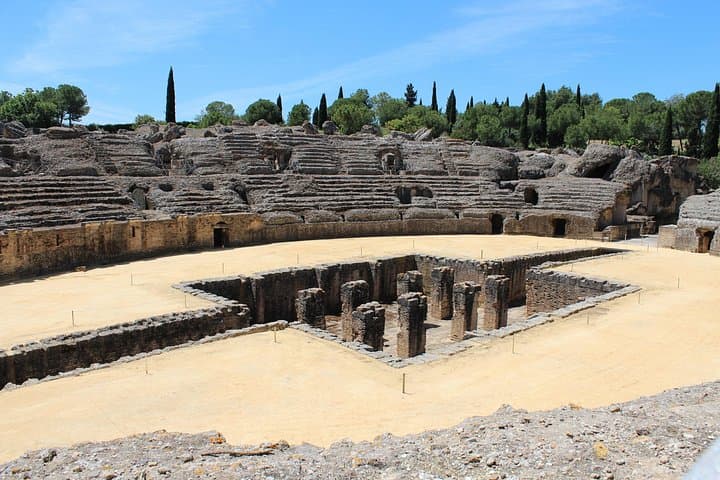
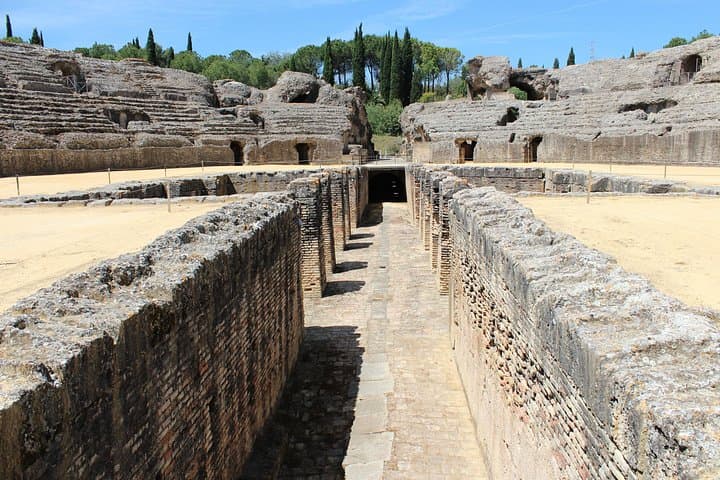
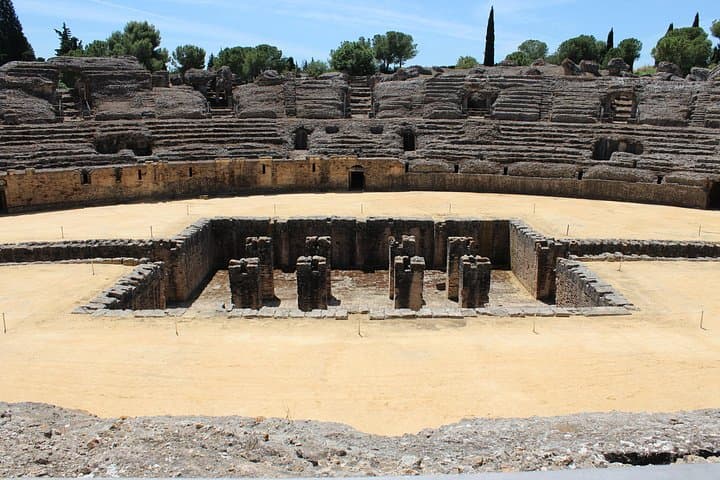
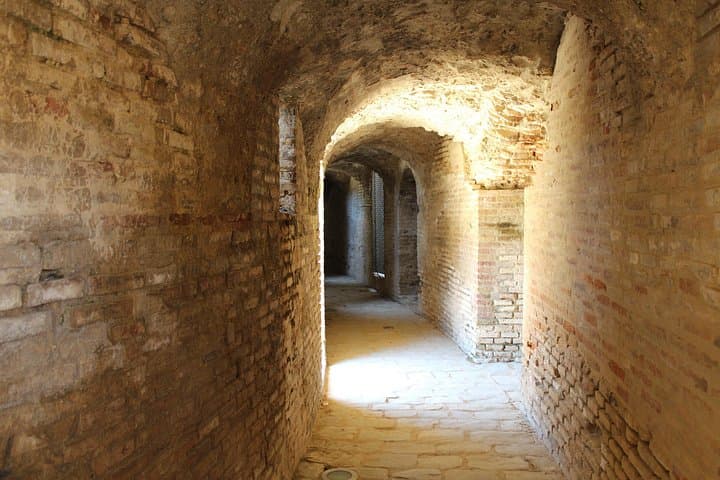
You step out of the minivan and the air changes—stone and dust, the dry hum of cicadas, and an amphitheater that still remembers applause. The arena’s worn steps slope underfoot; where dragons once stood on screen, you now stand in a Roman city that watched emperors grow into power. The guide gestures to a corridor and the past clicks into place.
You step out of the minivan and the air changes—stone and dust, the dry hum of cicadas, and an amphitheater that still remembers applause. The arena’s worn steps slope underfoot; where dragons once stood on screen, you now stand in a Roman city that watched emperors grow into power. The guide gestures to a corridor and the past clicks into place.
Itálica was founded in the aftermath of the Second Punic War and later became the childhood home of emperors Trajan and Hadrian. Its footprint—streets, domus, thermal baths and one of the largest amphitheaters in the Roman world—tells a layered story of Roman urban planning set on the Guadalquivir’s fertile plain. Nearby, the Monastery of San Isidoro del Campo shifts the lens forward to medieval Andalusia, with Mudejar tilework and Gothic vaults that show how cultures folded into each other here.
On the tour you’ll traverse hard-packed Roman avenues, peer at mosaics protected beneath low light, and enter the amphitheater vomitoria that doubled as a TV set. Expect uneven stone underfoot, sudden sun on open terraces, and interpretive stops explaining architecture and filming choices.
Practical guidance: arrive early (meeting in central Seville), bring sun protection and a refillable water bottle, and wear sturdy shoes for cobbled lanes and archaeological surfaces. Photography is allowed in most areas but respect barriers—some mosaics are fragile. The four-hour itinerary includes transport, monument entrance, and multilingual official guides—ideal for history lovers who want a compact, context-rich visit without the long drive.