THE ADVENTURE COLLECTIVE® · Independent discovery and booking for outdoor travel

A full-day private drive from Bled to Istria that pairs olive oil and wine tasting with guided visits to Rovinj’s old town and Pula’s Roman Arena. Expect a 12‑hour cultural road trip with short coastal walks and historic highlights.
A full-day private drive from Bled to Istria that pairs olive oil and wine tasting with guided visits to Rovinj’s old town and Pula’s Roman Arena. Expect a 12‑hour cultural road trip with short coastal walks and historic highlights.
You leave Bled before dawn and the mountains slide away; the karst plateaus flatten, limestone bluffs folding into scrub and olive terraces as you cross into Istria. By mid-morning the Adriatic appears—a bright, impatient ribbon—and the lane narrows toward a small family producer where the smell of crushed olives and oak barrels tells you this region makes things slowly and well.
Verified experiences and guided adventures in the surrounding area.
Operated by Palma Travel DMC · Rovinj, Istria
You leave Bled before dawn and the mountains slide away; the karst plateaus flatten, limestone bluffs folding into scrub and olive terraces as you cross into Istria. By mid-morning the Adriatic appears—a bright, impatient ribbon—and the lane narrows toward a small family producer where the smell of crushed olives and oak barrels tells you this region makes things slowly and well.
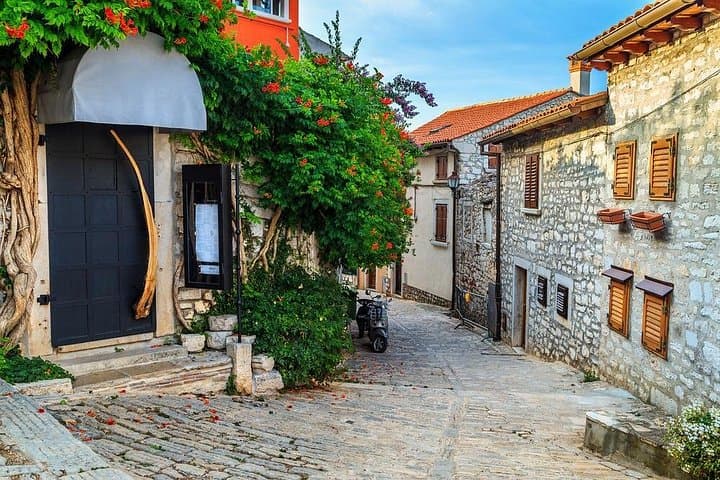
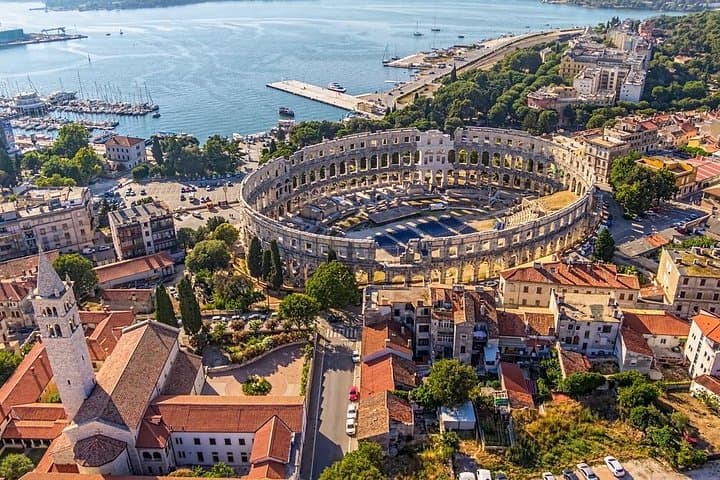
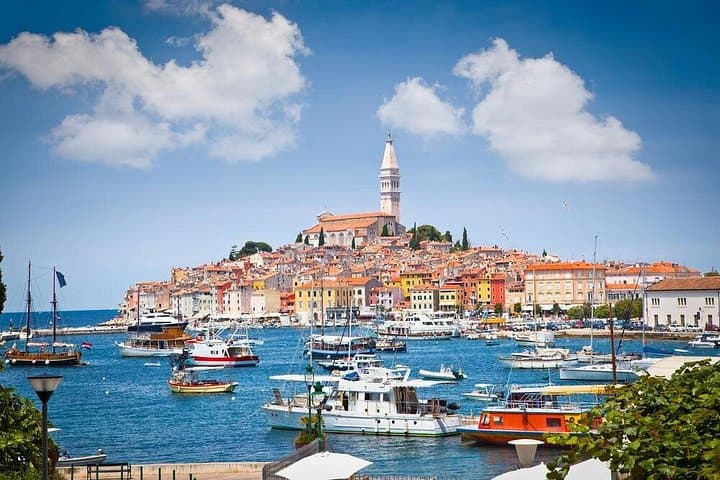
Istria’s coastline bears Roman footprints and Venetian attitudes. Pula’s Arena, one of the Mediterranean’s best-preserved amphitheatres, speaks plainly of the Roman appetite for drama and stone, while Rovinj’s compact old town—built on what was once an island—threads narrow alleys up to the bell tower of St. Euphemia, offering a sweeping harbor view.
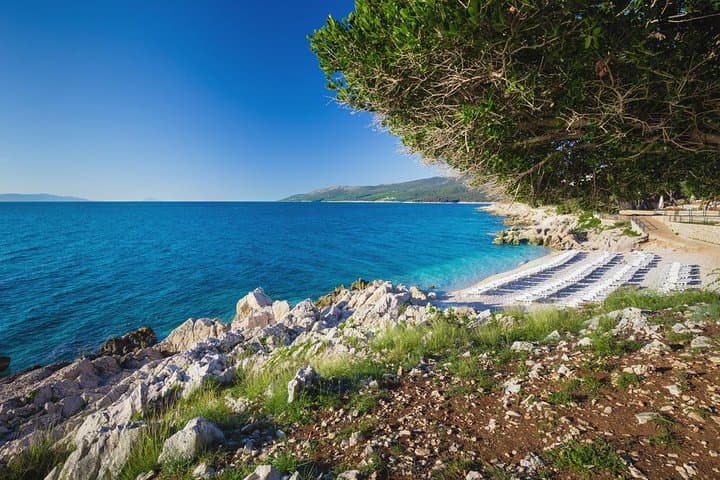
Geologically, Istria is karst: soluble limestone carved into cliffs, caves and sheltered bays that shape both microclimate and cultivation. Culture here is layered—Croatian, Italian, Austro-Hungarian—visible in the food, the language, and the small wineries tending indigenous malvasia and teran grapes.
Practically: this is a long, full day (about 12 hours) with a 3–4 hour initial drive from Bled. Expect short walks on cobbles and steps, tasting notes at a family estate, guided time in Rovinj, and admission to Pula Arena. Bring sturdy shoes, sun protection, a refillable water bottle and photo-ready patience for winding streets. Carry ID (cross-border travel), small local currency or card, and be prepared for a relaxed pace—this is a cultural road day that rewards curiosity more than speed.
easy.
12 hours.
Suitable for most fitness levels; involves short walks, stairs, and standing during tastings
Bring a passport or national ID—border crossings are usually straightforward but identification is required for international travel.
Expect about 3–4 hours each way depending on traffic; the itinerary schedules roughly 12 hours total for the round trip and visits.
Lunch is not listed as included; there is wine and olive oil tasting and typically free time in the towns to purchase a meal.
The Arena has uneven stone and steps; visitors with mobility concerns should inquire ahead since full access can be limited.
Istria has deep Roman roots—Pula’s Arena dates to the 1st century CE—and centuries of Venetian and Austro-Hungarian influence shaped local architecture and cuisine.
Tourism pressures the coastline and small producers; support locally owned wineries and follow leave-no-trace practices on shorelines and archaeological sites.
Palma Travel DMC operates guided outdoor trips and adventures with an emphasis on safety, stewardship, and memorable experiences.
You leave Bled before dawn and the mountains slide away; the karst plateaus flatten, limestone bluffs folding into scrub and olive terraces as you cross into Istria. By mid-morning the Adriatic appears—a bright, impatient ribbon—and the lane narrows toward a small family producer where the smell of crushed olives and oak barrels tells you this region makes things slowly and well.
You leave Bled before dawn and the mountains slide away; the karst plateaus flatten, limestone bluffs folding into scrub and olive terraces as you cross into Istria. By mid-morning the Adriatic appears—a bright, impatient ribbon—and the lane narrows toward a small family producer where the smell of crushed olives and oak barrels tells you this region makes things slowly and well.
Istria’s coastline bears Roman footprints and Venetian attitudes. Pula’s Arena, one of the Mediterranean’s best-preserved amphitheatres, speaks plainly of the Roman appetite for drama and stone, while Rovinj’s compact old town—built on what was once an island—threads narrow alleys up to the bell tower of St. Euphemia, offering a sweeping harbor view.
Geologically, Istria is karst: soluble limestone carved into cliffs, caves and sheltered bays that shape both microclimate and cultivation. Culture here is layered—Croatian, Italian, Austro-Hungarian—visible in the food, the language, and the small wineries tending indigenous malvasia and teran grapes.
Practically: this is a long, full day (about 12 hours) with a 3–4 hour initial drive from Bled. Expect short walks on cobbles and steps, tasting notes at a family estate, guided time in Rovinj, and admission to Pula Arena. Bring sturdy shoes, sun protection, a refillable water bottle and photo-ready patience for winding streets. Carry ID (cross-border travel), small local currency or card, and be prepared for a relaxed pace—this is a cultural road day that rewards curiosity more than speed.