THE ADVENTURE COLLECTIVE® · Independent discovery and booking for outdoor travel

Swap airport queues for a high-speed train, then trade volcanic valleys for a quick flight back. This 3-day Istanbul → Konya → Cappadocia loop packs Seljuk history, underground cities and hiking through Ihlara’s canyon into one seamless itinerary.
Swap airport queues for a high-speed train, then trade volcanic valleys for a quick flight back. This 3-day Istanbul → Konya → Cappadocia loop packs Seljuk history, underground cities and hiking through Ihlara’s canyon into one seamless itinerary.
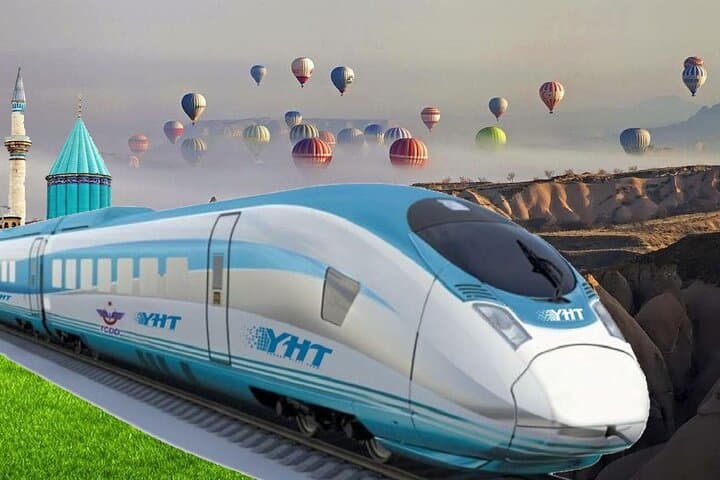
The train slides out of Istanbul before dawn, a ribbon of city lights giving way to farmland, and by mid-afternoon you’re stepping onto Konya’s platform under a wide Anatolian sky. There’s a rhythm to this route—steel rail to silent canyon to balloon-lit morning—that turns a transfer into a travel narrative. Over three days you trade Bosphorus bustle for Seljuk courtyards, then follow river gullies into Cappadocia’s otherworldly valleys before a short evening flight returns you to Istanbul.
Verified experiences and guided adventures in the surrounding area.
Operated by Disgate Tourism Travel Agency, Licance: 13265 · Göreme, Nevşehir
The train slides out of Istanbul before dawn, a ribbon of city lights giving way to farmland, and by mid-afternoon you’re stepping onto Konya’s platform under a wide Anatolian sky. There’s a rhythm to this route—steel rail to silent canyon to balloon-lit morning—that turns a transfer into a travel narrative. Over three days you trade Bosphorus bustle for Seljuk courtyards, then follow river gullies into Cappadocia’s otherworldly valleys before a short evening flight returns you to Istanbul.
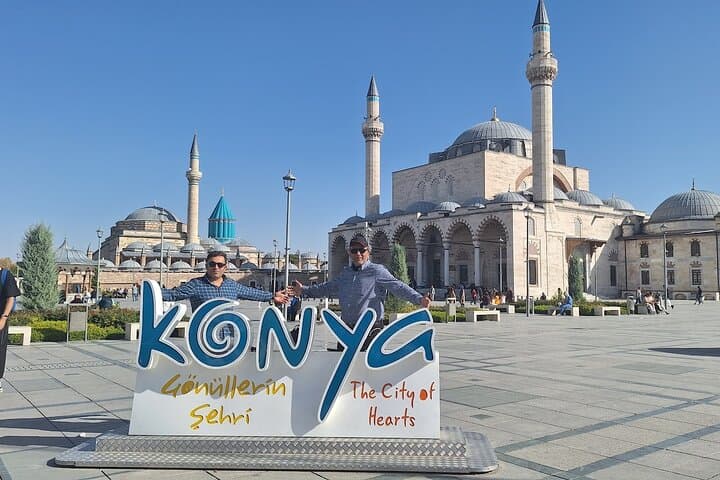
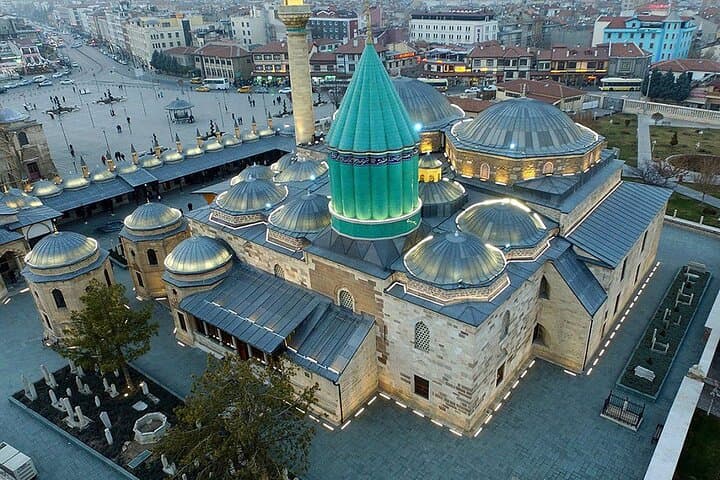
Konya greets you first: domes and minarets, the hushed corridors of the Mevlana Museum where Rumi’s tomb and the swirling theology of the Mevlevi dervishes reframe the day’s calm. The Seljuk legacy—stone portals, Kufic script, tilework—reads like a conversation in carved relief, connecting Anatolia’s medieval builders to today’s cafés selling etli ekmek, Konya’s thin, crisp meat bread.
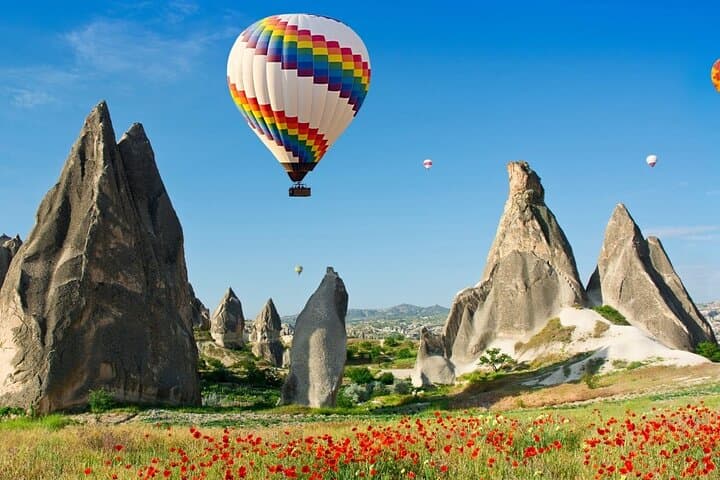
Geology drives Cappadocia’s drama. Millennia of volcanic eruptions left soft tuff plains capped by hard basalt; wind and winter rain have chewed that landscape into fairy chimneys, honeycombed cliff faces and the deep slot of Ihlara Valley. Rivers dare you along shaded trails, cliffs push back with cave churches painted in Byzantine reds and blues, and underground cities like Derinkuyu remind you people once moved below ground when the surface world turned dangerous.
Culturally the region is layered: Hittite, Roman, Byzantine, Seljuk and Ottoman influences show up in pottery techniques in Avanos, in the Selime Monastery hewn into a cliff, and in village life at Sille where stone bridges and water channels still whisper older trade routes.
Practical edge: the tour combines a roughly 4–5 hour high-speed train from Istanbul to Konya, short drives to key sites (Derinkuyu, Ihlara), and a return flight from Nevşehir or Kayseri (~1 hour) to Istanbul. Expect moderate walking: Ihlara’s canyon walk can be up to 14 km if you do it end-to-end, with stair sections and ~100–200 m elevation change; Derinkuyu’s passages are narrow—claustrophobia is a real consideration.
Pack layers: mornings in Cappadocia can be brisk even in summer; sun and wind act independently. Bring sturdy hiking shoes for dusty trails and canyon steps, a daypack, and a refillable water bottle—local cafés are frequent but shade is not. For ballooning, reserve early and plan a pre-dawn pickup; flights depend on weather and are nonrefundable at short notice.
This three-day loop—train, Seljuk Konya, rivers and caves, then skyward balloons and a flight back—reads like Anatolia condensed into motion. It’s cultural history, active terrain, and a geology lesson with a practical timetable: arrive curious, leave with new maps in your head and dust on your boots.
moderate.
3 days (approx.).
Suitable for travelers with regular fitness who can manage stairs, uneven trails and short hikes up to 14 km; not recommended for those with serious mobility issues.
The high-speed train portion typically takes about 4 to 5 hours depending on departure station and specific service; your operator will confirm exact timings and pickup windows.
No—the hot air balloon is an optional upgrade and must be reserved separately; prices and availability depend on season and weather.
Yes, but parents should assess whether children can manage narrow passages and stairways; infant seats and stroller-friendly options are noted for surface sightseeing, but not for underground levels.
Returns normally depart from Nevşehir Kapadokya Airport (NAV) or Kayseri Erkilet Airport (ASR); the operator will advise which airport based on the day and flight schedule.
The tour includes breakfasts and three lunches as described (train lunchbox, local specialties such as etli ekmek and a set casserole in Cappadocia); other meals are at your discretion.
Balloon flights are weather-dependent and refunded or rescheduled by providers; the cancellation policy for the tour allows refunds if the operator cancels due to weather or insufficient travelers—check the specific refund windows.
Konya was the Seljuk capital and a major cultural center in the 12th–13th centuries; Rumi’s Mevlana Museum anchors the city’s spiritual legacy.
Cappadocia’s soft tuff is fragile—stick to marked trails, avoid climbing fairy chimneys, and support local guides who promote sustainable access to cave sites.
Disgate Tourism Travel Agency, Licance: 13265 operates guided outdoor trips and adventures with an emphasis on safety, stewardship, and memorable experiences.
The train slides out of Istanbul before dawn, a ribbon of city lights giving way to farmland, and by mid-afternoon you’re stepping onto Konya’s platform under a wide Anatolian sky. There’s a rhythm to this route—steel rail to silent canyon to balloon-lit morning—that turns a transfer into a travel narrative. Over three days you trade Bosphorus bustle for Seljuk courtyards, then follow river gullies into Cappadocia’s otherworldly valleys before a short evening flight returns you to Istanbul.
The train slides out of Istanbul before dawn, a ribbon of city lights giving way to farmland, and by mid-afternoon you’re stepping onto Konya’s platform under a wide Anatolian sky. There’s a rhythm to this route—steel rail to silent canyon to balloon-lit morning—that turns a transfer into a travel narrative. Over three days you trade Bosphorus bustle for Seljuk courtyards, then follow river gullies into Cappadocia’s otherworldly valleys before a short evening flight returns you to Istanbul.
Konya greets you first: domes and minarets, the hushed corridors of the Mevlana Museum where Rumi’s tomb and the swirling theology of the Mevlevi dervishes reframe the day’s calm. The Seljuk legacy—stone portals, Kufic script, tilework—reads like a conversation in carved relief, connecting Anatolia’s medieval builders to today’s cafés selling etli ekmek, Konya’s thin, crisp meat bread.
Geology drives Cappadocia’s drama. Millennia of volcanic eruptions left soft tuff plains capped by hard basalt; wind and winter rain have chewed that landscape into fairy chimneys, honeycombed cliff faces and the deep slot of Ihlara Valley. Rivers dare you along shaded trails, cliffs push back with cave churches painted in Byzantine reds and blues, and underground cities like Derinkuyu remind you people once moved below ground when the surface world turned dangerous.
Culturally the region is layered: Hittite, Roman, Byzantine, Seljuk and Ottoman influences show up in pottery techniques in Avanos, in the Selime Monastery hewn into a cliff, and in village life at Sille where stone bridges and water channels still whisper older trade routes.
Practical edge: the tour combines a roughly 4–5 hour high-speed train from Istanbul to Konya, short drives to key sites (Derinkuyu, Ihlara), and a return flight from Nevşehir or Kayseri (~1 hour) to Istanbul. Expect moderate walking: Ihlara’s canyon walk can be up to 14 km if you do it end-to-end, with stair sections and ~100–200 m elevation change; Derinkuyu’s passages are narrow—claustrophobia is a real consideration.
Pack layers: mornings in Cappadocia can be brisk even in summer; sun and wind act independently. Bring sturdy hiking shoes for dusty trails and canyon steps, a daypack, and a refillable water bottle—local cafés are frequent but shade is not. For ballooning, reserve early and plan a pre-dawn pickup; flights depend on weather and are nonrefundable at short notice.
This three-day loop—train, Seljuk Konya, rivers and caves, then skyward balloons and a flight back—reads like Anatolia condensed into motion. It’s cultural history, active terrain, and a geology lesson with a practical timetable: arrive curious, leave with new maps in your head and dust on your boots.