THE ADVENTURE COLLECTIVE® · Independent discovery and booking for outdoor travel

Two days from Bishkek deliver Silk Road history, red sandstone canyons, a lakeside yurt stay and a beginner-friendly horseback ride along Issyk-Kul’s windswept shore. This private itinerary blends geology and culture with practical pacing for active travelers.
Two days from Bishkek deliver Silk Road history, red sandstone canyons, a lakeside yurt stay and a beginner-friendly horseback ride along Issyk-Kul’s windswept shore. This private itinerary blends geology and culture with practical pacing for active travelers.
A chill wind off Issyk-Kul pushes across the steppe as a minivan eases away from Bishkek and the skyline of the Tien Shan opens up.
Verified experiences and guided adventures in the surrounding area.
Operated by Datka Travel · Bokonbayevo, Issyk-Kul Region
A chill wind off Issyk-Kul pushes across the steppe as a minivan eases away from Bishkek and the skyline of the Tien Shan opens up.
By mid-morning the Burana Tower looms—its sun-bleached bricks and balbals telling a Silk Road chapter in stone. From there the route cuts through Boom Gorge to Konorchek’s red sandstone fins, where narrow passages channel light like a canyon theater. The next scene is the lake: a vast, high-altitude bowl of blue edged by yurt camps where felt and wood meet open air.
Geology here is stark: wind-sculpted conglomerates and layered sandstone create the canyons’ knife-edge ridges; glacial and riverine processes shaped the basin that holds Issyk-Kul, a saline lake that never freezes thanks to its depth and local climate. Culturally, this corridor threads nomadic Kyrgyz traditions—yurts, horse tack, and kumis—into a Silk Road heritage centered on Burana and nearby Balasagun artifacts.
Practical guidance: plan two days with private transport and a bilingual guide, expect a few easy-to-moderate hikes (short canyon walks and viewpoints) and a 1–2 hour horseback ride suitable for beginners with basic instruction.
Bring layered clothing for lake winds, sturdy shoes for uneven canyon trails, sunscreen and a brimmed hat for open plains, and a small daypack for water and camera. Yurt accommodations are simple but comfortable; sleep systems are provided. Flights of stairs, loose scree, and midday sun are the main on-trail considerations—hydrate, pace the canyon descents, and respect camp rules about fires and waste to keep this landscape intact.
moderate.
2 days.
Suitable for travelers with basic fitness who can walk uneven terrain for short periods and ride a horse for 1–2 hours.
Hikes through Konorchek and Skazka are short, mostly on well-worn paths with some loose rock; moderately fit travelers can complete them without special equipment.
No—guides provide basic instruction and calm horses are used; tell the operator your comfort level so they can match you appropriately.
Yurts are traditional felt-and-wood tents with basic beds, blankets, and communal dining; many camps provide heated facilities and shared washrooms.
Issyk-Kul sits around 1,600–1,900 m elevation—mild for most visitors; stay hydrated and avoid heavy exertion on the first day if you’re sensitive to altitude.
Burana Tower marks the medieval city of Balasagun on the Silk Road; nearby museums display relics and balbals—stone markers of Turkic nomads.
The canyons’ soft sandstone and steppe vegetation are fragile—stay on trails, pack out waste, and support local camps that follow low-impact practices.
Datka Travel operates guided outdoor trips and adventures with an emphasis on safety, stewardship, and memorable experiences.

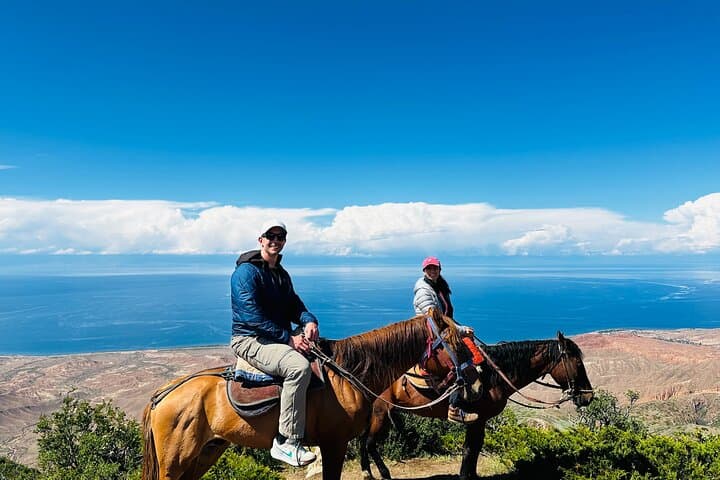


A chill wind off Issyk-Kul pushes across the steppe as a minivan eases away from Bishkek and the skyline of the Tien Shan opens up.
A chill wind off Issyk-Kul pushes across the steppe as a minivan eases away from Bishkek and the skyline of the Tien Shan opens up.
By mid-morning the Burana Tower looms—its sun-bleached bricks and balbals telling a Silk Road chapter in stone. From there the route cuts through Boom Gorge to Konorchek’s red sandstone fins, where narrow passages channel light like a canyon theater. The next scene is the lake: a vast, high-altitude bowl of blue edged by yurt camps where felt and wood meet open air.
Geology here is stark: wind-sculpted conglomerates and layered sandstone create the canyons’ knife-edge ridges; glacial and riverine processes shaped the basin that holds Issyk-Kul, a saline lake that never freezes thanks to its depth and local climate. Culturally, this corridor threads nomadic Kyrgyz traditions—yurts, horse tack, and kumis—into a Silk Road heritage centered on Burana and nearby Balasagun artifacts.
Practical guidance: plan two days with private transport and a bilingual guide, expect a few easy-to-moderate hikes (short canyon walks and viewpoints) and a 1–2 hour horseback ride suitable for beginners with basic instruction.
Bring layered clothing for lake winds, sturdy shoes for uneven canyon trails, sunscreen and a brimmed hat for open plains, and a small daypack for water and camera. Yurt accommodations are simple but comfortable; sleep systems are provided. Flights of stairs, loose scree, and midday sun are the main on-trail considerations—hydrate, pace the canyon descents, and respect camp rules about fires and waste to keep this landscape intact.