THE ADVENTURE COLLECTIVE® · Independent discovery and booking for outdoor travel

A compact 15-day itinerary that pairs high-altitude trekking with a technical summit of Island Peak (Imja Tse). Expect glacier travel, a roped summit slope and panoramic Khumbu views, with tea-house approach nights and tented high camps.
A compact 15-day itinerary that pairs high-altitude trekking with a technical summit of Island Peak (Imja Tse). Expect glacier travel, a roped summit slope and panoramic Khumbu views, with tea-house approach nights and tented high camps.
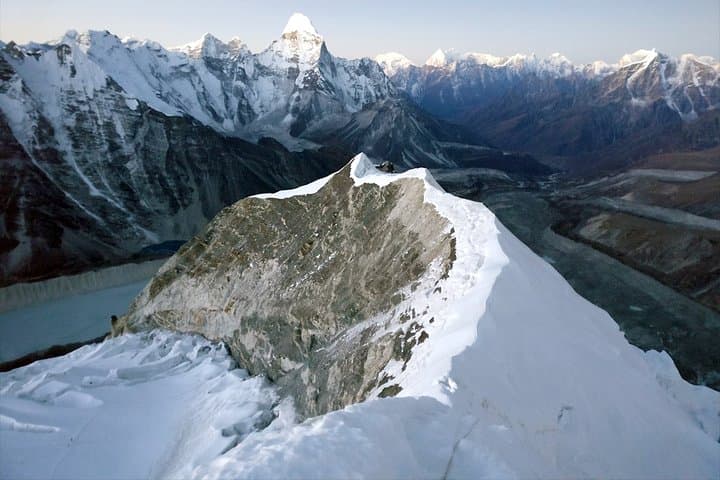
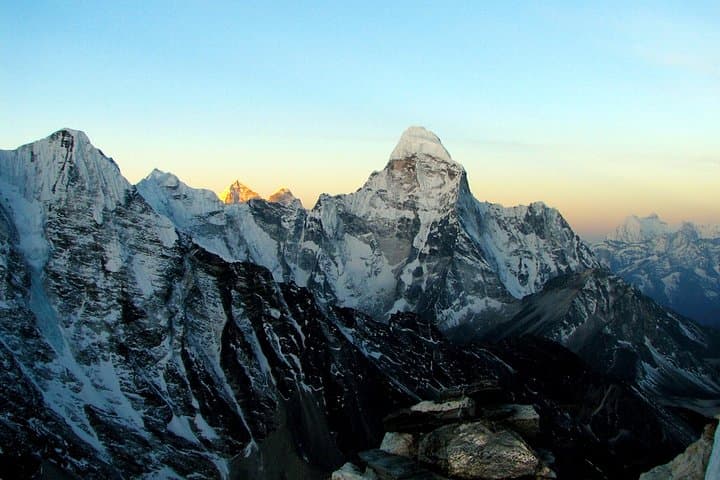
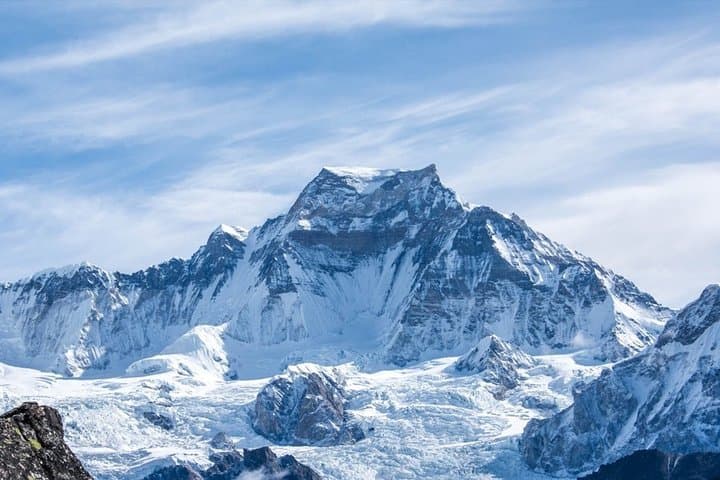
A thin light brushes the granite ribs of Imja Tse as climbers shoulder packs on the moraine below. Morning wind pushes cold air across the high amphitheater of the Khumbu; prayer flags snap, and the route up Island Peak rises like a natural stair to a white knife-edge that frames Ama Dablam and the south face of Lhotse.
Verified experiences and guided adventures in the surrounding area.
Operated by Alpine Club of Himalaya · Chhukung, Province No. 1
A thin light brushes the granite ribs of Imja Tse as climbers shoulder packs on the moraine below. Morning wind pushes cold air across the high amphitheater of the Khumbu; prayer flags snap, and the route up Island Peak rises like a natural stair to a white knife-edge that frames Ama Dablam and the south face of Lhotse.
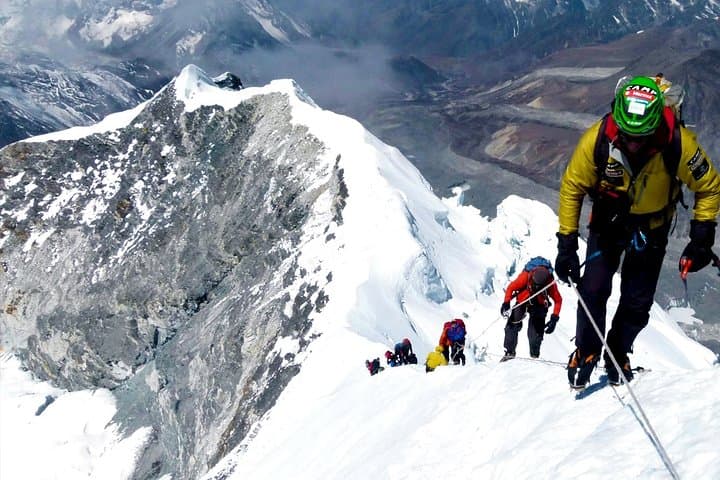
Island Peak (Imja Tse) sits at the head of the Chhukung Valley in Sagarmatha National Park, an area shaped by recent glaciation and active uplift along the Himalayan thrust. The Sherpa villages along the trail—Namche, Tengboche, Dingboche and Chhukung—hold centuries of Buddhist practice and high-altitude pastoral life. The climb itself mixes moraine walking, glacier travel and a steep 40–45° snow/ice slope near the summit that requires fixed ropes.
Expect multi-day trekking to acclimatize, tea-house nights on approach, then tented high camps and roped glacier travel for the summit push. Weather can flip quickly; clear mornings give jaw-dropping panoramas, storms close routes. Guides will fit crampons and fix ropes on the final slope; crevasses demand disciplined rope techniques.
Practical guidance: train with long uphill days and weighted packs, practice crampon and ice-axe use in advance, and plan for cold nights—down layers and a good sleeping system are essential. Hydrate and eat consistently to aid acclimatization. Timing matters: early summit starts reduce exposure to afternoon wind and slope softening. With careful preparation and respect for altitude, Island Peak is an attainable Himalayan summit that rewards effort with raw, high-mountain views.
challenging.
15 days.
Requires high aerobic fitness, experience with multi-day trekking, and previous exposure to 4000–5000m+ environments
Yes—this short itinerary expects prior mountaineering experience or guided instruction in crampon, ice-axe use and basic rope travel; novices should take introductory courses first.
Pre-monsoon (spring: March–May) and post-monsoon (autumn: late September–November) offer the most stable weather and clear views.
The final glacier and snow slope reaches about 40–45°, with fixed ropes; it is technically moderate but exposed and requires confident crampon and rope skills.
Climbers need a Sagarmatha National Park entry permit and an Island Peak climbing permit; permits are handled by the operator on most packaged trips.
The Khumbu has long been inhabited by Sherpa communities who shifted to high-altitude pastoralism and adopted Tibetan Buddhism; Sagarmatha National Park is a UNESCO site protecting both culture and landscape.
Glacial retreat and growing trekking waste are local concerns—carry out rubbish where possible, use operator-managed waste programs and respect water sources and prayer sites.
Alpine Club of Himalaya operates guided outdoor trips and adventures with an emphasis on safety, stewardship, and memorable experiences.
A thin light brushes the granite ribs of Imja Tse as climbers shoulder packs on the moraine below. Morning wind pushes cold air across the high amphitheater of the Khumbu; prayer flags snap, and the route up Island Peak rises like a natural stair to a white knife-edge that frames Ama Dablam and the south face of Lhotse.
A thin light brushes the granite ribs of Imja Tse as climbers shoulder packs on the moraine below. Morning wind pushes cold air across the high amphitheater of the Khumbu; prayer flags snap, and the route up Island Peak rises like a natural stair to a white knife-edge that frames Ama Dablam and the south face of Lhotse.
Island Peak (Imja Tse) sits at the head of the Chhukung Valley in Sagarmatha National Park, an area shaped by recent glaciation and active uplift along the Himalayan thrust. The Sherpa villages along the trail—Namche, Tengboche, Dingboche and Chhukung—hold centuries of Buddhist practice and high-altitude pastoral life. The climb itself mixes moraine walking, glacier travel and a steep 40–45° snow/ice slope near the summit that requires fixed ropes.
Expect multi-day trekking to acclimatize, tea-house nights on approach, then tented high camps and roped glacier travel for the summit push. Weather can flip quickly; clear mornings give jaw-dropping panoramas, storms close routes. Guides will fit crampons and fix ropes on the final slope; crevasses demand disciplined rope techniques.
Practical guidance: train with long uphill days and weighted packs, practice crampon and ice-axe use in advance, and plan for cold nights—down layers and a good sleeping system are essential. Hydrate and eat consistently to aid acclimatization. Timing matters: early summit starts reduce exposure to afternoon wind and slope softening. With careful preparation and respect for altitude, Island Peak is an attainable Himalayan summit that rewards effort with raw, high-mountain views.