THE ADVENTURE COLLECTIVE® · Independent discovery and booking for outdoor travel

A classic Himalayan objective, Island Peak combines Everest-region trekking with a short technical summit at 6,160 m. This 20-day itinerary builds acclimatization before a roped glacier ascent—ideal for climbers preparing for higher objectives.
A classic Himalayan objective, Island Peak combines Everest-region trekking with a short technical summit at 6,160 m. This 20-day itinerary builds acclimatization before a roped glacier ascent—ideal for climbers preparing for higher objectives.
A thin morning light slides across the Khumbu as prayer flags flutter above a line of loaded duffels—this is the cadence of an Island Peak expedition. You fly into Lukla, trade the hum of Kathmandu for stone teahouses, and begin walking into an environment where glaciers shape the skyline and wind chisels the ridgelines.
Verified experiences and guided adventures in the surrounding area.
Operated by Dream Himalaya Adventures Pvt Ltd · Chhukung, Province No. 1
A thin morning light slides across the Khumbu as prayer flags flutter above a line of loaded duffels—this is the cadence of an Island Peak expedition. You fly into Lukla, trade the hum of Kathmandu for stone teahouses, and begin walking into an environment where glaciers shape the skyline and wind chisels the ridgelines.
The route stitches together classic Everest-Circuit acclimatization—Namche Bazaar, Tengboche, Lobuche—before turning toward Chhukung and Island Peak base camp. Geologically the massif is part of the high Himalaya: metamorphic rock, moraine fields and active glacial ice define the last kilometres. Culturally the trail crosses Sherpa villages and gompas, where mountaineering and Buddhist practice coexist and local histories are printed in stone mani walls and monastery murals.
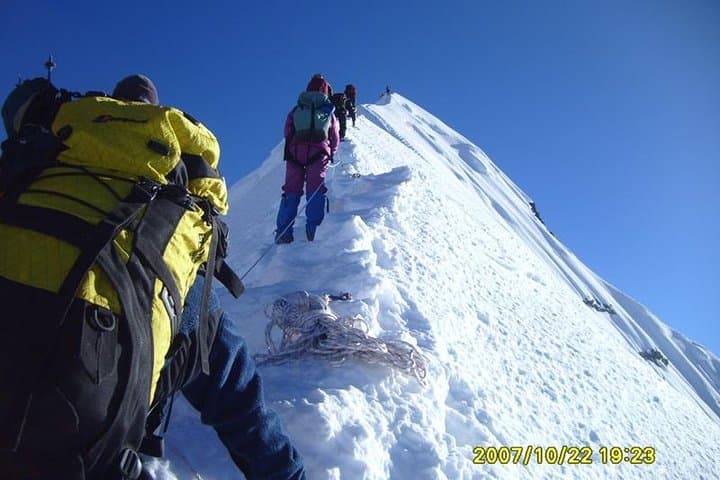
Expect sustained altitude gain—trekking up to 6,160 m with key climbs on Cho-La Pass (~5,330 m) and Gokyo Ri (~5,360 m) en route for acclimatization. Summit day is a mixed-ice ascent: fixed ropes, crampons and glacier travel on a 600–800 m technical pitch from high camp. Daily hiking ranges 3–8 hours; several full acclimatization days are built in.
Practical guidance: prepare with months of aerobic and weighted-hike training, bring a layered clothing system and a 4–5 L hydration plan, and travel with a guide experienced in alpine ropework. Weather windows open most reliably in pre-monsoon (April–May) and post-monsoon (September–November); monsoon brings unstable snow and poor visibility. If you want a high-altitude objective that blends classic Himalayan trekking with a short technical summit, Island Peak is a rigorous, deliverable step toward bigger mountains.
challenging.
20 days.
Strong aerobic fitness, endurance for 6–10 hour trekking days at altitude, and prior multi-day hiking experience; tailored mountaineering training recommended.
Some prior experience with steep snow and basic rope techniques is strongly recommended; guided teams will coach climbers but technical comfort with crampons and an ice axe improves summit chances.
Pre-monsoon (April–May) and post-monsoon (September–November) offer the most stable weather and clear views; monsoon (June–August) brings heavy snow and poor visibility.
You’ll need the Island Peak (Imja Tse) climbing permit plus Sagarmatha National Park/Conservation fees—these are typically arranged by your operator and paid before departure.
This 20-day itinerary builds multiple acclimatization stops (Namche, Tengboche, Dingboche/Gorakshep and a rest day at Chhukung) and includes shorter summit practice climbs to reduce AMS risk.
The region is central to Sherpa culture and modern Himalayan mountaineering; Island Peak was named by the 1953 British expedition as it resembles an island in a sea of ice.
Trek responsibly: carry out all non-biodegradable waste, use treated water, and support lodges that follow local waste-management practices; permits fund park conservation.
Dream Himalaya Adventures Pvt Ltd operates guided outdoor trips and adventures with an emphasis on safety, stewardship, and memorable experiences.


A thin morning light slides across the Khumbu as prayer flags flutter above a line of loaded duffels—this is the cadence of an Island Peak expedition. You fly into Lukla, trade the hum of Kathmandu for stone teahouses, and begin walking into an environment where glaciers shape the skyline and wind chisels the ridgelines.
A thin morning light slides across the Khumbu as prayer flags flutter above a line of loaded duffels—this is the cadence of an Island Peak expedition. You fly into Lukla, trade the hum of Kathmandu for stone teahouses, and begin walking into an environment where glaciers shape the skyline and wind chisels the ridgelines.
The route stitches together classic Everest-Circuit acclimatization—Namche Bazaar, Tengboche, Lobuche—before turning toward Chhukung and Island Peak base camp. Geologically the massif is part of the high Himalaya: metamorphic rock, moraine fields and active glacial ice define the last kilometres. Culturally the trail crosses Sherpa villages and gompas, where mountaineering and Buddhist practice coexist and local histories are printed in stone mani walls and monastery murals.
Expect sustained altitude gain—trekking up to 6,160 m with key climbs on Cho-La Pass (~5,330 m) and Gokyo Ri (~5,360 m) en route for acclimatization. Summit day is a mixed-ice ascent: fixed ropes, crampons and glacier travel on a 600–800 m technical pitch from high camp. Daily hiking ranges 3–8 hours; several full acclimatization days are built in.
Practical guidance: prepare with months of aerobic and weighted-hike training, bring a layered clothing system and a 4–5 L hydration plan, and travel with a guide experienced in alpine ropework. Weather windows open most reliably in pre-monsoon (April–May) and post-monsoon (September–November); monsoon brings unstable snow and poor visibility. If you want a high-altitude objective that blends classic Himalayan trekking with a short technical summit, Island Peak is a rigorous, deliverable step toward bigger mountains.