THE ADVENTURE COLLECTIVE® · Independent discovery and booking for outdoor travel

Board a traditional trajinera and glide into Xochimilco’s canals to visit the Island of the Dolls — a small, haunting site built from thousands of donated dolls. This private tour combines calm waterways, chinampa history, and a guide-led entry to one of Mexico City’s most mysterious attractions.
Board a traditional trajinera and glide into Xochimilco’s canals to visit the Island of the Dolls — a small, haunting site built from thousands of donated dolls. This private tour combines calm waterways, chinampa history, and a guide-led entry to one of Mexico City’s most mysterious attractions.
You push off from a wooden embarcadero, the trajinera’s flat hull cutting through green-brown water while papery reeds brush the boat’s edge. The canals of Xochimilco open wide, houses and chinampa gardens sliding past like pages in a slow-moving book. Ahead, a cluster of dolls hangs from trees and poles, their glassy eyes facing the same sky — curious, weathered, and unabashedly eerie.
Verified experiences and guided adventures in the surrounding area.
Operated by LIVELIZU · Mexico City, Mexico City
You push off from a wooden embarcadero, the trajinera’s flat hull cutting through green-brown water while papery reeds brush the boat’s edge. The canals of Xochimilco open wide, houses and chinampa gardens sliding past like pages in a slow-moving book. Ahead, a cluster of dolls hangs from trees and poles, their glassy eyes facing the same sky — curious, weathered, and unabashedly eerie.
The Island of the Dolls (Isla de las Muñecas) grew from the story of Don Julián Santana, a recluse who began collecting dolls mid-20th century to honor a girl said to have drowned in the canal. Over decades the island amassed thousands of dolls brought by visitors; many are worn, some are foreign-made, and all contribute to a local folklore that mixes grief, devotion, and spectacle.
Geologically these canals sit on an ancient lakebed; the chinampa system — raised, fertile garden plots built on shallow lake marshes — sustains the area’s agriculture and wildlife. Culturally, Xochimilco is a living reminder of pre-Hispanic land management and a modern recreational hub where mariachis, food stalls, and trajineras converge.
Practically: this private tour runs about 3.5–4 hours, includes round-trip trajinera transport and island entry, and commonly provides bilingual guides and snacks. Mornings are calmer for photos and quieter canals; bring sun protection, insect repellent, and a secure bag for cameras. Respect the dolls and private chinampas, and be prepared for brief walking on uneven surfaces at the embarcadero. For a compact, singularly strange cultural-ecological experience, this trip balances easy, accessible travel with persistent, uncanny history.
easy.
3.5–4 hours.
Suitable for most fitness levels; requires short, gentle walks at embarkation points and comfortable sitting on a boat.
The island’s dolls can be unsettling; many families visit during daylight and children are common—but consider your child’s sensitivity to eerie displays.
This private tour includes round-trip trajinera transport to the island; pick-up from central points like the Angel of Independence can be arranged for an extra fee.
The tour lasts about 3.5–4 hours (210–240 minutes), which covers trajinera time, island exploration, and snacks with your guide.
Many trajineras and tour services offer wheelchair-accessible options and the operator lists wheelchair and stroller accessibility—confirm specifics when booking.
Xochimilco’s canals are part of a pre-Hispanic chinampa system and were later recognized for their cultural landscape; Don Julián Santana’s decades-long effort to ornament the island created the modern legend of the dolls.
Xochimilco faces water quality and urbanization pressures; many local groups work on chinampa restoration and species protection, and visitors are asked to minimize waste and disturbance.
LIVELIZU operates guided outdoor trips and adventures with an emphasis on safety, stewardship, and memorable experiences.


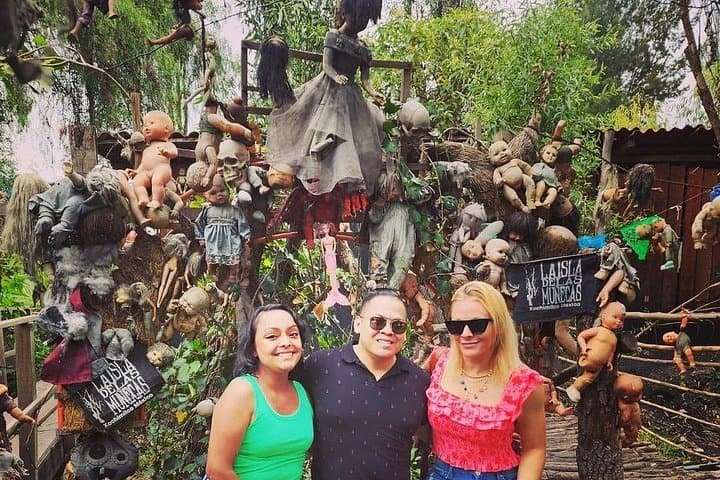

You push off from a wooden embarcadero, the trajinera’s flat hull cutting through green-brown water while papery reeds brush the boat’s edge. The canals of Xochimilco open wide, houses and chinampa gardens sliding past like pages in a slow-moving book. Ahead, a cluster of dolls hangs from trees and poles, their glassy eyes facing the same sky — curious, weathered, and unabashedly eerie.
You push off from a wooden embarcadero, the trajinera’s flat hull cutting through green-brown water while papery reeds brush the boat’s edge. The canals of Xochimilco open wide, houses and chinampa gardens sliding past like pages in a slow-moving book. Ahead, a cluster of dolls hangs from trees and poles, their glassy eyes facing the same sky — curious, weathered, and unabashedly eerie.
The Island of the Dolls (Isla de las Muñecas) grew from the story of Don Julián Santana, a recluse who began collecting dolls mid-20th century to honor a girl said to have drowned in the canal. Over decades the island amassed thousands of dolls brought by visitors; many are worn, some are foreign-made, and all contribute to a local folklore that mixes grief, devotion, and spectacle.
Geologically these canals sit on an ancient lakebed; the chinampa system — raised, fertile garden plots built on shallow lake marshes — sustains the area’s agriculture and wildlife. Culturally, Xochimilco is a living reminder of pre-Hispanic land management and a modern recreational hub where mariachis, food stalls, and trajineras converge.
Practically: this private tour runs about 3.5–4 hours, includes round-trip trajinera transport and island entry, and commonly provides bilingual guides and snacks. Mornings are calmer for photos and quieter canals; bring sun protection, insect repellent, and a secure bag for cameras. Respect the dolls and private chinampas, and be prepared for brief walking on uneven surfaces at the embarcadero. For a compact, singularly strange cultural-ecological experience, this trip balances easy, accessible travel with persistent, uncanny history.