THE ADVENTURE COLLECTIVE® · Independent discovery and booking for outdoor travel

Four days of speedboat crossings, lava-tunnel snorkeling and close-up encounters with giant tortoises across Isabela and Santa Cruz. Practical tips on when to go, what to pack, and how to get the most from the Galápagos’ marine and terrestrial highlights.
Four days of speedboat crossings, lava-tunnel snorkeling and close-up encounters with giant tortoises across Isabela and Santa Cruz. Practical tips on when to go, what to pack, and how to get the most from the Galápagos’ marine and terrestrial highlights.
You step off the small speedboat into a light that feels almost tactile — Pacific sun pressing on black lava, gulls cutting arcs overhead, and the ocean breathing against volcanic shorelines. Over four days this island-hopping itinerary stitches together the raw, immediate landscapes of Isabela and Santa Cruz: shallow lagoons, lava-tunnel reefs, and dusty trails that lead to tortoise habitats.
Verified experiences and guided adventures in the surrounding area.
You step off the small speedboat into a light that feels almost tactile — Pacific sun pressing on black lava, gulls cutting arcs overhead, and the ocean breathing against volcanic shorelines. Over four days this island-hopping itinerary stitches together the raw, immediate landscapes of Isabela and Santa Cruz: shallow lagoons, lava-tunnel reefs, and dusty trails that lead to tortoise habitats.
Geology here is recent and blunt — shield volcanoes and cooled pahoehoe flows shape coves and natural arches like Los Tuneles on Isabela, where underwater tunnels form clear, current-swept snorkeling channels. Culture is subtle: small fishing villages, crab-scarred docks, and the local guides who double as naturalists, translating the islands’ role in Darwin’s work and Ecuadorian conservation policy.
Expect close wildlife encounters — giant tortoises grazing in reserve paddocks, marine iguanas sunning on lava, and blue-footed boobies diving nearby. The Charles Darwin Research Station on Santa Cruz provides context: captive breeding, invasive-species control, and the story of Lonesome George.
Practical guidance: boat transfers between islands take a few hours and can be bouncy; plan for seasickness prevention and waterproof bags. Snorkeling at Los Tuneles and Concha Perla exposes you to strong currents and cold upwellings — basic swim competence is required. Trails are short and rocky rather than steep, so sturdy water shoes and layered sun protection are more useful than heavy hiking boots. Bring reef-safe sunscreen, a reusable water bottle, and patience — schedules and weather can shift, but the rewards are immediate: clear water, sculpted rock, and animals that largely ignore you if you give them space.
moderate.
4 days.
Moderately fit — should be comfortable with short rocky walks, repeated snorkeling sessions, and a few hours on open boats.
Visitors must pay the Galápagos National Park entrance fee on arrival to the islands — usually handled at the airport or by your operator.
Water temps range roughly 18–25°C (64–77°F) depending on season and upwelling; a thin wetsuit or shorty can add comfort for longer swims.
Most island-hopping packages include arrival pickup at Baltra and the boat transfers noted in the itinerary, but confirm specifics when booking.
Yes, if you’re comfortable in open water; guides choose sheltered spots when currents are strong, but basic swim ability is required.
The islands were central to Charles Darwin’s development of evolutionary theory; the Charles Darwin Research Station on Santa Cruz continues breeding and research programs.
The Galápagos has strict visitor rules, active invasive species eradication, and limits on day-trip numbers; choose reef-safe products and follow guide instructions to minimize impact.
You step off the small speedboat into a light that feels almost tactile — Pacific sun pressing on black lava, gulls cutting arcs overhead, and the ocean breathing against volcanic shorelines. Over four days this island-hopping itinerary stitches together the raw, immediate landscapes of Isabela and Santa Cruz: shallow lagoons, lava-tunnel reefs, and dusty trails that lead to tortoise habitats.
You step off the small speedboat into a light that feels almost tactile — Pacific sun pressing on black lava, gulls cutting arcs overhead, and the ocean breathing against volcanic shorelines. Over four days this island-hopping itinerary stitches together the raw, immediate landscapes of Isabela and Santa Cruz: shallow lagoons, lava-tunnel reefs, and dusty trails that lead to tortoise habitats.
Geology here is recent and blunt — shield volcanoes and cooled pahoehoe flows shape coves and natural arches like Los Tuneles on Isabela, where underwater tunnels form clear, current-swept snorkeling channels. Culture is subtle: small fishing villages, crab-scarred docks, and the local guides who double as naturalists, translating the islands’ role in Darwin’s work and Ecuadorian conservation policy.
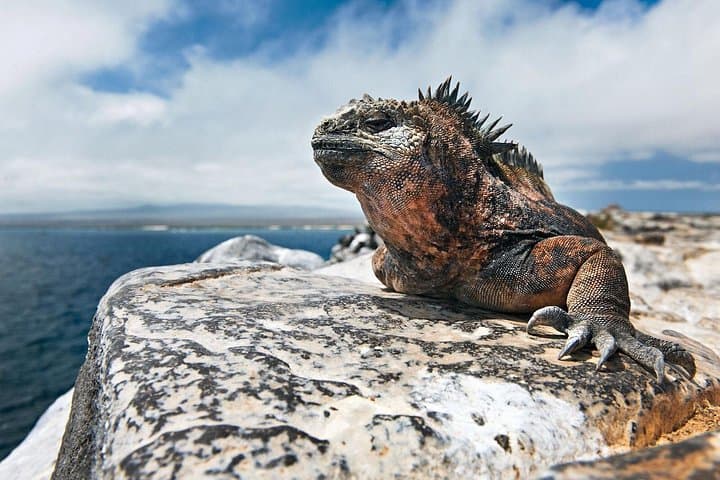
Expect close wildlife encounters — giant tortoises grazing in reserve paddocks, marine iguanas sunning on lava, and blue-footed boobies diving nearby. The Charles Darwin Research Station on Santa Cruz provides context: captive breeding, invasive-species control, and the story of Lonesome George.
Practical guidance: boat transfers between islands take a few hours and can be bouncy; plan for seasickness prevention and waterproof bags. Snorkeling at Los Tuneles and Concha Perla exposes you to strong currents and cold upwellings — basic swim competence is required. Trails are short and rocky rather than steep, so sturdy water shoes and layered sun protection are more useful than heavy hiking boots. Bring reef-safe sunscreen, a reusable water bottle, and patience — schedules and weather can shift, but the rewards are immediate: clear water, sculpted rock, and animals that largely ignore you if you give them space.