THE ADVENTURE COLLECTIVE® · Independent discovery and booking for outdoor travel

Step from Paihia Beach onto a comfortable catamaran and cross the Bay of Islands to a predator-free sanctuary. Spend two hours snorkeling, paddle boarding, or hiking among native bush before a leisurely return sail with picnic lunch.
Step from Paihia Beach onto a comfortable catamaran and cross the Bay of Islands to a predator-free sanctuary. Spend two hours snorkeling, paddle boarding, or hiking among native bush before a leisurely return sail with picnic lunch.
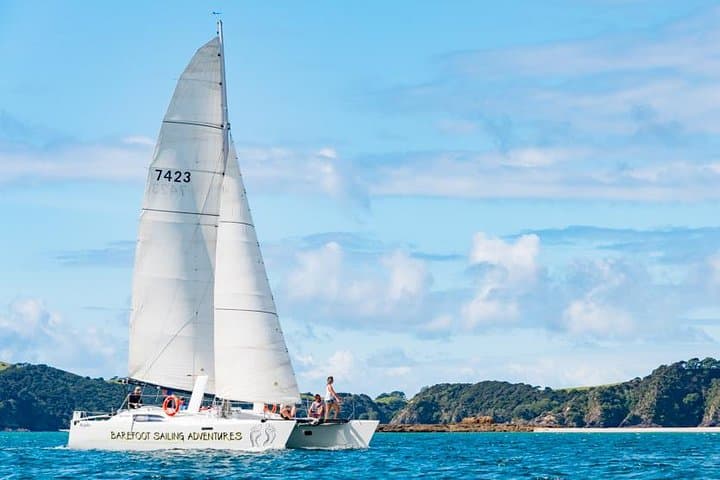
The catamaran sits low in the shallows off Paihia Beach, hull humming like a patient animal; bean bags and sun decks promise a day of moving horizons. Guests clap off sandy shoes and climb aboard, the town shrinking into a line of roofs as the skipper eases away. The wind takes the sails and the eastern Bay of Islands opens—rocky islets stud the blue with scrubbed faces and beaches that invite a landing.
Verified experiences and guided adventures in the surrounding area.
Operated by Barefoot Sailing Adventures · Paihia, Northland
The catamaran sits low in the shallows off Paihia Beach, hull humming like a patient animal; bean bags and sun decks promise a day of moving horizons. Guests clap off sandy shoes and climb aboard, the town shrinking into a line of roofs as the skipper eases away. The wind takes the sails and the eastern Bay of Islands opens—rocky islets stud the blue with scrubbed faces and beaches that invite a landing.
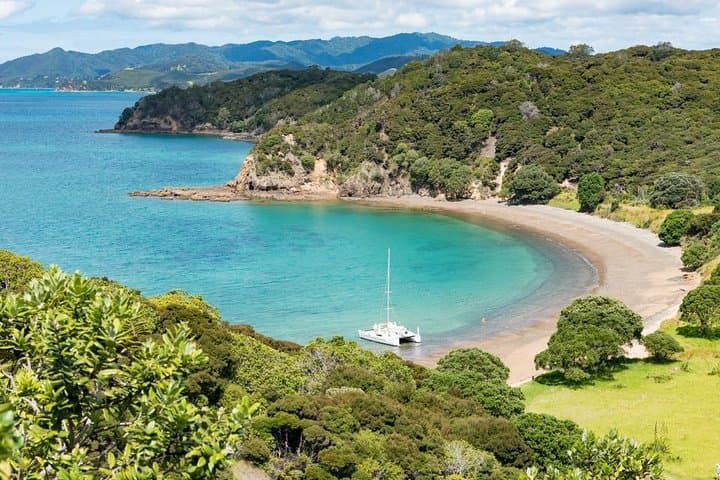
Geology here is blunt and visible: ancient sedimentary rocks folded and smoothed by sea and storm, islands worn to compact cliffs and sandy pockets. Māori have navigated these waters for centuries; the bay’s name—Te Tai Tokerau—recalls a coastline of food, canoe routes and settlements. Today, many of the smaller islands are predator-free wildlife sanctuaries, fenced off from stoats and rats to give native birds and plants a fighting chance.
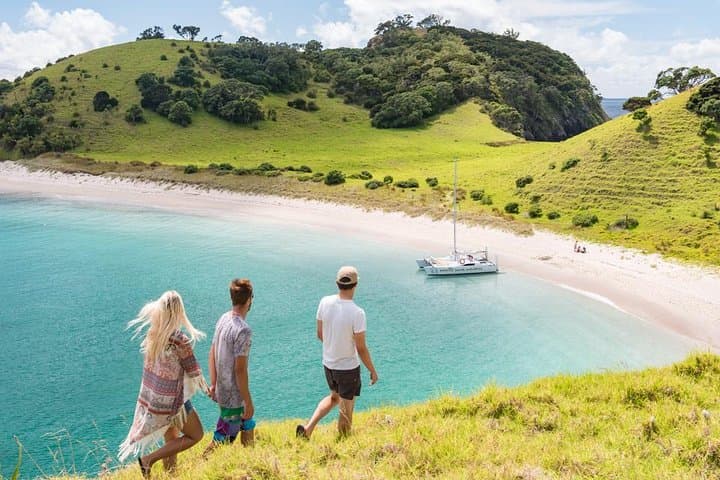
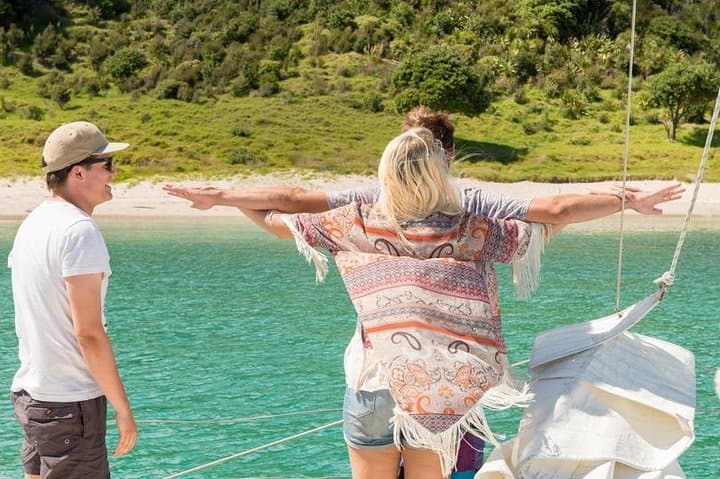
The day’s rhythm is simple and generous. There’s a relaxed sail through archipelagos and points of interest, morning tea and a commentary that mixes natural history with navigational anecdotes, then a two-hour stop at a sanctuary island. The cat comes up onto the sand; you step directly ashore and choose—snorkel a shallow reef, paddle a board along the headland, or take a short bush track where tūī and kererū call from kanuka and pōhutukawa.
Wildlife encounters are unflashy but rewarding: watch for curious little reef fish under your mask and songbirds that take little notice of human boots. Guides respect the pace of the place—no chasing of wildlife, just quiet observation. The return sail is a reward in itself: cold drinks, a packed picnic lunch, and an easy watch of the horizon as islands slide by.
Practicalities shape the experience. Gear is straightforward—swimwear, a towel, closed shoes for island walks, a sun hat and reef-safe sunscreen. Seasons change the feel more than the itinerary: summer is busy and warm with glassy snorkel conditions; shoulder seasons offer clearer light and fewer crowds. The operator asks swimmers to be comfortable in open water (200m competency recommended) and notes this cruise is not suitable for those with significant mobility issues due to uneven terrain and boarding from shore.
For travelers who want a single-day immersion in Northland’s marine and bird life, this is a tidy, well-paced option: experiential, educational and practical. Confirm your booking 24 hours ahead—weather and sea-state decisions happen then—and plan to arrive early at Paihia Beach so you board relaxed and ready to sail.
moderate.
6 hours.
Suitable for moderately fit travelers who can board from shore, swim 200m, and walk uneven island tracks for up to 30–60 minutes.
Meet at Paihia Beach by the Barefoot Sailing catamaran—look for the vessel anchored along the shoreline at least 30 minutes before departure.
Yes, children can join but must be supervised—snorkelers should be competent swimmers and children should wear appropriate flotation if needed.
Yes—snorkel participants must be comfortable swimming in open water for about 200m; non-swimmers can still enjoy the island walk and paddle-boarding with supervision.
This tour is not recommended for those with significant mobility problems due to beach boarding and uneven island surfaces.
Expect coastal birds like tūī and kererū on island tracks, and small reef fish and occasional rays while snorkeling.
Full refunds are available if you cancel at least 24 hours before departure; weather-related cancellations are handled by the operator.
Māori have used the Bay of Islands as a waka route and food source for centuries; many islands were seasonal camps and protected areas.
Sanctuary islands are predator-free or predator-controlled to protect native birds and plants—visitors are asked to follow leave-no-trace rules and to avoid bringing food ashore.
Barefoot Sailing Adventures operates guided outdoor trips and adventures with an emphasis on safety, stewardship, and memorable experiences.
The catamaran sits low in the shallows off Paihia Beach, hull humming like a patient animal; bean bags and sun decks promise a day of moving horizons. Guests clap off sandy shoes and climb aboard, the town shrinking into a line of roofs as the skipper eases away. The wind takes the sails and the eastern Bay of Islands opens—rocky islets stud the blue with scrubbed faces and beaches that invite a landing.
The catamaran sits low in the shallows off Paihia Beach, hull humming like a patient animal; bean bags and sun decks promise a day of moving horizons. Guests clap off sandy shoes and climb aboard, the town shrinking into a line of roofs as the skipper eases away. The wind takes the sails and the eastern Bay of Islands opens—rocky islets stud the blue with scrubbed faces and beaches that invite a landing.
Geology here is blunt and visible: ancient sedimentary rocks folded and smoothed by sea and storm, islands worn to compact cliffs and sandy pockets. Māori have navigated these waters for centuries; the bay’s name—Te Tai Tokerau—recalls a coastline of food, canoe routes and settlements. Today, many of the smaller islands are predator-free wildlife sanctuaries, fenced off from stoats and rats to give native birds and plants a fighting chance.
The day’s rhythm is simple and generous. There’s a relaxed sail through archipelagos and points of interest, morning tea and a commentary that mixes natural history with navigational anecdotes, then a two-hour stop at a sanctuary island. The cat comes up onto the sand; you step directly ashore and choose—snorkel a shallow reef, paddle a board along the headland, or take a short bush track where tūī and kererū call from kanuka and pōhutukawa.
Wildlife encounters are unflashy but rewarding: watch for curious little reef fish under your mask and songbirds that take little notice of human boots. Guides respect the pace of the place—no chasing of wildlife, just quiet observation. The return sail is a reward in itself: cold drinks, a packed picnic lunch, and an easy watch of the horizon as islands slide by.
Practicalities shape the experience. Gear is straightforward—swimwear, a towel, closed shoes for island walks, a sun hat and reef-safe sunscreen. Seasons change the feel more than the itinerary: summer is busy and warm with glassy snorkel conditions; shoulder seasons offer clearer light and fewer crowds. The operator asks swimmers to be comfortable in open water (200m competency recommended) and notes this cruise is not suitable for those with significant mobility issues due to uneven terrain and boarding from shore.
For travelers who want a single-day immersion in Northland’s marine and bird life, this is a tidy, well-paced option: experiential, educational and practical. Confirm your booking 24 hours ahead—weather and sea-state decisions happen then—and plan to arrive early at Paihia Beach so you board relaxed and ready to sail.