THE ADVENTURE COLLECTIVE® · Independent discovery and booking for outdoor travel

Spend a full day exploring Malta’s highlights on a shore excursion that threads Valletta’s baroque streets, Mdina’s medieval calm, the fishing charm of Marsaxlokk, and the sea-lit Blue Grotto. This guided loop pairs history with short walks and optional boat time.
Spend a full day exploring Malta’s highlights on a shore excursion that threads Valletta’s baroque streets, Mdina’s medieval calm, the fishing charm of Marsaxlokk, and the sea-lit Blue Grotto. This guided loop pairs history with short walks and optional boat time.
You step off the ship into a bright, salt-scented port and the island’s limestone catches the light like a promise. The day moves at walking pace: narrow streets of Valletta opening to sunlit plazas, a hush inside St. John’s Cathedral, then a drive inland where Mdina’s silent lanes climb to viewpoints that look out over patchwork fields and the distant sea.
Verified experiences and guided adventures in the surrounding area.
You step off the ship into a bright, salt-scented port and the island’s limestone catches the light like a promise. The day moves at walking pace: narrow streets of Valletta opening to sunlit plazas, a hush inside St. John’s Cathedral, then a drive inland where Mdina’s silent lanes climb to viewpoints that look out over patchwork fields and the distant sea.
Malta’s story runs deep: Bronze Age temple builders at Hagar Qim left megaliths older than the pyramids, while the Knights of St. John fortified Valletta into a baroque stronghold after the Great Siege of 1565. Geology matters here — porous Globigerina limestone shapes caves and harbors, and the Blue Grotto’s sea caves demonstrate how winter swell carves light into vivid blues.
Culture is immediate: fishermen in Marsaxlokk repair brightly painted luzzus, and local markets offer caperberries and ricotta-filled pastizzis. Expect a mix of walking on cobbled streets and short drives between sites; the optional 20-minute boat to the Blue Grotto depends on sea conditions but rewards you with reflective caverns.
Practical guidance: start early to avoid mid-day crowds in Valletta, wear sturdy shoes for uneven pavement, and carry sun protection and water. If visiting St. John’s expect a modest entrance fee and respectful dress. Weather can turn coastal — bring a light windbreaker. Plan for roughly a full day (about seven hours) with room for a relaxed lunch in Marsaxlokk, and hire a licensed guide to add historical context and speed through logistics.
moderate.
6–8 hours.
Moderate: comfortable walking on uneven surfaces with occasional short climbs; basic stamina for a full-day outing.
No — the short boat trip depends on calm sea conditions and is often offered only in calm weather; you can usually view the grotto from the headland if boats are canceled.
Typically not included; expect separate entrance fees and factor them into your budget.
Yes with caveats: short walks are family-friendly but uneven pavement and some steps may challenge strollers or limited-mobility travelers—plan for slower pacing.
The excursion is about seven hours; lunch is usually at Marsaxlokk and may not be included so confirm with the operator beforehand.
Malta’s landscape records millennia: Neolithic temple complexes like Hagar Qim predate classical civilizations, and Valletta was constructed by the Knights of St. John after 1565 to secure the island.
The islands’ limestone and coastal caves are fragile—avoid climbing on megaliths, stick to marked paths, and support licensed local guides to minimize impact.
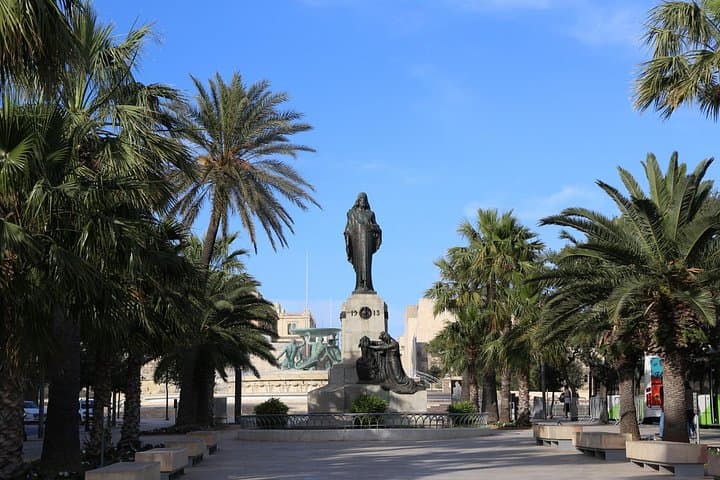
You step off the ship into a bright, salt-scented port and the island’s limestone catches the light like a promise. The day moves at walking pace: narrow streets of Valletta opening to sunlit plazas, a hush inside St. John’s Cathedral, then a drive inland where Mdina’s silent lanes climb to viewpoints that look out over patchwork fields and the distant sea.
You step off the ship into a bright, salt-scented port and the island’s limestone catches the light like a promise. The day moves at walking pace: narrow streets of Valletta opening to sunlit plazas, a hush inside St. John’s Cathedral, then a drive inland where Mdina’s silent lanes climb to viewpoints that look out over patchwork fields and the distant sea.
Malta’s story runs deep: Bronze Age temple builders at Hagar Qim left megaliths older than the pyramids, while the Knights of St. John fortified Valletta into a baroque stronghold after the Great Siege of 1565. Geology matters here — porous Globigerina limestone shapes caves and harbors, and the Blue Grotto’s sea caves demonstrate how winter swell carves light into vivid blues.
Culture is immediate: fishermen in Marsaxlokk repair brightly painted luzzus, and local markets offer caperberries and ricotta-filled pastizzis. Expect a mix of walking on cobbled streets and short drives between sites; the optional 20-minute boat to the Blue Grotto depends on sea conditions but rewards you with reflective caverns.
Practical guidance: start early to avoid mid-day crowds in Valletta, wear sturdy shoes for uneven pavement, and carry sun protection and water. If visiting St. John’s expect a modest entrance fee and respectful dress. Weather can turn coastal — bring a light windbreaker. Plan for roughly a full day (about seven hours) with room for a relaxed lunch in Marsaxlokk, and hire a licensed guide to add historical context and speed through logistics.