THE ADVENTURE COLLECTIVE® · Independent discovery and booking for outdoor travel

A single-day voyage from Bariloche that pairs a one-hour catamaran crossing with guided walks through the cinnamon trunks of the Arrayanes and the conifered slopes of Isla Victoria. Expect easy trails, park fees, and views that put the Andes just beyond the water.
A single-day voyage from Bariloche that pairs a one-hour catamaran crossing with guided walks through the cinnamon trunks of the Arrayanes and the conifered slopes of Isla Victoria. Expect easy trails, park fees, and views that put the Andes just beyond the water.
The catamaran slips away from Puerto Pañuelo and the lake opens like a cool, moving plain. Wind tugs at jackets, gulls cut the air, and the snow-smudged ridgelines of the Andes lean over Nahuel Huapi like a pared-down skyline. In the space between Bariloche and the islands, water becomes the route, and the day’s rhythm is set by crossings and short, purposeful hikes.
Verified experiences and guided adventures in the surrounding area.
Operated by Que Hacer en Buenos Aires · San Carlos de Bariloche, Río Negro
The catamaran slips away from Puerto Pañuelo and the lake opens like a cool, moving plain. Wind tugs at jackets, gulls cut the air, and the snow-smudged ridgelines of the Andes lean over Nahuel Huapi like a pared-down skyline. In the space between Bariloche and the islands, water becomes the route, and the day’s rhythm is set by crossings and short, purposeful hikes.
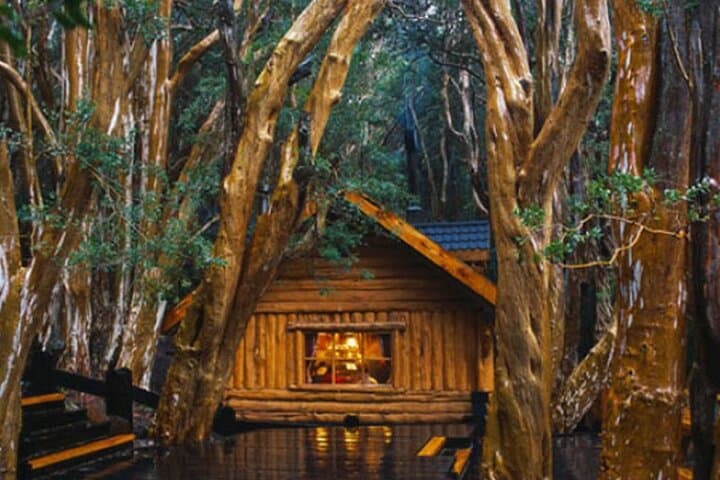
History here reads on several layers. Nahuel Huapi was a crossroads for Mapuche and Tehuelche peoples long before 19th-century explorers and Argentine park planners arrived. The Quetrihué Peninsula—the approach to the Bosque de Arrayanes—gained protected status when early conservationists recognized the rarity of the myrtle (arrayán) woodland: cinnamon-colored trunks with smooth bark that age into sculptural columns, some older than a human lifetime.
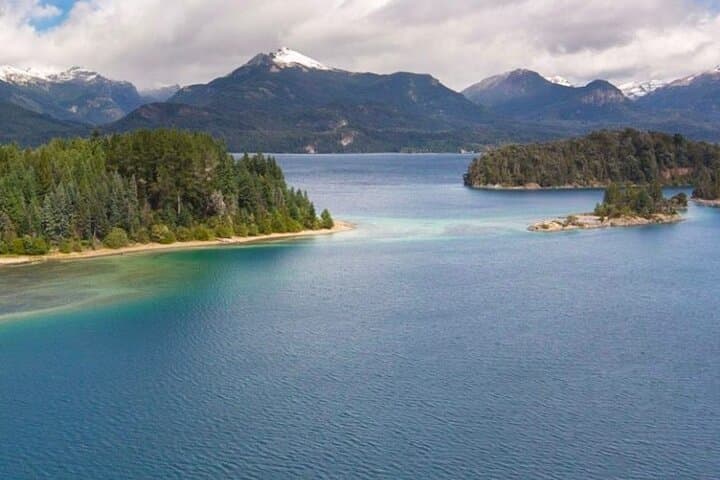
Geology rules the shorelines. Glacial action carved the lake basin; erratic boulders and steep, glaciated coves create microclimates that favor both the arrayán and taller Nothofagus species on Isla Victoria. The island itself is a patchwork of coihue and ciprés, trails that thread through understory ferns and open to pebble beaches. The forest canopy shifts from the compact warmth of the arrayanes to the vertical drama of conifers on Victoria, where viewpoints pare the distance between you and the mountains.
Culturally, the tour is part natural history lesson, part active transport. Boat crossings—roughly an hour each—are interludes for birdwatching and listening. Guides point out native plant uses and recount early conservation wins that kept these stands intact.
Practical essentials: the full-day excursion runs about seven hours and moves at a relaxed pace—short walks of 30–90 minutes at each stop, mostly on compact dirt or boardwalks but with some uneven roots and steps. Entrance to Nahuel Huapi National Park requires a local fee (paid onboard or at departure; check current rates—recent notices listed AR$6,000). Bring layered clothing against lake wind and a light rain shell—conditions change fast. Footwear should be supportive and water-resistant; trails can be slippery after rain.
Timing matters. Mornings are best for smooth water and clearer skies; afternoon light sculpts the arrayán trunks but can bring gusts. Pack sunscreen, insect repellent, a refillable water bottle, and a small daypack for snacks and camera gear. If you want quieter viewpoints, ask the guide about less-traveled paths on Victoria—timed departures and group sizes shape the experience.
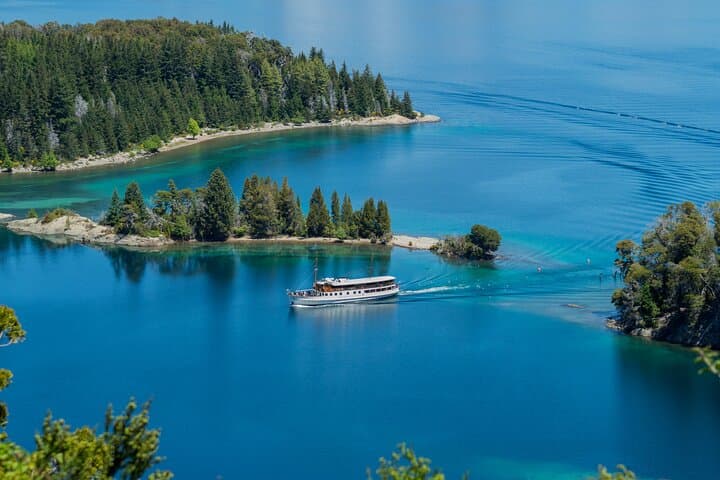
The payoff is straightforward: wandering among cinnamon trunks that seem to lean in to listen, then crossing to an island where coihues crowd the slopes and the lake keeps pushing and pulling at the shore. It’s a day of gentle motion—the boat carrying you, and the forests nudging you ashore.
easy.
7 hours.
Suitable for most fitness levels; expect multiple short walks totaling 3–6 km on uneven terrain and some stairs
The full excursion is about 7 hours total, including crossings and guided walks on the peninsula and Isla Victoria.
No—entrance to Nahuel Huapi National Park is paid separately at boarding or departure; check current rates and bring local cash if unsure.
Walks are generally easy—well-marked trails with short ascents; expect some uneven ground and stairs but no technical sections.
Yes, this tour includes a bilingual guide according to the operator’s listing.
Pickups are offered from many Bariloche hotels; the operator asks guests to be ready about 30 minutes before departure time.
Yes—stroller access is noted and infants are required to sit on an adult’s lap during the boat crossings.
The area was protected early in Argentina’s national park movement to preserve the unique myrtle stands and native forests on Lake Nahuel Huapi.
Visitor limits and park fees fund trail maintenance and invasive-species control—stay on marked paths to protect sensitive root systems and soil.
Que Hacer en Buenos Aires operates guided outdoor trips and adventures with an emphasis on safety, stewardship, and memorable experiences.
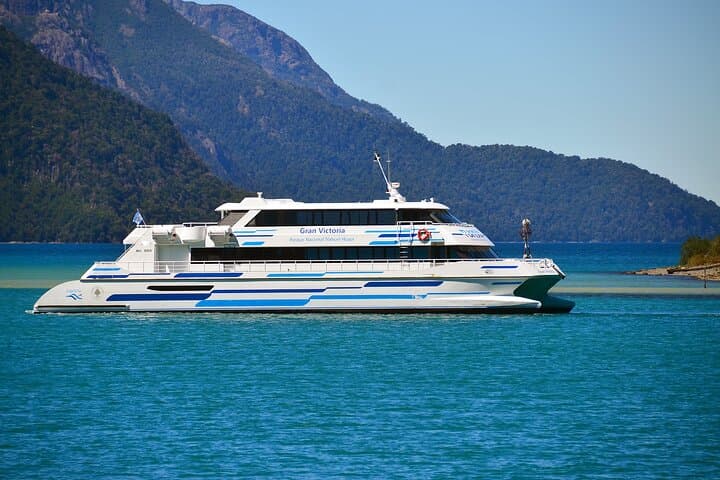
The catamaran slips away from Puerto Pañuelo and the lake opens like a cool, moving plain. Wind tugs at jackets, gulls cut the air, and the snow-smudged ridgelines of the Andes lean over Nahuel Huapi like a pared-down skyline. In the space between Bariloche and the islands, water becomes the route, and the day’s rhythm is set by crossings and short, purposeful hikes.
The catamaran slips away from Puerto Pañuelo and the lake opens like a cool, moving plain. Wind tugs at jackets, gulls cut the air, and the snow-smudged ridgelines of the Andes lean over Nahuel Huapi like a pared-down skyline. In the space between Bariloche and the islands, water becomes the route, and the day’s rhythm is set by crossings and short, purposeful hikes.
History here reads on several layers. Nahuel Huapi was a crossroads for Mapuche and Tehuelche peoples long before 19th-century explorers and Argentine park planners arrived. The Quetrihué Peninsula—the approach to the Bosque de Arrayanes—gained protected status when early conservationists recognized the rarity of the myrtle (arrayán) woodland: cinnamon-colored trunks with smooth bark that age into sculptural columns, some older than a human lifetime.
Geology rules the shorelines. Glacial action carved the lake basin; erratic boulders and steep, glaciated coves create microclimates that favor both the arrayán and taller Nothofagus species on Isla Victoria. The island itself is a patchwork of coihue and ciprés, trails that thread through understory ferns and open to pebble beaches. The forest canopy shifts from the compact warmth of the arrayanes to the vertical drama of conifers on Victoria, where viewpoints pare the distance between you and the mountains.
Culturally, the tour is part natural history lesson, part active transport. Boat crossings—roughly an hour each—are interludes for birdwatching and listening. Guides point out native plant uses and recount early conservation wins that kept these stands intact.
Practical essentials: the full-day excursion runs about seven hours and moves at a relaxed pace—short walks of 30–90 minutes at each stop, mostly on compact dirt or boardwalks but with some uneven roots and steps. Entrance to Nahuel Huapi National Park requires a local fee (paid onboard or at departure; check current rates—recent notices listed AR$6,000). Bring layered clothing against lake wind and a light rain shell—conditions change fast. Footwear should be supportive and water-resistant; trails can be slippery after rain.
Timing matters. Mornings are best for smooth water and clearer skies; afternoon light sculpts the arrayán trunks but can bring gusts. Pack sunscreen, insect repellent, a refillable water bottle, and a small daypack for snacks and camera gear. If you want quieter viewpoints, ask the guide about less-traveled paths on Victoria—timed departures and group sizes shape the experience.
The payoff is straightforward: wandering among cinnamon trunks that seem to lean in to listen, then crossing to an island where coihues crowd the slopes and the lake keeps pushing and pulling at the shore. It’s a day of gentle motion—the boat carrying you, and the forests nudging you ashore.