THE ADVENTURE COLLECTIVE® · Independent discovery and booking for outdoor travel

Descend to 80 feet to explore two penetrable Admirable-class wrecks then drift over vibrant reef life on a second tank. This guided two-tank trip from Isla Mujeres mixes history, big fish sightings and current-assisted reef drifting.
Descend to 80 feet to explore two penetrable Admirable-class wrecks then drift over vibrant reef life on a second tank. This guided two-tank trip from Isla Mujeres mixes history, big fish sightings and current-assisted reef drifting.
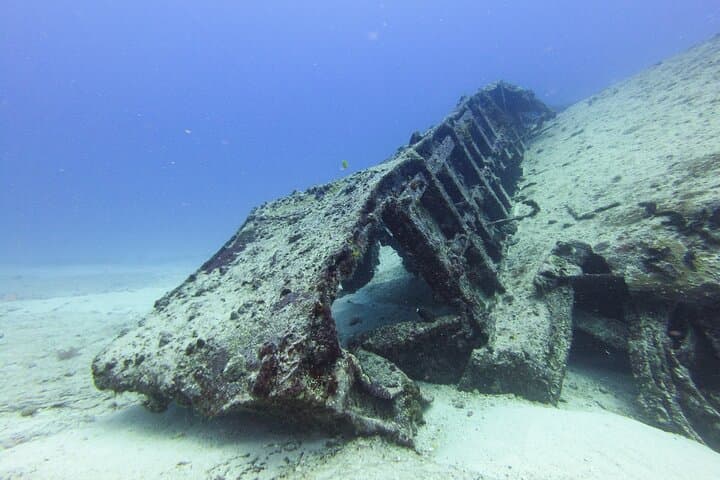
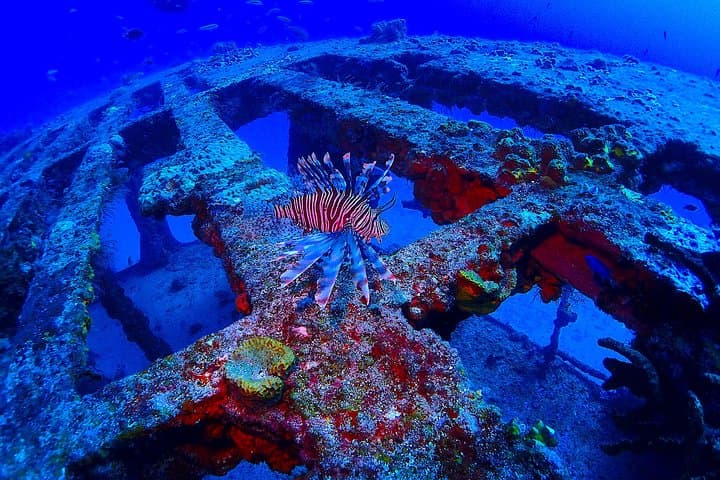
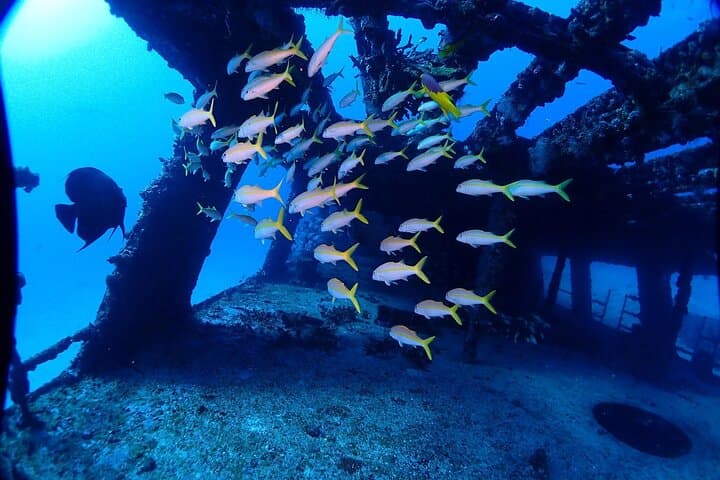
The boat eases away from Isla Mujeres' pier and the turquoise shelf drops away like a curtain. Within minutes the current begins to push you along the reef and, deeper down, two rusted hulls lie half-sunken in soft blue shadow. Descending to 23m (80ft), the wrecks open like chapters—doorways, cabins and beams inhabited by moray eels, grouper and the occasional curious turtle—while the second dive lets the current carry you over living coral gardens bright with angelfish and schooling snapper.
Verified experiences and guided adventures in the surrounding area.
Operated by Aqua Adventures Eco Divers, 5 STAR PADI · Isla Mujeres, Quintana Roo
The boat eases away from Isla Mujeres' pier and the turquoise shelf drops away like a curtain. Within minutes the current begins to push you along the reef and, deeper down, two rusted hulls lie half-sunken in soft blue shadow. Descending to 23m (80ft), the wrecks open like chapters—doorways, cabins and beams inhabited by moray eels, grouper and the occasional curious turtle—while the second dive lets the current carry you over living coral gardens bright with angelfish and schooling snapper.
Those wrecks—the former USS Ransom (C55) and USS Harlequin (C58), later Mexican Navy vessels—are Admirable-class minesweepers; their iron frames offer both structure for reef growth and a window into mid-20th-century naval history. Geologically the shelf off Isla Mujeres drops quickly to deeper Caribbean water, which concentrates pelagic traffic and feeds nutrient-rich currents that animate the reef.
Locals balance fishing and tourism; small-town Isla Mujeres has a relaxed port culture and dive operators with decades of experience. Expect surface intervals on the boat, clear visibility that can exceed 20–30m on good days, and occasional surge on the reef.
Practical guidance: this is a two-tank trip lasting roughly 4–5 hours. Certified Advanced Open Water divers will be fully comfortable; Open Water divers can join as an adventure dive but should disclose experience at booking. Bring a dive computer, a close-fitting mask, redundant depth awareness for wreck penetration, and a reef-safe sunscreen. Hydrate before boarding, secure loose gear against current, and follow your divemaster’s brief for safety and conservation—these sites are popular and fragile, so good buoyancy and conservative finning keep both divers and reefs safe.
moderate.
4–5 hours.
Comfortable basic fitness and good buoyancy control; able to manage surface swim and ladder exits multiple times.
Advanced Open Water is recommended for safe wreck penetration; Open Water divers can participate as an Adventure Dive but must notify the operator of their experience.
The wrecks sit around 23m (80ft); visibility varies with season but often ranges 15–30m on clear days.
Currents are common and can assist drift dives; guides choose sites and entry times to match diver skill and conditions.
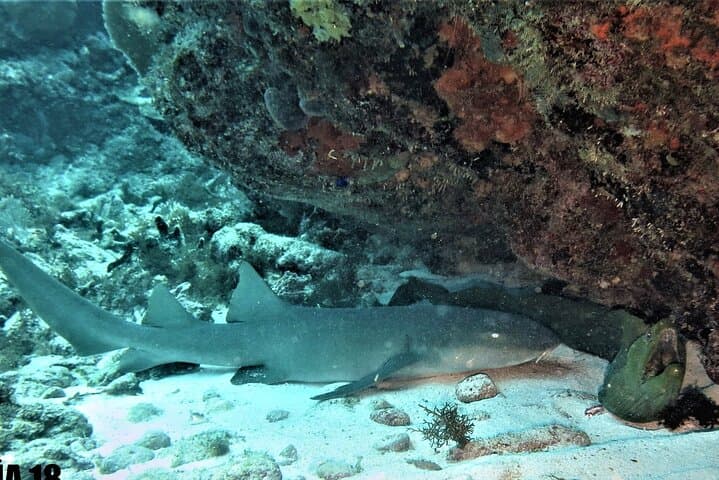
Yes—green morays, turtles, occasional nurse sharks and seasonal pelagics like eagle rays and larger gamefish can be seen.
The wrecks are former U.S. Admirable-class minesweepers (mid-20th century) later commissioned into the Mexican Navy and intentionally sunk to form artificial reefs.
These sites attract heavy dive traffic; operators and divers are encouraged to use reef-safe sunscreen, maintain buoyancy, and avoid touching to protect coral and resident species.
Aqua Adventures Eco Divers, 5 STAR PADI operates guided outdoor trips and adventures with an emphasis on safety, stewardship, and memorable experiences.
The boat eases away from Isla Mujeres' pier and the turquoise shelf drops away like a curtain. Within minutes the current begins to push you along the reef and, deeper down, two rusted hulls lie half-sunken in soft blue shadow. Descending to 23m (80ft), the wrecks open like chapters—doorways, cabins and beams inhabited by moray eels, grouper and the occasional curious turtle—while the second dive lets the current carry you over living coral gardens bright with angelfish and schooling snapper.
The boat eases away from Isla Mujeres' pier and the turquoise shelf drops away like a curtain. Within minutes the current begins to push you along the reef and, deeper down, two rusted hulls lie half-sunken in soft blue shadow. Descending to 23m (80ft), the wrecks open like chapters—doorways, cabins and beams inhabited by moray eels, grouper and the occasional curious turtle—while the second dive lets the current carry you over living coral gardens bright with angelfish and schooling snapper.
Those wrecks—the former USS Ransom (C55) and USS Harlequin (C58), later Mexican Navy vessels—are Admirable-class minesweepers; their iron frames offer both structure for reef growth and a window into mid-20th-century naval history. Geologically the shelf off Isla Mujeres drops quickly to deeper Caribbean water, which concentrates pelagic traffic and feeds nutrient-rich currents that animate the reef.
Locals balance fishing and tourism; small-town Isla Mujeres has a relaxed port culture and dive operators with decades of experience. Expect surface intervals on the boat, clear visibility that can exceed 20–30m on good days, and occasional surge on the reef.
Practical guidance: this is a two-tank trip lasting roughly 4–5 hours. Certified Advanced Open Water divers will be fully comfortable; Open Water divers can join as an adventure dive but should disclose experience at booking. Bring a dive computer, a close-fitting mask, redundant depth awareness for wreck penetration, and a reef-safe sunscreen. Hydrate before boarding, secure loose gear against current, and follow your divemaster’s brief for safety and conservation—these sites are popular and fragile, so good buoyancy and conservative finning keep both divers and reefs safe.