THE ADVENTURE COLLECTIVE® · Independent discovery and booking for outdoor travel

Trade Naples’ noise for Ischia’s steamy pools on a full-day thermal park visit. Expect volcanic-hot springs, terrace gardens, and easy-to-navigate spa facilities with pockets of coastal charm.
Trade Naples’ noise for Ischia’s steamy pools on a full-day thermal park visit. Expect volcanic-hot springs, terrace gardens, and easy-to-navigate spa facilities with pockets of coastal charm.
Step off the hydrofoil into salt air that pushes at your shoulders and follow steam climbing from rock-cut pools — Ischia’s thermal parks feel like the island itself is offering a slow, warm hand. On this full-day escape you move from Naples’ bustle to a patchwork of terraced gardens and mineral-rich baths where water does the work: loosening muscle, loosening thoughts.
Verified experiences and guided adventures in the surrounding area.
Step off the hydrofoil into salt air that pushes at your shoulders and follow steam climbing from rock-cut pools — Ischia’s thermal parks feel like the island itself is offering a slow, warm hand. On this full-day escape you move from Naples’ bustle to a patchwork of terraced gardens and mineral-rich baths where water does the work: loosening muscle, loosening thoughts.
The island has long been prized for its volcanic springs; Romans built baths here and 19th-century visitors mapped spa routes. Geologically, Ischia is the remnant of a volcanic complex — pumice and basalt outcrops frame the coast and feed naturally hot springs that seep through mineral layers, coloring pools ochre and green.
Local culture blends fisherfolk, vine growers, and spa operators; plan to see family-run trattorie, lemon groves and small thermal chapels between park gates. Practicalities are simple: most thermal parks offer day passes, lockers, and plateaus of pools from lukewarm to hot.
Bring a rhythm of patience — move between pools, take short swims, sit in shadowed grottoes and hydrate. Footwear should handle slick stone and short steps; timing a midweek visit avoids ferries of weekend crowds. If you want beach time, schedule an hour before or after the spa; ferries run regularly to Naples and Sorrento.
This trip is low-impact physically but rich in sensory detail: the gurgle of thermal jets, lemon-scented lanes, and the steady, slow work of water on rock. It’s restorative, straightforward, and easy to weave into a broader Amalfi or Sorrentine itinerary.
easy.
8–10 hours.
Minimal fitness; able to walk short flights of steps and stand on uneven surfaces
Hydrofoils and ferries run from Molo Beverello and Calata di Massa in Naples; fast hydrofoils take about 50–70 minutes depending on route.
Most parks rent towels and offer lockers for a small fee, but bringing your own saves cost and avoids lines.
Yes — pools have a range of temperatures and many parks have shallow areas, but check mobility needs for steps and uneven surfaces.
Technically yes if parks are close and opening hours align, but a single park visit provides a more relaxed, restorative experience.
Ischia’s thermal use dates to Roman times; many modern parks occupy centuries-old bathing sites fed by volcanic aquifers.
Respect signage in protected coastal areas, avoid using soaps in natural springs, and support parks that treat and recycle pool water.
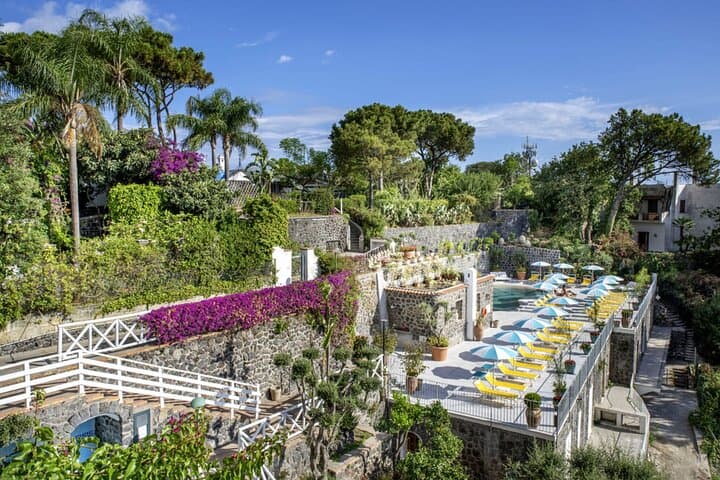
Step off the hydrofoil into salt air that pushes at your shoulders and follow steam climbing from rock-cut pools — Ischia’s thermal parks feel like the island itself is offering a slow, warm hand. On this full-day escape you move from Naples’ bustle to a patchwork of terraced gardens and mineral-rich baths where water does the work: loosening muscle, loosening thoughts.
Step off the hydrofoil into salt air that pushes at your shoulders and follow steam climbing from rock-cut pools — Ischia’s thermal parks feel like the island itself is offering a slow, warm hand. On this full-day escape you move from Naples’ bustle to a patchwork of terraced gardens and mineral-rich baths where water does the work: loosening muscle, loosening thoughts.
The island has long been prized for its volcanic springs; Romans built baths here and 19th-century visitors mapped spa routes. Geologically, Ischia is the remnant of a volcanic complex — pumice and basalt outcrops frame the coast and feed naturally hot springs that seep through mineral layers, coloring pools ochre and green.
Local culture blends fisherfolk, vine growers, and spa operators; plan to see family-run trattorie, lemon groves and small thermal chapels between park gates. Practicalities are simple: most thermal parks offer day passes, lockers, and plateaus of pools from lukewarm to hot.
Bring a rhythm of patience — move between pools, take short swims, sit in shadowed grottoes and hydrate. Footwear should handle slick stone and short steps; timing a midweek visit avoids ferries of weekend crowds. If you want beach time, schedule an hour before or after the spa; ferries run regularly to Naples and Sorrento.
This trip is low-impact physically but rich in sensory detail: the gurgle of thermal jets, lemon-scented lanes, and the steady, slow work of water on rock. It’s restorative, straightforward, and easy to weave into a broader Amalfi or Sorrentine itinerary.