THE ADVENTURE COLLECTIVE® · Independent discovery and booking for outdoor travel

A focused two‑hour private walking tour of Inverness that highlights Inverness Castle, St Andrew’s Cathedral, Cavell Gardens and local music heritage. Ideal for first‑time visitors who want architectural context, short Highland views and local stories.
A focused two‑hour private walking tour of Inverness that highlights Inverness Castle, St Andrew’s Cathedral, Cavell Gardens and local music heritage. Ideal for first‑time visitors who want architectural context, short Highland views and local stories.
Stand on the River Ness and feel the city pull into view: red sandstone of Inverness Castle rises above the water, swans drift past, and the guide from the VisitScotland iCentre sketches the next two hours in clear, practiced strokes.
Verified experiences and guided adventures in the surrounding area.
Operated by Opatrip.com Scotland · Inverness, Highland
Stand on the River Ness and feel the city pull into view: red sandstone of Inverness Castle rises above the water, swans drift past, and the guide from the VisitScotland iCentre sketches the next two hours in clear, practiced strokes.
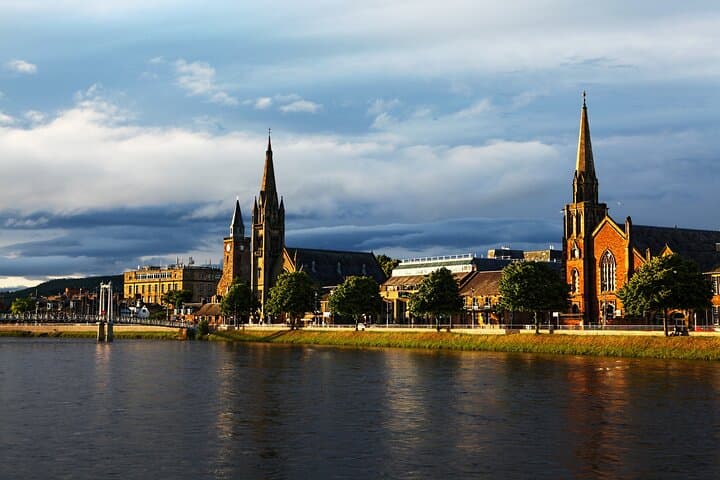
The walk threads civic pride and Highland memory. You pass the Neo‑Gothic Town House, a Victorian-era assertion of prosperity, then climb to castle terraces that deliver short, dramatic Highland panoramas. Statues—Flora Macdonald and the virtues in Cavell Gardens—mark moments of local myth and mourning. Eden Court and Balnain House speak to the area's musical and theatrical tradition, while St Andrew’s Cathedral demonstrates late‑19th‑century Gothic ambition on the riverbank.
Geology and layout are readable in the streets: red sandstone buildings, low basalt outcrops, and the River Ness carving a straight, navigable channel into the Moray Firth. Culture here is public and audible—pipers, café chatter, seasonal festivals—so expect stops that mix architecture, history, and live city life.
Practicalities are straightforward: plan for roughly 1.5–3 miles (2.5–5 km) of mostly flat walking with a few steps and uneven cobbles; elevation gain is minimal. Dress for changeable weather—wind off the Moray Firth can arrive suddenly—and bring a charged phone for photos and maps. Morning or late afternoon light favours castle views and quieter streets. The tour is private and accessible for most fitness levels, but wear grippy shoes and allow time afterward to explore the riverside paths or the Victorian Market on your own.
easy.
2 hours.
Suitable for most people who can walk 2–5 km at a relaxed pace; minimal elevation.
The meeting point is the VisitScotland Inverness iCentre; the route finishes near Balnain House after visiting the main landmarks along the River Ness.
Yes—it's rated easy and suitable for most fitness levels, though some short cobbled stretches and steps may be challenging for those with limited mobility.
Expect about 1.5–3 miles (2.5–5 km) in total with frequent stops for commentary and photos over two hours.
Yes—this private tour is adaptable; let the operator know your interests when booking so the guide can emphasize those themes.
Inverness grew as a strategic crossing on the River Ness; many public buildings date from Victorian civic expansion while local lore preserves figures like Flora Macdonald of 18th‑century Jacobite history.
Stick to paths and avoid trampling riverbank vegetation; support local venues like Eden Court and Balnain House to sustain cultural conservation.
Opatrip.com Scotland operates guided outdoor trips and adventures with an emphasis on safety, stewardship, and memorable experiences.

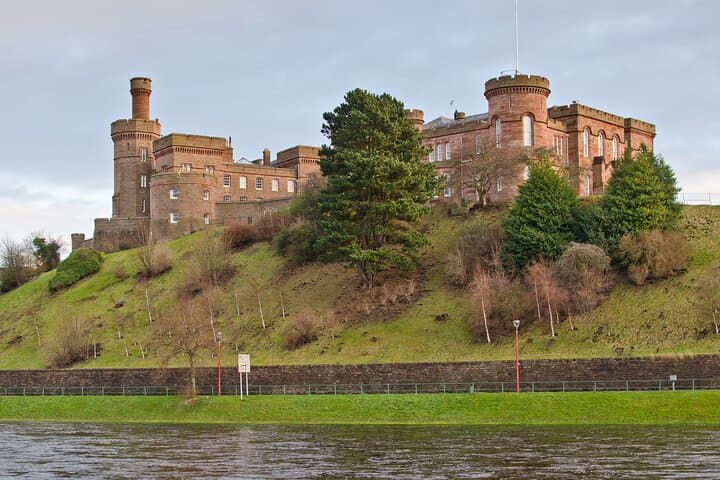

Stand on the River Ness and feel the city pull into view: red sandstone of Inverness Castle rises above the water, swans drift past, and the guide from the VisitScotland iCentre sketches the next two hours in clear, practiced strokes.
Stand on the River Ness and feel the city pull into view: red sandstone of Inverness Castle rises above the water, swans drift past, and the guide from the VisitScotland iCentre sketches the next two hours in clear, practiced strokes.
The walk threads civic pride and Highland memory. You pass the Neo‑Gothic Town House, a Victorian-era assertion of prosperity, then climb to castle terraces that deliver short, dramatic Highland panoramas. Statues—Flora Macdonald and the virtues in Cavell Gardens—mark moments of local myth and mourning. Eden Court and Balnain House speak to the area's musical and theatrical tradition, while St Andrew’s Cathedral demonstrates late‑19th‑century Gothic ambition on the riverbank.
Geology and layout are readable in the streets: red sandstone buildings, low basalt outcrops, and the River Ness carving a straight, navigable channel into the Moray Firth. Culture here is public and audible—pipers, café chatter, seasonal festivals—so expect stops that mix architecture, history, and live city life.
Practicalities are straightforward: plan for roughly 1.5–3 miles (2.5–5 km) of mostly flat walking with a few steps and uneven cobbles; elevation gain is minimal. Dress for changeable weather—wind off the Moray Firth can arrive suddenly—and bring a charged phone for photos and maps. Morning or late afternoon light favours castle views and quieter streets. The tour is private and accessible for most fitness levels, but wear grippy shoes and allow time afterward to explore the riverside paths or the Victorian Market on your own.