THE ADVENTURE COLLECTIVE® · Independent discovery and booking for outdoor travel

Experience your first breaths underwater off Crete with guided pool training and a supervised open-water dive to 3–6 meters. This 3–4 hour program pairs classroom basics with hands-on practice and close instructor support—ideal for confident swimmers aged 10–60.
Experience your first breaths underwater off Crete with guided pool training and a supervised open-water dive to 3–6 meters. This 3–4 hour program pairs classroom basics with hands-on practice and close instructor support—ideal for confident swimmers aged 10–60.
Salted light cuts across the surface as the boat eases out from the shore and the island's limestone cliffs shrink into a horizon of blue. You feel the swell under your feet, the sea pressing a cool hand against the hull, and then the instructor's calm briefing narrows focus: breathe slow, equalize early, look around.
Verified experiences and guided adventures in the surrounding area.
Operated by Cretan Holidays · Heraklion, Crete
Salted light cuts across the surface as the boat eases out from the shore and the island's limestone cliffs shrink into a horizon of blue. You feel the swell under your feet, the sea pressing a cool hand against the hull, and then the instructor's calm briefing narrows focus: breathe slow, equalize early, look around.
Crete's coastline carries millennia of maritime history—from Minoan sailors to Venetian harbors—and its underwater terrain reflects that legacy: stepped rock shelves, pockets of Posidonia seagrass, and rocky reefs formed by tectonic uplift and erosion. Cultural life on Crete still orbits the sea; small fishing villages and seaside tavernas line the bays you'll leave behind.
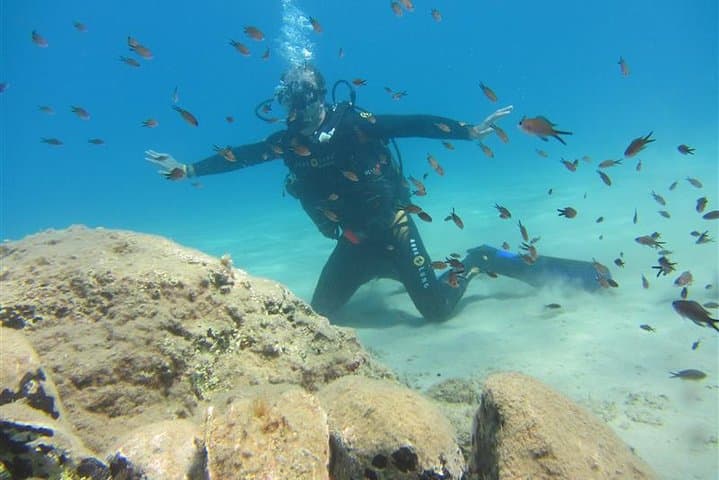
The experience is structured for beginners: a short theory session, confined-water training in a pool or shallow bay, then a guided open-water dive to roughly 3–6 meters. Expect 3–4 hours total, hands-on supervision, and an instructor alongside you at all times. Visibility in summer commonly exceeds 10–20 meters; spring and autumn bring cooler water and fewer boats.
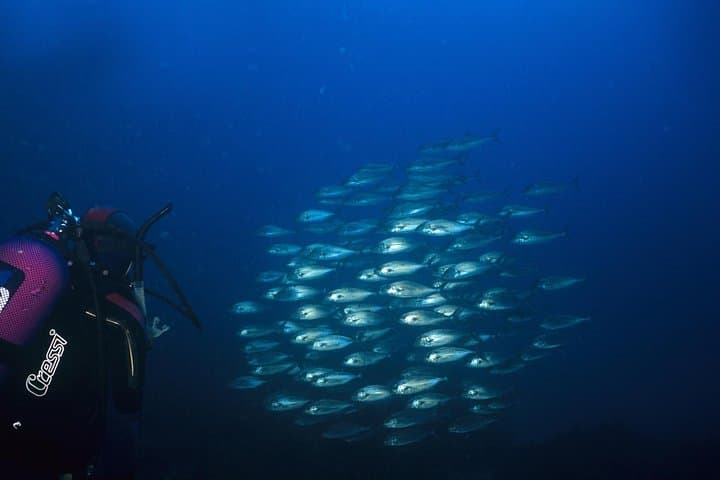
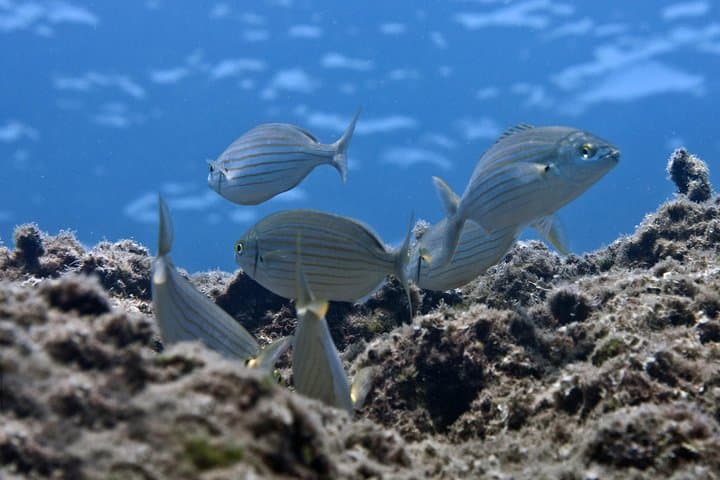
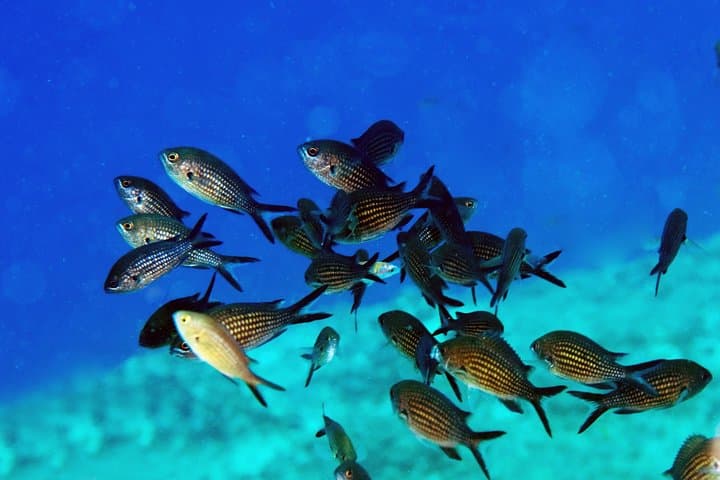
Practical notes: arrive hydrated, with swimwear under your clothes and a light meal beforehand. The company supplies standard dive equipment; bring a logbook or mask if you prefer your own fit. Respect Posidonia meadows—don't fin through them—and listen to briefings on neutral buoyancy to avoid contact with fragile life. For first-time divers the payoff is immediate: an intimate, low-depth window into Mediterranean life—octopus tucked into crevices, curious wrasse, and the slow drift of seagrass waving like an underwater field.
moderate.
3–4 hours.
Should be in good health and comfortable swimming; moderate cardiovascular fitness recommended
No — this introductory course includes theory, confined-water training, and a supervised shallow open-water dive; no prior certification is required.
Typical age range is 10–60; participants should be in good cardiovascular health and able to swim comfortably. Pregnant travelers and those with heart problems are advised not to participate.
Open-water dives on this program are shallow, generally between 3 and 6 meters, with the instructor always present for direct supervision.
Operators usually cancel for bad weather—check the cancellation policy but many offer full refunds if canceled at least 24 hours before departure.
Crete's coastline has been a maritime crossroads since the Minoan era; coastal shelves and submerged features reflect long geological uplift and erosion shaped by the Mediterranean.
Posidonia oceanica meadows are vital to the Mediterranean—avoid finning through seagrass, use reef-safe sunscreen, and follow instructor guidance to minimize impact.
Cretan Holidays operates guided outdoor trips and adventures with an emphasis on safety, stewardship, and memorable experiences.
Salted light cuts across the surface as the boat eases out from the shore and the island's limestone cliffs shrink into a horizon of blue. You feel the swell under your feet, the sea pressing a cool hand against the hull, and then the instructor's calm briefing narrows focus: breathe slow, equalize early, look around.
Salted light cuts across the surface as the boat eases out from the shore and the island's limestone cliffs shrink into a horizon of blue. You feel the swell under your feet, the sea pressing a cool hand against the hull, and then the instructor's calm briefing narrows focus: breathe slow, equalize early, look around.
Crete's coastline carries millennia of maritime history—from Minoan sailors to Venetian harbors—and its underwater terrain reflects that legacy: stepped rock shelves, pockets of Posidonia seagrass, and rocky reefs formed by tectonic uplift and erosion. Cultural life on Crete still orbits the sea; small fishing villages and seaside tavernas line the bays you'll leave behind.
The experience is structured for beginners: a short theory session, confined-water training in a pool or shallow bay, then a guided open-water dive to roughly 3–6 meters. Expect 3–4 hours total, hands-on supervision, and an instructor alongside you at all times. Visibility in summer commonly exceeds 10–20 meters; spring and autumn bring cooler water and fewer boats.
Practical notes: arrive hydrated, with swimwear under your clothes and a light meal beforehand. The company supplies standard dive equipment; bring a logbook or mask if you prefer your own fit. Respect Posidonia meadows—don't fin through them—and listen to briefings on neutral buoyancy to avoid contact with fragile life. For first-time divers the payoff is immediate: an intimate, low-depth window into Mediterranean life—octopus tucked into crevices, curious wrasse, and the slow drift of seagrass waving like an underwater field.