THE ADVENTURE COLLECTIVE® · Independent discovery and booking for outdoor travel

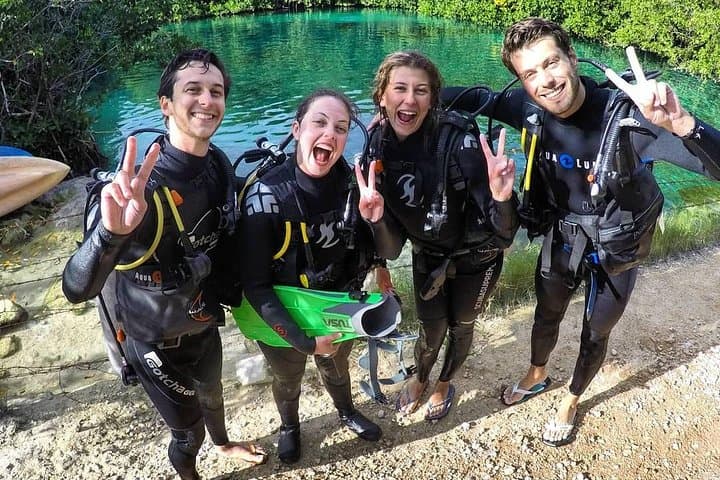
Try scuba for the first time under a canopy of mangrove roots at Casa Cenote near Tulum. This guided, shallow dive introduces beginners to basic skills while exposing them to an unusual mix of freshwater and marine life.
Try scuba for the first time under a canopy of mangrove roots at Casa Cenote near Tulum. This guided, shallow dive introduces beginners to basic skills while exposing them to an unusual mix of freshwater and marine life.
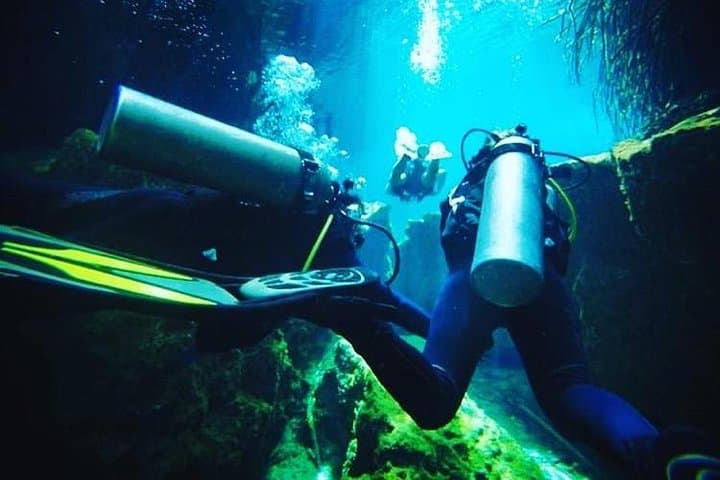
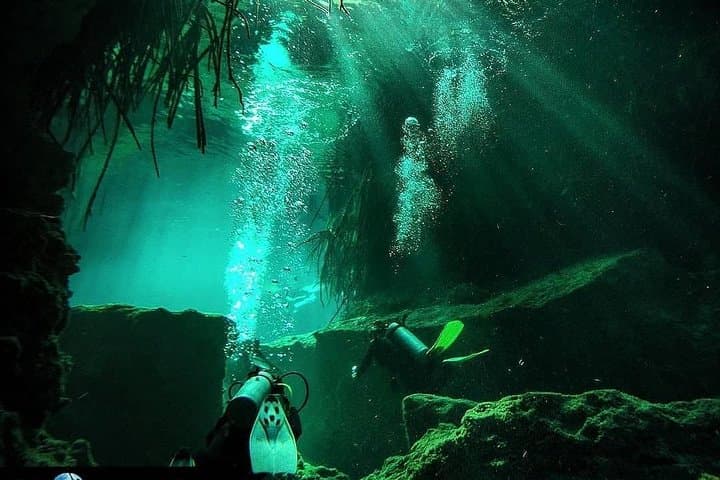
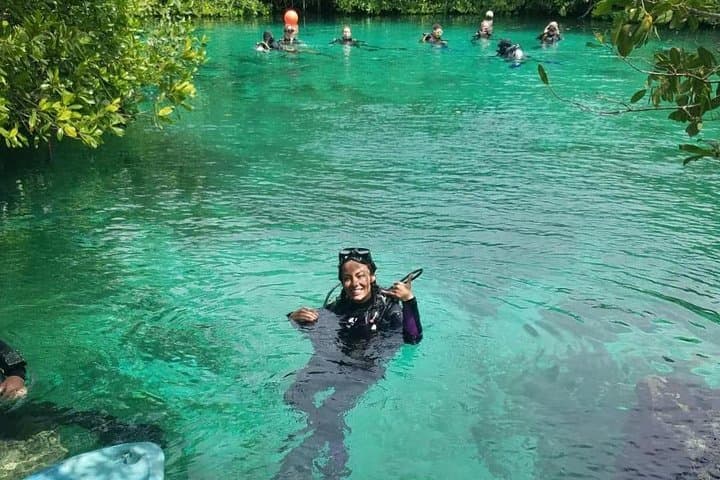
The surface here is a bright green mirror; beneath it the mangrove roots thread into caverns and saltwater channels that dare you to look deeper.
Verified experiences and guided adventures in the surrounding area.
Operated by Flying Fish Tulum · Tulum, Quintana Roo
The surface here is a bright green mirror; beneath it the mangrove roots thread into caverns and saltwater channels that dare you to look deeper.
At Casa Cenote the water temperature is warm and clear, and an introductory PADI dive takes you under a fringe of jungle where light filters like a corridor. The guide starts with basic theory on the shore, then you practice regulator use and safety skills in shallow water before making a guided dive to roughly 7 m (21 ft).
Geologically, Casa Cenote is a coastal sinkhole in the Yucatán’s limestone platform where karst processes opened a conduit between groundwater and the Caribbean — the result is a mix of freshwater and marine influence that supports both freshwater and saltwater species. Culturally, cenotes were vital to the Maya and remain community water sites; today they’re managed as fragile ecosystems and popular dive training grounds.
Expect mangrove roots, patches of seagrass, occasional tarpon and inquisitive juvenile barracuda, plus blue swimmer crabs and moray eels tucked into ledges.
Practical guidance: arrive in swimwear, plan for roughly 4 hours including transport and briefing, and bring a towel and reef-safe sunscreen. Listen closely during the orientation — buoyancy and regulator drills are the core of a safe first dive. If you have back or heart issues, discuss with the operator and your doctor first. Bookings commonly include gear and snacks; photos are best taken by a guide or with a secure underwater housing. Timing early in the day keeps conditions glassier and groups smaller.
moderate.
4 hours.
Moderate fitness — able to swim and kneel/stand for the brief shore training; some comfort with shallow water required.
No — this is a Discover Scuba Diving program designed for non-certified guests under direct instructor supervision.
The guided dive typically reaches about 7 meters (21 feet), appropriate for training and beginners.
Many operators include private transport from Tulum; confirm at booking — this experience lists private transport in inclusions.
Participants should have moderate fitness; the activity is not recommended for pregnant travelers or those with serious heart or spinal conditions — consult the operator and a physician if unsure.
Cenotes formed when the Yucatán’s limestone roof collapsed, exposing groundwater; they were crucial freshwater sources for the Maya and remain culturally significant today.
Cenote environments are sensitive to pollution and touch; use reef-safe products, follow guide directions, and avoid contact with roots and rock to preserve the site.
Flying Fish Tulum operates guided outdoor trips and adventures with an emphasis on safety, stewardship, and memorable experiences.
The surface here is a bright green mirror; beneath it the mangrove roots thread into caverns and saltwater channels that dare you to look deeper.
The surface here is a bright green mirror; beneath it the mangrove roots thread into caverns and saltwater channels that dare you to look deeper.
At Casa Cenote the water temperature is warm and clear, and an introductory PADI dive takes you under a fringe of jungle where light filters like a corridor. The guide starts with basic theory on the shore, then you practice regulator use and safety skills in shallow water before making a guided dive to roughly 7 m (21 ft).
Geologically, Casa Cenote is a coastal sinkhole in the Yucatán’s limestone platform where karst processes opened a conduit between groundwater and the Caribbean — the result is a mix of freshwater and marine influence that supports both freshwater and saltwater species. Culturally, cenotes were vital to the Maya and remain community water sites; today they’re managed as fragile ecosystems and popular dive training grounds.
Expect mangrove roots, patches of seagrass, occasional tarpon and inquisitive juvenile barracuda, plus blue swimmer crabs and moray eels tucked into ledges.
Practical guidance: arrive in swimwear, plan for roughly 4 hours including transport and briefing, and bring a towel and reef-safe sunscreen. Listen closely during the orientation — buoyancy and regulator drills are the core of a safe first dive. If you have back or heart issues, discuss with the operator and your doctor first. Bookings commonly include gear and snacks; photos are best taken by a guide or with a secure underwater housing. Timing early in the day keeps conditions glassier and groups smaller.