THE ADVENTURE COLLECTIVE® · Independent discovery and booking for outdoor travel

Learn the fundamentals of cave diving in the Yucatán’s cenotes with a TDI Intro to Cave Diver course. Expect classroom theory, reel and light skills, and supervised cave penetrations guided by local instructors.
Learn the fundamentals of cave diving in the Yucatán’s cenotes with a TDI Intro to Cave Diver course. Expect classroom theory, reel and light skills, and supervised cave penetrations guided by local instructors.
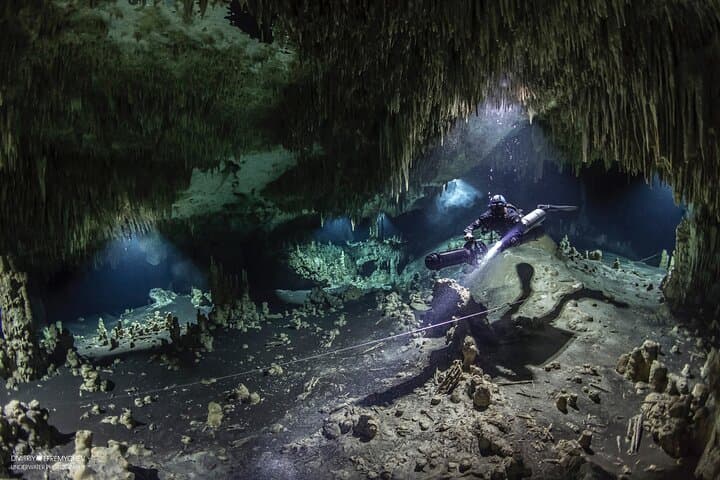
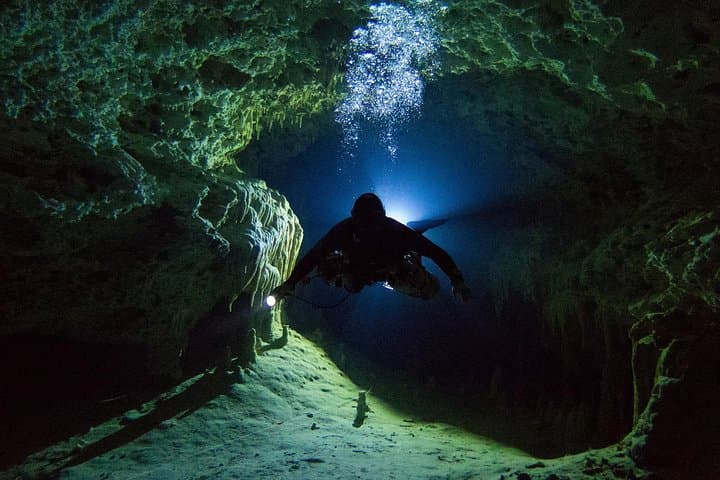
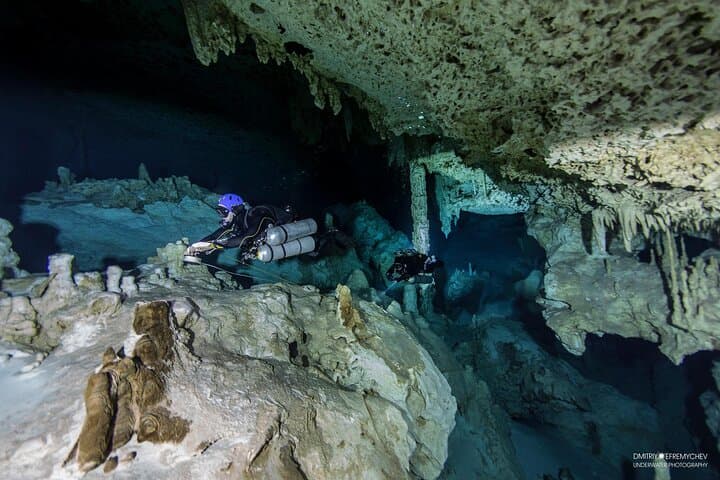
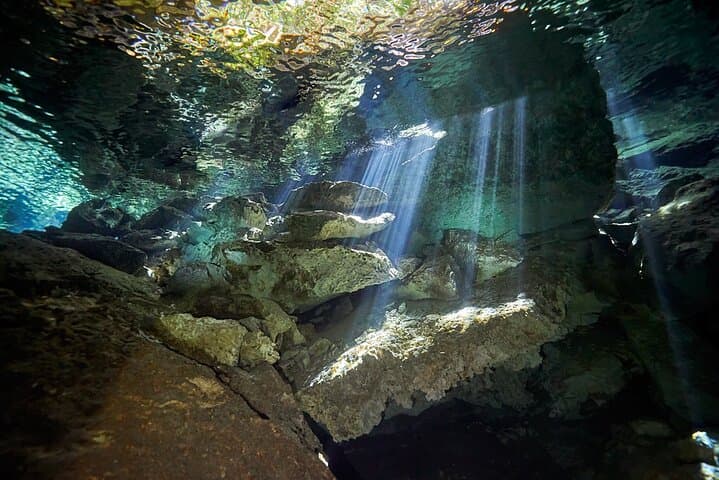
A low sun cuts through the jungle canopy and light pillars spill into the water as students gather at the rim of a cenote. The entrance is a doorway to an underground world where visibility can be crystalline and walls are scored by millennia of freshwater flow. In the Yucatán, cave passages are literal archives of geology: a karst plateau riddled with tunnels and chambers carved from limestone and fed by the aquifer system that produced Ox Bel Ha and Sac Actun.
Verified experiences and guided adventures in the surrounding area.
Operated by Diversland Mexico · Playa del Carmen, Quintana Roo
A low sun cuts through the jungle canopy and light pillars spill into the water as students gather at the rim of a cenote. The entrance is a doorway to an underground world where visibility can be crystalline and walls are scored by millennia of freshwater flow. In the Yucatán, cave passages are literal archives of geology: a karst plateau riddled with tunnels and chambers carved from limestone and fed by the aquifer system that produced Ox Bel Ha and Sac Actun.
This TDI Intro to Cave Diver course builds on cavern skills, teaching single-line navigation, gas management and equipment configurations suited to confined, silt-prone passages. Trainers cover the local geology and Maya-era relationships to sinkholes, plus site-specific access and landowner etiquette important in Quintana Roo.
Expect hands-on instruction in buoyancy, trim and reel techniques, plus emergency procedures for silting and equipment failure. The course blends classroom theory—decompression basics, gas matching—and practical pool or open-water drills before supervised cave penetrations.
Practical guidance: come rested, avoid diving within 24 hours of flying, and carry a dive computer and primary/backup lights. The course is technical—attention to procedures matters more than raw fitness—but competent buoyancy and recent diving experience are essential. Respect the formations: one careless fin kick can erase decades of growth. For divers seeking structured progression into overhead environments, this course is a measured, safety-focused step into a uniquely Mexican underwater landscape.
challenging.
3 days (approx. 72 hours).
Moderate fitness with good buoyancy control; not highly aerobic but requires stamina for repetitive skill drills.
Minimum certification is Cavern Diver TDI or equivalent; instructors will verify credentials before training begins.
The advertised duration is approximately 72 hours (multi-day), combining classroom, confined-water drills and supervised cave penetrations.
The course includes bottled water, snacks and hotel pickup/drop-off in Playa del Carmen; full meals are not typically included.
No; the course is not recommended for pregnant people or those with certain cardiovascular or respiratory conditions—complete the required health questionnaire and consult a physician if unsure.
The Yucatán’s cenotes were sacred to the Maya and served as freshwater sources and ritual sites; the region’s karst geology created one of the world’s most extensive submerged cave networks.
Cenotes are fragile: avoid sunscreens that contain oxybenzone, follow site rules, and minimize contact to protect formations and water quality.
Diversland Mexico operates guided outdoor trips and adventures with an emphasis on safety, stewardship, and memorable experiences.
A low sun cuts through the jungle canopy and light pillars spill into the water as students gather at the rim of a cenote. The entrance is a doorway to an underground world where visibility can be crystalline and walls are scored by millennia of freshwater flow. In the Yucatán, cave passages are literal archives of geology: a karst plateau riddled with tunnels and chambers carved from limestone and fed by the aquifer system that produced Ox Bel Ha and Sac Actun.
A low sun cuts through the jungle canopy and light pillars spill into the water as students gather at the rim of a cenote. The entrance is a doorway to an underground world where visibility can be crystalline and walls are scored by millennia of freshwater flow. In the Yucatán, cave passages are literal archives of geology: a karst plateau riddled with tunnels and chambers carved from limestone and fed by the aquifer system that produced Ox Bel Ha and Sac Actun.
This TDI Intro to Cave Diver course builds on cavern skills, teaching single-line navigation, gas management and equipment configurations suited to confined, silt-prone passages. Trainers cover the local geology and Maya-era relationships to sinkholes, plus site-specific access and landowner etiquette important in Quintana Roo.
Expect hands-on instruction in buoyancy, trim and reel techniques, plus emergency procedures for silting and equipment failure. The course blends classroom theory—decompression basics, gas matching—and practical pool or open-water drills before supervised cave penetrations.
Practical guidance: come rested, avoid diving within 24 hours of flying, and carry a dive computer and primary/backup lights. The course is technical—attention to procedures matters more than raw fitness—but competent buoyancy and recent diving experience are essential. Respect the formations: one careless fin kick can erase decades of growth. For divers seeking structured progression into overhead environments, this course is a measured, safety-focused step into a uniquely Mexican underwater landscape.