THE ADVENTURE COLLECTIVE® · Independent discovery and booking for outdoor travel

A full-day, hands-on Arctic skills course in Iceland’s Westfjords that teaches Nordic skiing, pulka travel, snow shelters, and expedition cooking. Expect sustained physical work, expert instruction, and an optional overnight in your own camp.
A full-day, hands-on Arctic skills course in Iceland’s Westfjords that teaches Nordic skiing, pulka travel, snow shelters, and expedition cooking. Expect sustained physical work, expert instruction, and an optional overnight in your own camp.
A pale sun hangs low over a frozen fjord as a small group clips into cross-country skis; wind scours the black rock and the snow gleams like worked metal. The day begins on a gravel road out of Ísafjörður and quickly narrows to an Arctic quiet where your pulka sled taps a steady rhythm behind you.
Verified experiences and guided adventures in the surrounding area.
Operated by Wakeboarding Iceland · Ísafjörður, Westfjords
A pale sun hangs low over a frozen fjord as a small group clips into cross-country skis; wind scours the black rock and the snow gleams like worked metal. The day begins on a gravel road out of Ísafjörður and quickly narrows to an Arctic quiet where your pulka sled taps a steady rhythm behind you.
The Westfjords were carved by glaciers and sea — steep fjord walls, bowl-shaped valleys, and peeling basalt cliffs tell a geological story of ice, fire, and uplift. Human history here centers on fishing and self-reliance; small coastal communities learned to read weather and sea for survival. Guides draw on that heritage while teaching practical expedition skills adapted to Icelandic conditions.
Over the course of the day you’ll practice Nordic-ski technique, pulka management, and building snow shelters; you’ll make fire in wind-scoured snow and cook a hot lunch outdoors. The experience is deliberately hands-on: expect repetitive skill drills, heavy exertion when hauling a loaded pulka, and decision-making in cold, variable weather. For those who opt to spend the night in camp, you’ll test sleeping systems and watch how micro-shelters change the sound of the fjord after sundown.
Practical guidance: arrive with layered, windproof clothing, a sense of self-reliance, and a tolerance for hard physical work. Hydrate before you start and plan for limited phone reception; guides provide skis, pulk, and instruction, but personal comfort items—warm base layers, sun goggles, and high-energy snacks—make a long Arctic day manageable.
challenging.
8–10 hours (full day).
Participants should have a high level of cardiovascular fitness and leg/core strength for extended skiing and pulka hauling.
No—guides teach Nordic-ski technique, but basic balance and some prior cross-country experience reduces the learning curve and fatigue.
Yes—there’s an option to spend the night in your own camp; participants must be prepared to return independently to Ísafjörður the next morning.
Guides supply skis, poles, and pulk equipment plus group cooking gear; bring personal layers, warm socks, goggles, snacks, and any personal medication.
No—this is physically demanding and not recommended for people with serious cardiovascular, spinal, or pregnancy-related restrictions; check booking requirements before registering.
Westfjords communities developed tight-knit maritime cultures shaped by fishing, boat-building, and weather forecasting traditions; survival skills remain part of local identity.
The region’s tundra and nesting cliffs are fragile—stick to established routes, minimize campfire impact, and follow guide instructions to protect habitat.
Wakeboarding Iceland operates guided outdoor trips and adventures with an emphasis on safety, stewardship, and memorable experiences.


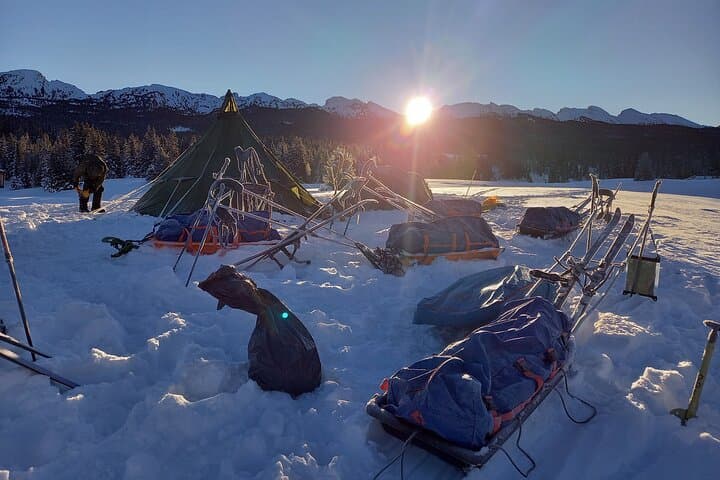
A pale sun hangs low over a frozen fjord as a small group clips into cross-country skis; wind scours the black rock and the snow gleams like worked metal. The day begins on a gravel road out of Ísafjörður and quickly narrows to an Arctic quiet where your pulka sled taps a steady rhythm behind you.
A pale sun hangs low over a frozen fjord as a small group clips into cross-country skis; wind scours the black rock and the snow gleams like worked metal. The day begins on a gravel road out of Ísafjörður and quickly narrows to an Arctic quiet where your pulka sled taps a steady rhythm behind you.
The Westfjords were carved by glaciers and sea — steep fjord walls, bowl-shaped valleys, and peeling basalt cliffs tell a geological story of ice, fire, and uplift. Human history here centers on fishing and self-reliance; small coastal communities learned to read weather and sea for survival. Guides draw on that heritage while teaching practical expedition skills adapted to Icelandic conditions.
Over the course of the day you’ll practice Nordic-ski technique, pulka management, and building snow shelters; you’ll make fire in wind-scoured snow and cook a hot lunch outdoors. The experience is deliberately hands-on: expect repetitive skill drills, heavy exertion when hauling a loaded pulka, and decision-making in cold, variable weather. For those who opt to spend the night in camp, you’ll test sleeping systems and watch how micro-shelters change the sound of the fjord after sundown.
Practical guidance: arrive with layered, windproof clothing, a sense of self-reliance, and a tolerance for hard physical work. Hydrate before you start and plan for limited phone reception; guides provide skis, pulk, and instruction, but personal comfort items—warm base layers, sun goggles, and high-energy snacks—make a long Arctic day manageable.