THE ADVENTURE COLLECTIVE® · Independent discovery and booking for outdoor travel

Explore Madeira’s narrow gorges on a three‑hour intermediate canyoning route—rappels, jumps into natural pools, and basalt cliffs framed by laurisilva forest. Expect wet rock, technical anchors, and a guide‑led descent that showcases the island’s volcanic geology.
Explore Madeira’s narrow gorges on a three‑hour intermediate canyoning route—rappels, jumps into natural pools, and basalt cliffs framed by laurisilva forest. Expect wet rock, technical anchors, and a guide‑led descent that showcases the island’s volcanic geology.
You step off a narrow lane and the mountain brings you forward—the gorge narrows, basalt walls darken, and the river's voice grows into a series of lined-up waterfalls daring you downstream. Spray hits your face; moss clings to every ledge. For three hours you move through carved rock and bright pools, lowering yourself from anchors and pushing across natural swim basins that feel deliberately hidden.
Verified experiences and guided adventures in the surrounding area.
You step off a narrow lane and the mountain brings you forward—the gorge narrows, basalt walls darken, and the river's voice grows into a series of lined-up waterfalls daring you downstream. Spray hits your face; moss clings to every ledge. For three hours you move through carved rock and bright pools, lowering yourself from anchors and pushing across natural swim basins that feel deliberately hidden.
Madeira is volcanic: steep, young rock and narrow ribeiras (ravines) channel winter rains into powerful drops that have carved the island's canyons. The laurisilva forest that blankets parts of the north shore is UNESCO-listed; local levadas and small villages like São Vicente speak to an agricultural past that still frames access routes. Canyoning here blends geology and culture—guides place anchors where shepherds once crossed streams.
This intermediate route typically covers 2–3 km of canyon with roughly 150–200 m of total descent and several abseils (max single rappel around 20–25 m). Terrain alternates wet basalt, gravel slabs, and deep plunge pools; a confident swimmer comfortable with heights and guided rope techniques will get the most from the day.
Practical guidance: wear a neoprene suit and sturdy canyon shoes, hydrate before the drop, and expect strong currents in winter months. Start mid-morning for better light into shaded gorges and bring a waterproof camera if you want splash photos—secure it to your body. Book with an operator who provides technical kit, checks anchors, and limits group size so movement through tight sections stays efficient and safe.
challenging.
3 hours.
Should be in good cardio and leg strength condition; able to climb, swim in moving water, and handle repeated rappels.
No formal experience is required for this intermediate trip, but you should be comfortable with rappels, swimming in current, and exposure to heights; guides teach techniques on site.
Minimum ages vary by operator (often 14–16), and participants should be in good health with the ability to hike uneven terrain and execute multiple rappels.
Yes — most operators provide harnesses, helmets, ropes, and wetsuits; confirm sizes and what's included when booking to avoid surprises.
Guides will assess safety and may postpone or cancel the trip; reputable operators prioritize conditions and can often offer alternative routes or rescheduling.
Madeira’s ravines were shaped by volcanic eruptions and later managed by levada irrigation systems; small north-coast settlements grew around these water courses.
Canyoning routes pass through sensitive laurisilva and riparian zones — stick to guided trails, avoid disturbing vegetation, and follow leave‑no‑trace practices to minimize impact.
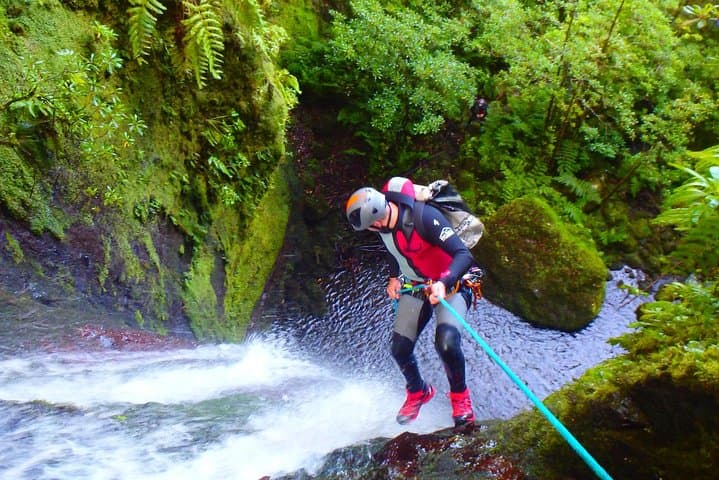
You step off a narrow lane and the mountain brings you forward—the gorge narrows, basalt walls darken, and the river's voice grows into a series of lined-up waterfalls daring you downstream. Spray hits your face; moss clings to every ledge. For three hours you move through carved rock and bright pools, lowering yourself from anchors and pushing across natural swim basins that feel deliberately hidden.
You step off a narrow lane and the mountain brings you forward—the gorge narrows, basalt walls darken, and the river's voice grows into a series of lined-up waterfalls daring you downstream. Spray hits your face; moss clings to every ledge. For three hours you move through carved rock and bright pools, lowering yourself from anchors and pushing across natural swim basins that feel deliberately hidden.
Madeira is volcanic: steep, young rock and narrow ribeiras (ravines) channel winter rains into powerful drops that have carved the island's canyons. The laurisilva forest that blankets parts of the north shore is UNESCO-listed; local levadas and small villages like São Vicente speak to an agricultural past that still frames access routes. Canyoning here blends geology and culture—guides place anchors where shepherds once crossed streams.
This intermediate route typically covers 2–3 km of canyon with roughly 150–200 m of total descent and several abseils (max single rappel around 20–25 m). Terrain alternates wet basalt, gravel slabs, and deep plunge pools; a confident swimmer comfortable with heights and guided rope techniques will get the most from the day.
Practical guidance: wear a neoprene suit and sturdy canyon shoes, hydrate before the drop, and expect strong currents in winter months. Start mid-morning for better light into shaded gorges and bring a waterproof camera if you want splash photos—secure it to your body. Book with an operator who provides technical kit, checks anchors, and limits group size so movement through tight sections stays efficient and safe.