THE ADVENTURE COLLECTIVE® · Independent discovery and booking for outdoor travel

Ride classic Swiss trains from Interlaken to Grindelwald, ascend the cogwheel to Kleine Scheidegg for lunch with Eiger views, stroll car-free Wengen, and finish beneath Lauterbrunnen’s dramatic Staubbach Falls. This small-group day trip packs high-alpine scenery and accessible walks into one efficient day.
Ride classic Swiss trains from Interlaken to Grindelwald, ascend the cogwheel to Kleine Scheidegg for lunch with Eiger views, stroll car-free Wengen, and finish beneath Lauterbrunnen’s dramatic Staubbach Falls. This small-group day trip packs high-alpine scenery and accessible walks into one efficient day.
A crisp mountain morning opens in Interlaken as travelers gather by the glass cube of the tourist information point, the trains humming like a promise. The short rail glide to Grindelwald delivers an immediate change: a village threaded with timbered chalets, the north face of the Eiger towering and watching. From here the cogwheel train climbs to Kleine Scheidegg, where lunch at 2,061 m comes with a panorama—Eiger, Mönch and Jungfrau arranged like cliffs of an alpine amphitheater.
Verified experiences and guided adventures in the surrounding area.
Operated by SwissTravelGuide.ch · Interlaken, Bern
A crisp mountain morning opens in Interlaken as travelers gather by the glass cube of the tourist information point, the trains humming like a promise. The short rail glide to Grindelwald delivers an immediate change: a village threaded with timbered chalets, the north face of the Eiger towering and watching. From here the cogwheel train climbs to Kleine Scheidegg, where lunch at 2,061 m comes with a panorama—Eiger, Mönch and Jungfrau arranged like cliffs of an alpine amphitheater.
The route traces a history of 19th‑century alpinism and Swiss rail engineering; these valleys were sealed by glaciers and gradually carved by meltwater into the steep-walled Lauterbrunnen basin. Wengen’s car-free streets preserve mountain village life and invite a brisk walk before the descent into Lauterbrunnen, where Staubbach Falls plunges from a near-vertical rock face and sprays the valley with fresh, cold mist.
Practically, the trip is rail-based and accessible: expect multiple short walks on paved or compact dirt surfaces, some standing time on platforms, and weather that can shift fast. Bring layered clothing for wind and sun, a good pair of walking shoes for cobbled streets and viewing points, and a small daypack for water and camera gear. Meals at Kleine Scheidegg follow Swiss mountain-house fare—reservations help at busy lunch hours.
Timing matters: start early to avoid afternoon crowds, and plan transport back to Interlaken on the regional timetable. Respect alpine rules—stay on paths, pack out waste, and give wildlife space—and the day delivers high-alpine views with minimal exertion, framed by centuries of mountain culture and engineering.
easy.
7 hours.
Suitable for most fitness levels; requires the ability to walk short distances and stand on platforms for transfers.
Yes—this small-group day trip includes all necessary 2nd-class regional and cogwheel train tickets for the itinerary.
Yes; the tour is rated easy with only short walks and no technical hiking, though participants should be able to manage stairs and standing on trains.
Lunch is not included; the itinerary provides free time at Kleine Scheidegg where mountain restaurants offer traditional Swiss dishes available for purchase.
The operator may cancel for poor weather or insufficient travelers; check cancellation terms and arrive prepared with layers—visibility can affect views but trains generally still run.
The Jungfrau region grew in prominence during the golden age of alpinism in the 19th century; rail lines and mountain hotels followed to serve climbers and early tourists.
Alpine meadows and fragile high-altitude ecosystems recover slowly—stick to paths, avoid off-trail walking, and carry out all litter to reduce impact.
SwissTravelGuide.ch operates guided outdoor trips and adventures with an emphasis on safety, stewardship, and memorable experiences.
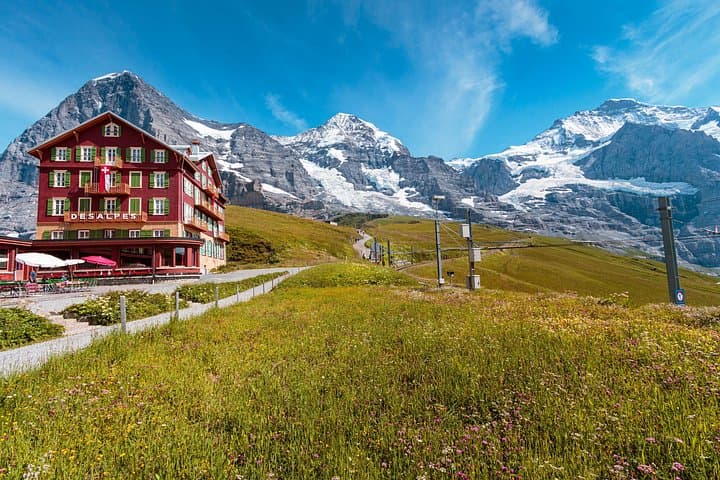
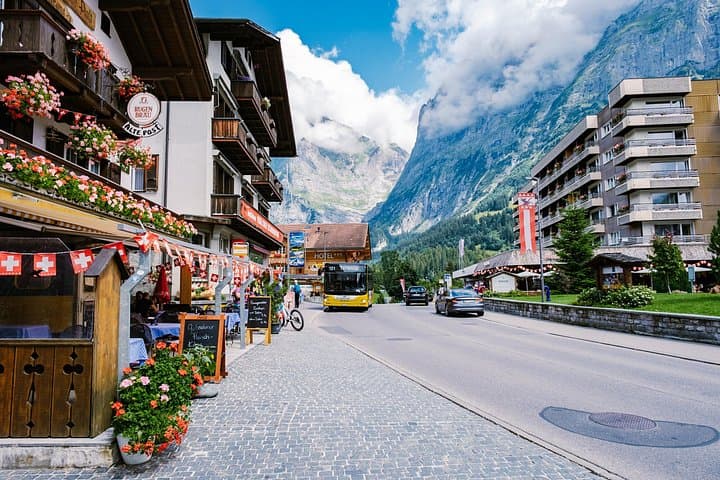
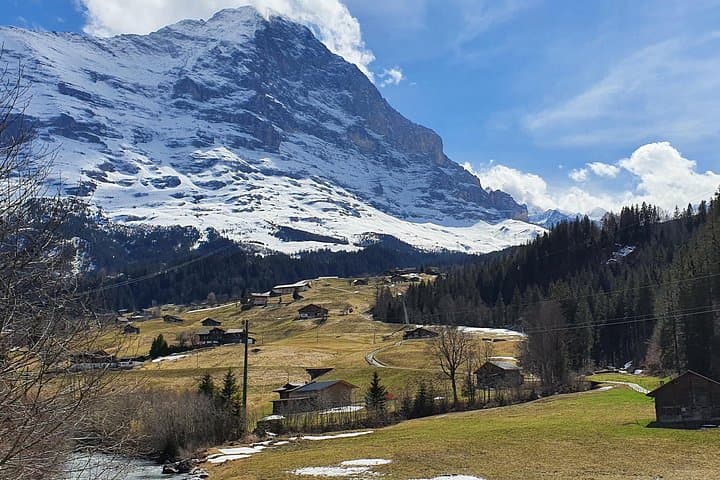
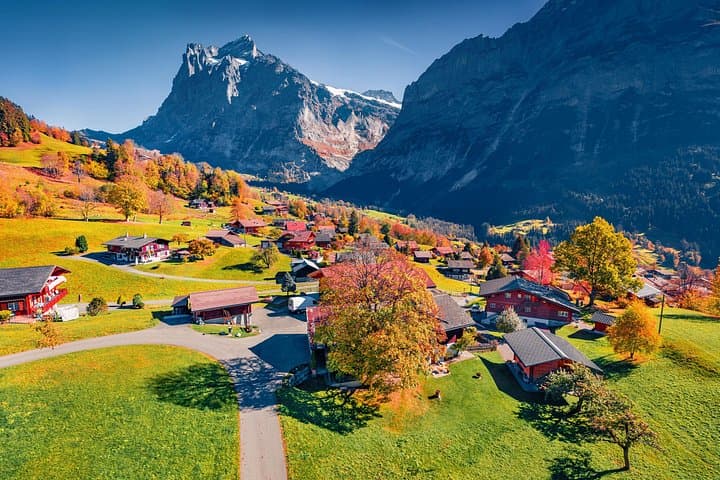
A crisp mountain morning opens in Interlaken as travelers gather by the glass cube of the tourist information point, the trains humming like a promise. The short rail glide to Grindelwald delivers an immediate change: a village threaded with timbered chalets, the north face of the Eiger towering and watching. From here the cogwheel train climbs to Kleine Scheidegg, where lunch at 2,061 m comes with a panorama—Eiger, Mönch and Jungfrau arranged like cliffs of an alpine amphitheater.
A crisp mountain morning opens in Interlaken as travelers gather by the glass cube of the tourist information point, the trains humming like a promise. The short rail glide to Grindelwald delivers an immediate change: a village threaded with timbered chalets, the north face of the Eiger towering and watching. From here the cogwheel train climbs to Kleine Scheidegg, where lunch at 2,061 m comes with a panorama—Eiger, Mönch and Jungfrau arranged like cliffs of an alpine amphitheater.
The route traces a history of 19th‑century alpinism and Swiss rail engineering; these valleys were sealed by glaciers and gradually carved by meltwater into the steep-walled Lauterbrunnen basin. Wengen’s car-free streets preserve mountain village life and invite a brisk walk before the descent into Lauterbrunnen, where Staubbach Falls plunges from a near-vertical rock face and sprays the valley with fresh, cold mist.
Practically, the trip is rail-based and accessible: expect multiple short walks on paved or compact dirt surfaces, some standing time on platforms, and weather that can shift fast. Bring layered clothing for wind and sun, a good pair of walking shoes for cobbled streets and viewing points, and a small daypack for water and camera gear. Meals at Kleine Scheidegg follow Swiss mountain-house fare—reservations help at busy lunch hours.
Timing matters: start early to avoid afternoon crowds, and plan transport back to Interlaken on the regional timetable. Respect alpine rules—stay on paths, pack out waste, and give wildlife space—and the day delivers high-alpine views with minimal exertion, framed by centuries of mountain culture and engineering.