THE ADVENTURE COLLECTIVE® · Independent discovery and booking for outdoor travel

Explore the Interlaken valley by e‑bike—follow the turquoise Aare to lakes Thun and Brienz, ride through woodlands and farmland, and stop at two medieval castle ruins. This guided 3‑hour loop is an efficient, scenic way to see local history and alpine views.
Explore the Interlaken valley by e‑bike—follow the turquoise Aare to lakes Thun and Brienz, ride through woodlands and farmland, and stop at two medieval castle ruins. This guided 3‑hour loop is an efficient, scenic way to see local history and alpine views.
The ride opens on a crisp morning beside the Aare, where turquoise water hurries past and the first pedal strokes loosen the city’s rhythm.
Verified experiences and guided adventures in the surrounding area.
Operated by Yellow Velo · Interlaken, Bern
The ride opens on a crisp morning beside the Aare, where turquoise water hurries past and the first pedal strokes loosen the city’s rhythm.
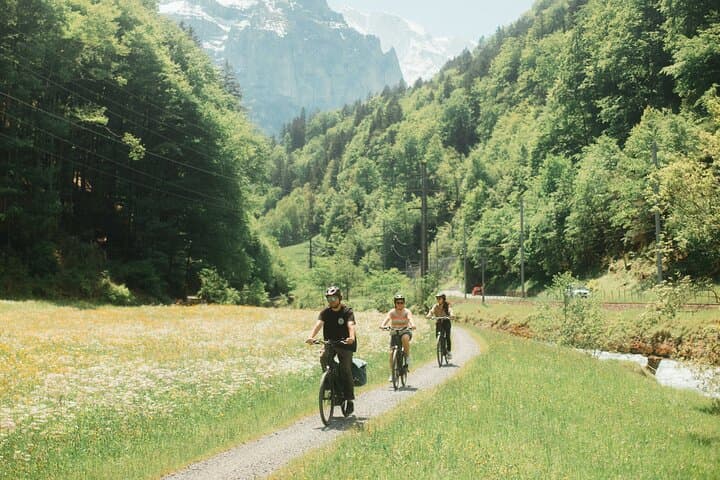
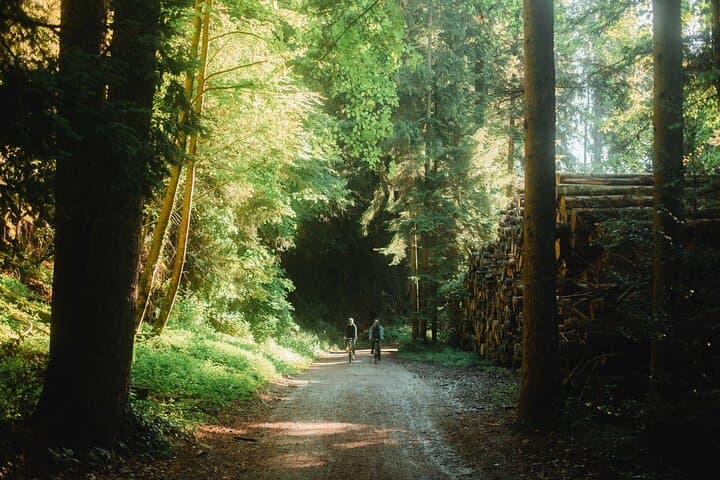
A small group sets out from Yellow Velo in Interlaken, guided down flat cycle paths that follow the river through mixed woodland and farmland. In one direction the Aare broadens into Lake Thun, framed by the stepped face of Niesen; in the other, Lake Brienz glitters with glacier-fed clarity. Along the route, two medieval low-castle ruins — relics of 13th-century trade control — punctuate the pastoral scenery, offering compact viewpoints rather than full restorations.
Geologically the Bernese Oberland is young and dramatic: steep valley walls carved by ice, rivers that still sort and polish the valley’s stones, and moraine-shaped plains where farmers have long worked smallholdings. Culturally, Unterseen feels like the region’s civic memory, its Stadthausplatz a reminder that tourism here dates back to 19th-century alpine explorers.
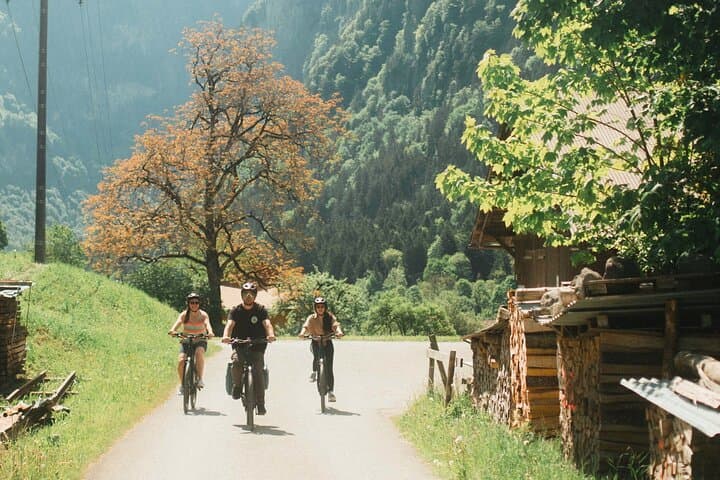
Practically, the guided e-bike tour covers roughly 30–35 km over about three hours with minimal elevation but variable surfaces — paved cycleways, farm tracks and hard-packed gravel. Expect short photo and rest stops, a lakeside chance to swim in Brienz, and local detours through a BIO farm.
Bring layered clothing for wind and sun, a filled water bottle, and shoes with a bit of tread. Helmets and e-bikes are provided; battery assistance makes hills manageable but you’ll still be active for the duration. Aim for a morning start to avoid the hottest midday sun and to catch the clearest light on the lakes.
easy.
3–3.5 hours.
Suitable for most people who can pedal lightly for a few hours; e-bike assistance reduces strain but basic stamina helps.
The guided loop lasts about 3–3.5 hours and covers roughly 30–35 km on mostly flat cycle paths with short stretches of gravel and farm tracks.
Yes—quality e-bikes and helmets are supplied at the Yellow Velo shop; guides will fit and brief you before departure.
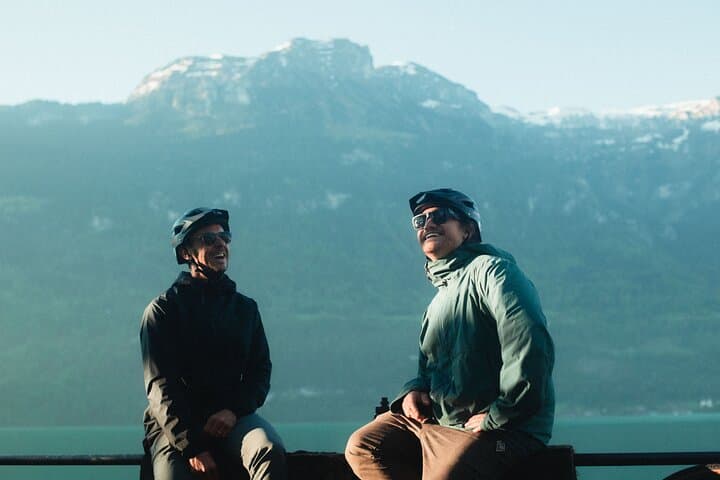
Yes, there is a scheduled stop at Bonigen on Lake Brienz where guests can swim; bring swimwear and a towel if you plan to go in.
Yes—this route is rated easy and suitable for riders 16 and older; e-bike assistance makes it accessible even if you don’t cycle regularly.
The region’s low-castle ruins date to the 13th century, built to control alpine trade routes; Interlaken itself grew as a tourist gateway in the 1800s.
Stick to signed paths, avoid disturbing farmland operations, and use refillable bottles—local operators support low-impact mobility and responsible lake use.
Yellow Velo operates guided outdoor trips and adventures with an emphasis on safety, stewardship, and memorable experiences.
The ride opens on a crisp morning beside the Aare, where turquoise water hurries past and the first pedal strokes loosen the city’s rhythm.
The ride opens on a crisp morning beside the Aare, where turquoise water hurries past and the first pedal strokes loosen the city’s rhythm.
A small group sets out from Yellow Velo in Interlaken, guided down flat cycle paths that follow the river through mixed woodland and farmland. In one direction the Aare broadens into Lake Thun, framed by the stepped face of Niesen; in the other, Lake Brienz glitters with glacier-fed clarity. Along the route, two medieval low-castle ruins — relics of 13th-century trade control — punctuate the pastoral scenery, offering compact viewpoints rather than full restorations.
Geologically the Bernese Oberland is young and dramatic: steep valley walls carved by ice, rivers that still sort and polish the valley’s stones, and moraine-shaped plains where farmers have long worked smallholdings. Culturally, Unterseen feels like the region’s civic memory, its Stadthausplatz a reminder that tourism here dates back to 19th-century alpine explorers.
Practically, the guided e-bike tour covers roughly 30–35 km over about three hours with minimal elevation but variable surfaces — paved cycleways, farm tracks and hard-packed gravel. Expect short photo and rest stops, a lakeside chance to swim in Brienz, and local detours through a BIO farm.
Bring layered clothing for wind and sun, a filled water bottle, and shoes with a bit of tread. Helmets and e-bikes are provided; battery assistance makes hills manageable but you’ll still be active for the duration. Aim for a morning start to avoid the hottest midday sun and to catch the clearest light on the lakes.