THE ADVENTURE COLLECTIVE® · Independent discovery and booking for outdoor travel

A concise one- to two-hour private walking tour of Lucerne focused on the city’s most photogenic spots — Chapel Bridge, Jesuit Church and the old town’s hidden corners. Perfect for photographers and social-media-minded travelers wanting local angles and timing tips.
A concise one- to two-hour private walking tour of Lucerne focused on the city’s most photogenic spots — Chapel Bridge, Jesuit Church and the old town’s hidden corners. Perfect for photographers and social-media-minded travelers wanting local angles and timing tips.
You step out of Lucerne’s train station into a bright river corridor: the Reuss threads through the city, nudging you toward a wooden bridge that has watched carts and painters for six centuries. In sixty minutes the guide leads a compact circuit — Chapel Bridge, Jesuit Church, and the cobbled alleys of the Altstadt — each stop staged for photos but rooted in history.
Verified experiences and guided adventures in the surrounding area.
Operated by Historic Walking Tour - Lucerne (2hours) · Lucerne, Canton of Lucerne
You step out of Lucerne’s train station into a bright river corridor: the Reuss threads through the city, nudging you toward a wooden bridge that has watched carts and painters for six centuries. In sixty minutes the guide leads a compact circuit — Chapel Bridge, Jesuit Church, and the cobbled alleys of the Altstadt — each stop staged for photos but rooted in history.
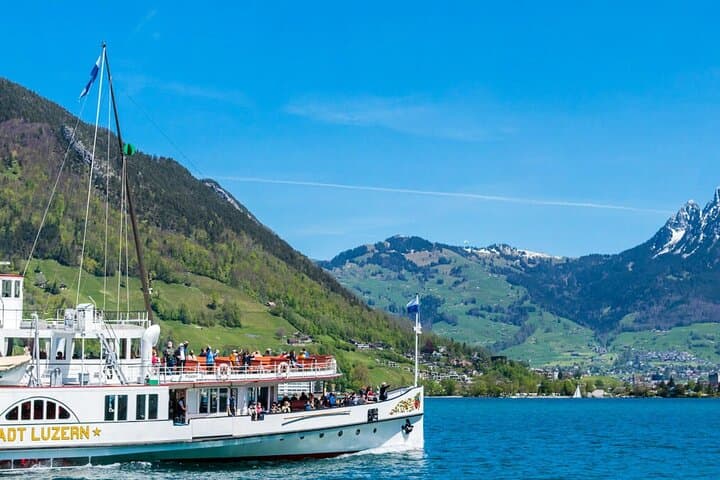
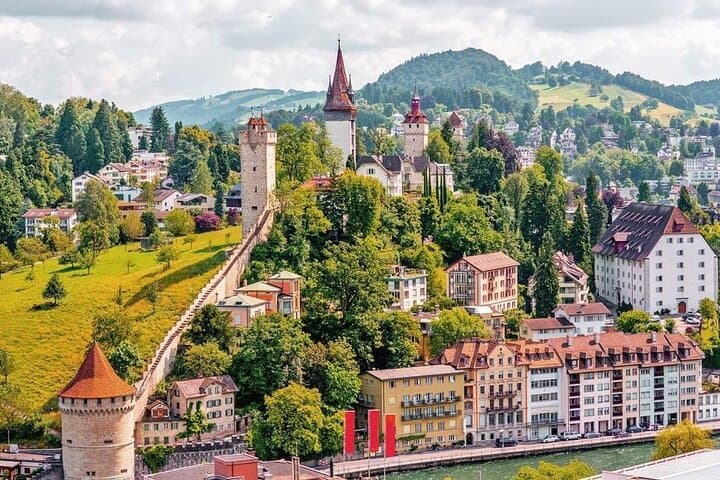
Lucerne grew around trade routes and the lake; Chapel Bridge (Kapellbrücke) dates to the 14th century and still carries painted panels that map civic memory. Geology shows itself in the distant ridgeline of the Swiss Alps and in pockets of glacially polished stone along the lakeshore; culture lives in merchants’ facades, guildhouse murals and the soft toll of church bells. Local guides know the quieter angles — a carved corner on a mural, a canal-side reflection, a shuttered bakery that glows at golden hour.
Practical guidance is direct: plan for 1–2 hours, meet at the arch facing Lucerne Hauptbahnhof, and prioritize light — early morning or late afternoon yields the best contrast without crowds. Wear comfortable walking shoes for cobbles and a light layer against lakeside breezes; bring a charged phone or camera and a portable battery for uninterrupted shooting. Respect private courtyards and keep to public walkways when framing shots. If you want slow portraits, mention it when booking so your guide can pace the route. This is an easy, urban stroll that rewards attention to detail: the city invites you to frame history, not just photograph it.
easy.
1–2 hours.
Suitable for all fitness levels; requires standing and short walks on uneven cobbles.
Meet at the arch facing Lucerne Hauptbahnhof (train station) — your guide will be waiting there.
Yes; the tour is private and designed for small groups, typically ideal for two people.
Language options vary by guide; confirm at booking — many guides speak English and German.
Yes; request extended time or portrait assistance when booking so the guide can adjust the route and pacing.
Lucerne’s development centers on medieval trade and protection; Chapel Bridge (14th century) served both as a crossing and a pictorial chronicle of civic life.
The city encourages low-impact tourism—use public transit, avoid dumping waste into the Reuss and follow posted signs to protect historic wood and painted panels.
Historic Walking Tour - Lucerne (2hours) operates guided outdoor trips and adventures with an emphasis on safety, stewardship, and memorable experiences.
You step out of Lucerne’s train station into a bright river corridor: the Reuss threads through the city, nudging you toward a wooden bridge that has watched carts and painters for six centuries. In sixty minutes the guide leads a compact circuit — Chapel Bridge, Jesuit Church, and the cobbled alleys of the Altstadt — each stop staged for photos but rooted in history.
You step out of Lucerne’s train station into a bright river corridor: the Reuss threads through the city, nudging you toward a wooden bridge that has watched carts and painters for six centuries. In sixty minutes the guide leads a compact circuit — Chapel Bridge, Jesuit Church, and the cobbled alleys of the Altstadt — each stop staged for photos but rooted in history.
Lucerne grew around trade routes and the lake; Chapel Bridge (Kapellbrücke) dates to the 14th century and still carries painted panels that map civic memory. Geology shows itself in the distant ridgeline of the Swiss Alps and in pockets of glacially polished stone along the lakeshore; culture lives in merchants’ facades, guildhouse murals and the soft toll of church bells. Local guides know the quieter angles — a carved corner on a mural, a canal-side reflection, a shuttered bakery that glows at golden hour.
Practical guidance is direct: plan for 1–2 hours, meet at the arch facing Lucerne Hauptbahnhof, and prioritize light — early morning or late afternoon yields the best contrast without crowds. Wear comfortable walking shoes for cobbles and a light layer against lakeside breezes; bring a charged phone or camera and a portable battery for uninterrupted shooting. Respect private courtyards and keep to public walkways when framing shots. If you want slow portraits, mention it when booking so your guide can pace the route. This is an easy, urban stroll that rewards attention to detail: the city invites you to frame history, not just photograph it.