THE ADVENTURE COLLECTIVE® · Independent discovery and booking for outdoor travel

Explore Zoo Aquarium Madrid in Casa de Campo—a compact, accessible wildlife and marine complex offering daily shows, aquarium displays, and family-friendly encounters. This guide covers what to expect, practical tips, and how to plan a 3–5 hour visit.
Explore Zoo Aquarium Madrid in Casa de Campo—a compact, accessible wildlife and marine complex offering daily shows, aquarium displays, and family-friendly encounters. This guide covers what to expect, practical tips, and how to plan a 3–5 hour visit.
Step through the gates of Zoo Aquarium Madrid and the city’s pace thins into pathways of palms, aviaries and tidal glass. In the broad green of Casa de Campo, enclosures open like chapters—an aquarium glass wall humming with saltwater life, a dolphin pool that slices sunlight, and family-friendly petting areas where smaller hands meet goats and sheep.
Verified experiences and guided adventures in the surrounding area.
Operated by Zoo Aquarium Madrid · Madrid, Community of Madrid
Step through the gates of Zoo Aquarium Madrid and the city’s pace thins into pathways of palms, aviaries and tidal glass. In the broad green of Casa de Campo, enclosures open like chapters—an aquarium glass wall humming with saltwater life, a dolphin pool that slices sunlight, and family-friendly petting areas where smaller hands meet goats and sheep.
The zoo occupies a long-standing cultural edge of Madrid: Casa de Campo was once royal hunting grounds turned public park, and the zoo evolved as a civic collection aimed at education and species care. Geologically the park sits in the low Manzanares valley, so routes are mostly flat and accessible; culturally the site functions as both leisure park and conservation center with scheduled feedings and talks that explain animal behavior and husbandry.
Expect an organized, largely paved layout with accessible paths, shaded benches, and descriptive panels in Spanish and often English. The aquarium habitats highlight temperate and tropical marine systems, while aviaries bring the chorus of birds close enough to feel the wind they make. Staff-led demonstrations—dolphin sessions, feeding windows, and keeper talks—are the practical heart of a visit and best scheduled early or mid-afternoon.
Practical guidance: buy mobile tickets in advance to skip lines, allow 3–5 hours for a relaxed visit, wear comfortable walking shoes and sun protection, and use public transit (metro and buses serve Casa de Campo) to avoid limited parking. Hydrate, follow posted distances at enclosures, and arrive early for the busiest exhibits—Madrid’s urban wildlife waits with a steady, curious patience.
easy.
3–5 hours.
Suitable for most fitness levels; expect walking on flat, paved paths for several hours.
Most visitors plan 3–5 hours to see key exhibits and catch a couple of shows; families with young children may spend longer with breaks.
Yes—daily demonstrations and feedings are included; check the schedule on arrival for exact times.
Yes—the site reports wheelchair- and stroller-accessible paths and surfaces throughout the park.
Picnic areas exist in Casa de Campo outside the zoo; within the zoo there are designated eating areas and cafés—check onsite rules for outside food.
Casa de Campo began as royal hunting lands and later became Madrid’s principal urban park; the zoo grew alongside the park as a public institution focused on education.
The zoo participates in captive breeding and education programs; visitors are encouraged to follow exhibit rules to minimize stress for animals and reduce littering.
Zoo Aquarium Madrid operates guided outdoor trips and adventures with an emphasis on safety, stewardship, and memorable experiences.
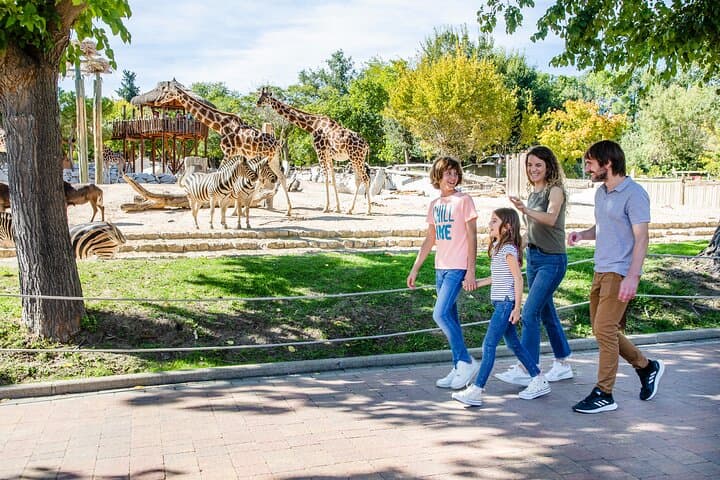

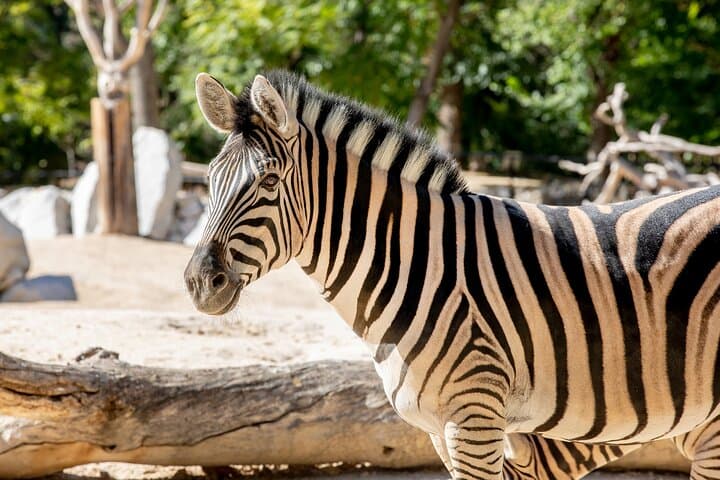

Step through the gates of Zoo Aquarium Madrid and the city’s pace thins into pathways of palms, aviaries and tidal glass. In the broad green of Casa de Campo, enclosures open like chapters—an aquarium glass wall humming with saltwater life, a dolphin pool that slices sunlight, and family-friendly petting areas where smaller hands meet goats and sheep.
Step through the gates of Zoo Aquarium Madrid and the city’s pace thins into pathways of palms, aviaries and tidal glass. In the broad green of Casa de Campo, enclosures open like chapters—an aquarium glass wall humming with saltwater life, a dolphin pool that slices sunlight, and family-friendly petting areas where smaller hands meet goats and sheep.
The zoo occupies a long-standing cultural edge of Madrid: Casa de Campo was once royal hunting grounds turned public park, and the zoo evolved as a civic collection aimed at education and species care. Geologically the park sits in the low Manzanares valley, so routes are mostly flat and accessible; culturally the site functions as both leisure park and conservation center with scheduled feedings and talks that explain animal behavior and husbandry.
Expect an organized, largely paved layout with accessible paths, shaded benches, and descriptive panels in Spanish and often English. The aquarium habitats highlight temperate and tropical marine systems, while aviaries bring the chorus of birds close enough to feel the wind they make. Staff-led demonstrations—dolphin sessions, feeding windows, and keeper talks—are the practical heart of a visit and best scheduled early or mid-afternoon.
Practical guidance: buy mobile tickets in advance to skip lines, allow 3–5 hours for a relaxed visit, wear comfortable walking shoes and sun protection, and use public transit (metro and buses serve Casa de Campo) to avoid limited parking. Hydrate, follow posted distances at enclosures, and arrive early for the busiest exhibits—Madrid’s urban wildlife waits with a steady, curious patience.