THE ADVENTURE COLLECTIVE® · Independent discovery and booking for outdoor travel

Explore Vis Island’s fortified past on a focused 2–3 hour guided tour of forts, WWII sites and Cold War tunnels. Small groups and experienced guides bring military history and the island’s karst landscape to life.
Explore Vis Island’s fortified past on a focused 2–3 hour guided tour of forts, WWII sites and Cold War tunnels. Small groups and experienced guides bring military history and the island’s karst landscape to life.
Salt spray and limestone greet you as the ferry drops you off and the island’s low profile unfolds: a patchwork of white rock, olive groves and squat military concrete peeking from scrub. You step from the quay and soon find yourself under an arched entrance—a British-built Napoleonic fort whose stone stairways direct you toward the island’s quieter, sterner history.
Verified experiences and guided adventures in the surrounding area.
Operated by TEUTA Tourist Agency · Vis, Split-Dalmatia County
Salt spray and limestone greet you as the ferry drops you off and the island’s low profile unfolds: a patchwork of white rock, olive groves and squat military concrete peeking from scrub. You step from the quay and soon find yourself under an arched entrance—a British-built Napoleonic fort whose stone stairways direct you toward the island’s quieter, sterner history.
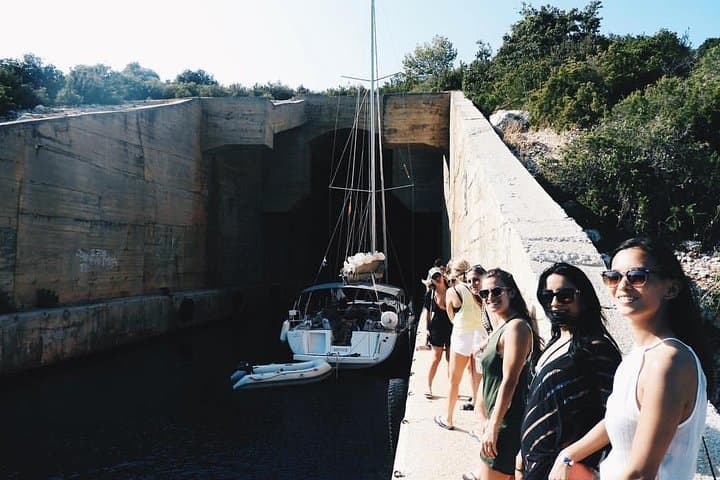
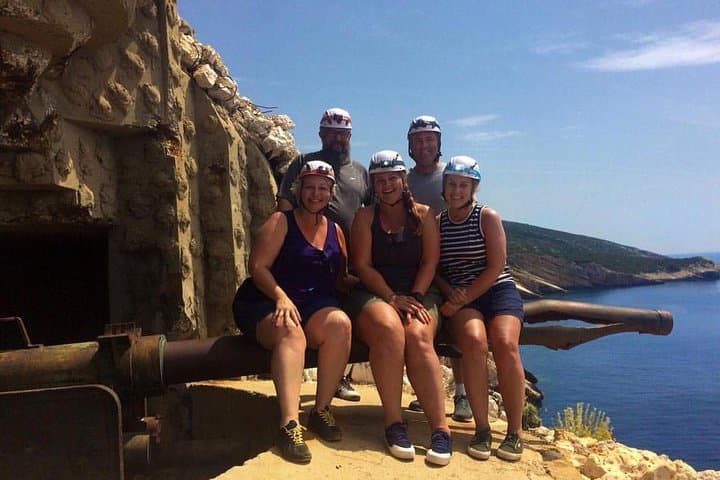
The route threads between eras: 19th‑century fortifications, a wartime airstrip that played a strategic role in WWII, and a network of Cold War-era subterranean tunnels carved for Yugoslav naval operations and submarine sheltering in Bay Parja. Vis’s karst geology—jagged limestone, fissures, and low hills—made it both defensible and convenient for buried infrastructure. Guides with years on the island highlight tactical choices in short, clear anecdotes, turning concrete and rust into readable history.
Culturally the island still hums with a fishing rhythm and small-village hospitality; vineyards and family konobas sit a short drive from military sites. Practicalities are simple: this is a 2–3 hour, small-group tour (up to 16) with some uneven steps, narrow tunnels and exposed viewpoints on Hum. Wear closed, grippy shoes, bring water and a light layer for wind off the sea. Cameras are welcome but large backpacks can be awkward in tunnels. The operator permits service animals and allows cancellations up to 24 hours in advance.
Expect an easy-paced walk that balances hands-on history with raw coastal geology—an efficient half-day that makes Vis’s strategic past tangible without demanding mountaineering skills.
easy.
2–3 hours.
Suitable for most fitness levels; expect short walks, stairs and brief stooping in tunnels
The tour runs approximately 2 to 3 hours, depending on group size and time spent at each point of interest.
Yes—it's graded as physically easy, but tunnels and steps may be challenging for those with limited mobility or severe claustrophobia.
Admission is included as part of the guided experience; guides handle access and safety while inside the shelters and tunnels.
Most visitors arrive by scheduled ferry to Vis town; public transport and local taxis connect the quay to the meeting point—confirm pickup details when booking.
Vis served as a strategic naval base across multiple conflicts—Napoleonic fortifications, WWII operations and Cold War Yugoslav submarine shelters are all present on the island.
Respect marked areas and don’t remove artifacts or take stones from historic sites; the island balances tourism with fragile karst ecosystems and local agriculture.
TEUTA Tourist Agency operates guided outdoor trips and adventures with an emphasis on safety, stewardship, and memorable experiences.


Salt spray and limestone greet you as the ferry drops you off and the island’s low profile unfolds: a patchwork of white rock, olive groves and squat military concrete peeking from scrub. You step from the quay and soon find yourself under an arched entrance—a British-built Napoleonic fort whose stone stairways direct you toward the island’s quieter, sterner history.
Salt spray and limestone greet you as the ferry drops you off and the island’s low profile unfolds: a patchwork of white rock, olive groves and squat military concrete peeking from scrub. You step from the quay and soon find yourself under an arched entrance—a British-built Napoleonic fort whose stone stairways direct you toward the island’s quieter, sterner history.
The route threads between eras: 19th‑century fortifications, a wartime airstrip that played a strategic role in WWII, and a network of Cold War-era subterranean tunnels carved for Yugoslav naval operations and submarine sheltering in Bay Parja. Vis’s karst geology—jagged limestone, fissures, and low hills—made it both defensible and convenient for buried infrastructure. Guides with years on the island highlight tactical choices in short, clear anecdotes, turning concrete and rust into readable history.
Culturally the island still hums with a fishing rhythm and small-village hospitality; vineyards and family konobas sit a short drive from military sites. Practicalities are simple: this is a 2–3 hour, small-group tour (up to 16) with some uneven steps, narrow tunnels and exposed viewpoints on Hum. Wear closed, grippy shoes, bring water and a light layer for wind off the sea. Cameras are welcome but large backpacks can be awkward in tunnels. The operator permits service animals and allows cancellations up to 24 hours in advance.
Expect an easy-paced walk that balances hands-on history with raw coastal geology—an efficient half-day that makes Vis’s strategic past tangible without demanding mountaineering skills.