THE ADVENTURE COLLECTIVE® · Independent discovery and booking for outdoor travel

See Varosha’s abandoned beachfront hotels, tour Famagusta’s medieval walls and Othello Castle, and watch before-and-after footage that explains how this bustling resort became a ghost town. Practical tips on passports, walking terrain, and what to expect are included.
See Varosha’s abandoned beachfront hotels, tour Famagusta’s medieval walls and Othello Castle, and watch before-and-after footage that explains how this bustling resort became a ghost town. Practical tips on passports, walking terrain, and what to expect are included.
You step off the minibus onto a wind-scoured strip of sand and face a row of empty beachfront hotels—windows dark, façades pocked, the sea still pushing toward shore. The air carries salt and a peculiar stillness; the guide sets the scene with archival footage that shows Famagusta in its 1960s prime, then fades to the present, hollowed-out Varosha beyond the wire.
Verified experiences and guided adventures in the surrounding area.
Operated by Trackers Excursions, Cyprus · Famagusta, Famagusta District
You step off the minibus onto a wind-scoured strip of sand and face a row of empty beachfront hotels—windows dark, façades pocked, the sea still pushing toward shore. The air carries salt and a peculiar stillness; the guide sets the scene with archival footage that shows Famagusta in its 1960s prime, then fades to the present, hollowed-out Varosha beyond the wire.
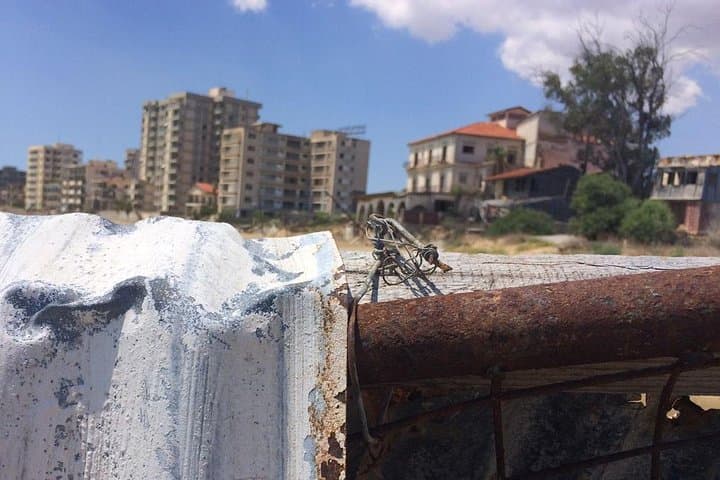
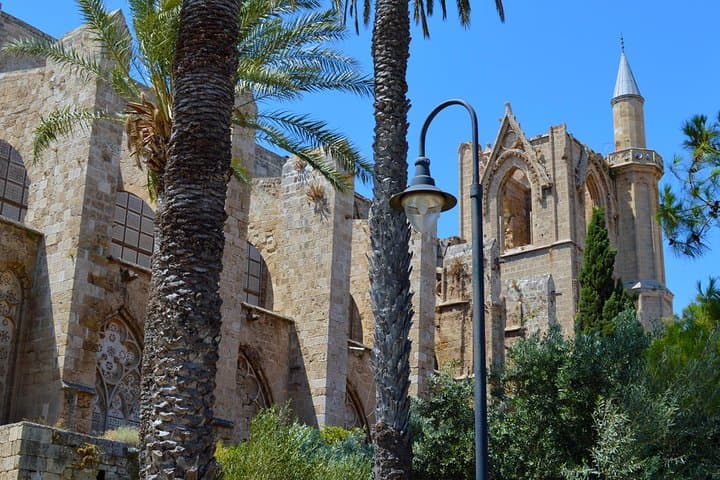
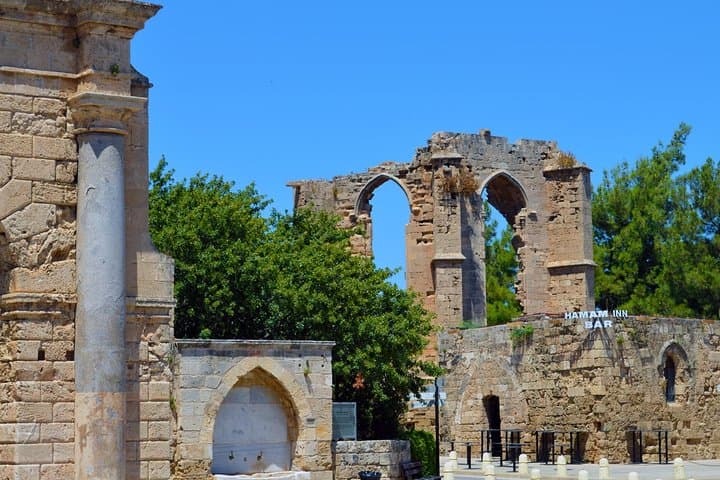
The tour moves from a Derynia viewing platform—binoculars provided—to a slow drive beside the fenced perimeter of Varosha, then into the medieval walled city of Famagusta. Here the layers of history are visible in stone: Lusignan fortifications, Venetian walls and Othello Castle’s squat silhouette, and the former St. Nicholas Cathedral with its Ottoman-era adaptation. Geology is simple but telling—the coast’s long sandspits and limestone bedrock shaped maritime trade routes that once made Famagusta wealthy.
Local life today radiates from cafés tucked behind the walls and from sweets passed between neighbors; the region’s recent history—abandonment after 1974 and decades of buffer-zone control—frames the visit.
Practical guidance: bring your passport (border controls apply), wear sturdy shoes for cobbled streets and light sand, and carry water and sun protection—parts of the tour are exposed. Photography is allowed in public areas but respect restricted zones and follow the guide’s instructions. Expect moderate walking over uneven surfaces and roughly 4–4.5 hours on the road. The experience is part history, part urban archaeology, and part close-up look at a 20th-century abandoned resort.
moderate.
4–4.5 hours.
Moderate fitness—able to walk 1–2 miles over uneven ground and climb stairs or short inclines.
Yes—passports are required for border control; ensure the passport you travel with is accepted (some nationalities are restricted).
Photography is allowed in public and accessible areas, but you must obey the guide and not enter fenced or restricted zones for photos.
Expect moderate walking: short stretches along beaches, up to 1–2 miles inside the walled city on cobbles and stairs, with free-time breaks for coffee.
The Derynia Cultural & Heritage Center has a café and facilities; there are also cafés inside the old city where you can buy coffee and sweets during free time.
Famagusta grew into a wealthy medieval port under the Lusignans and Venetians; Varosha became a modern resort before being fenced off after the 1974 conflict, leaving an abandoned coastal strip.
The restricted areas have slowed development but not halted decay; visitors should avoid touching fragile façades, dispose of waste responsibly, and follow local guidance to minimize impact.
Trackers Excursions, Cyprus operates guided outdoor trips and adventures with an emphasis on safety, stewardship, and memorable experiences.
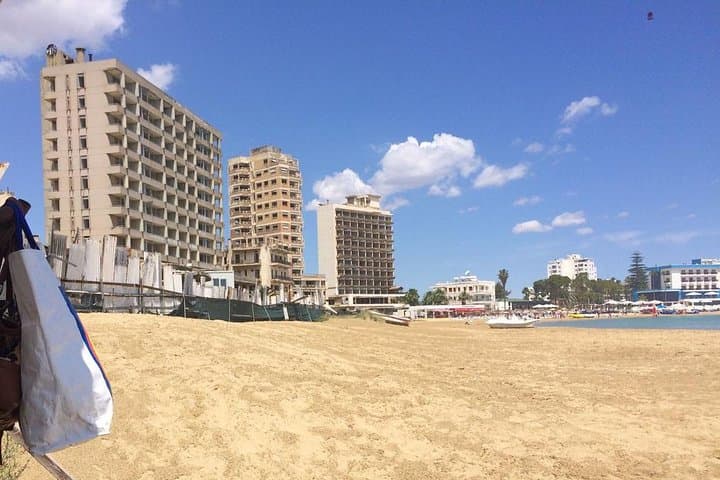
You step off the minibus onto a wind-scoured strip of sand and face a row of empty beachfront hotels—windows dark, façades pocked, the sea still pushing toward shore. The air carries salt and a peculiar stillness; the guide sets the scene with archival footage that shows Famagusta in its 1960s prime, then fades to the present, hollowed-out Varosha beyond the wire.
You step off the minibus onto a wind-scoured strip of sand and face a row of empty beachfront hotels—windows dark, façades pocked, the sea still pushing toward shore. The air carries salt and a peculiar stillness; the guide sets the scene with archival footage that shows Famagusta in its 1960s prime, then fades to the present, hollowed-out Varosha beyond the wire.
The tour moves from a Derynia viewing platform—binoculars provided—to a slow drive beside the fenced perimeter of Varosha, then into the medieval walled city of Famagusta. Here the layers of history are visible in stone: Lusignan fortifications, Venetian walls and Othello Castle’s squat silhouette, and the former St. Nicholas Cathedral with its Ottoman-era adaptation. Geology is simple but telling—the coast’s long sandspits and limestone bedrock shaped maritime trade routes that once made Famagusta wealthy.
Local life today radiates from cafés tucked behind the walls and from sweets passed between neighbors; the region’s recent history—abandonment after 1974 and decades of buffer-zone control—frames the visit.
Practical guidance: bring your passport (border controls apply), wear sturdy shoes for cobbled streets and light sand, and carry water and sun protection—parts of the tour are exposed. Photography is allowed in public areas but respect restricted zones and follow the guide’s instructions. Expect moderate walking over uneven surfaces and roughly 4–4.5 hours on the road. The experience is part history, part urban archaeology, and part close-up look at a 20th-century abandoned resort.