THE ADVENTURE COLLECTIVE® · Independent discovery and booking for outdoor travel

Experience the raw energy of a Minnesota Vikings game at U.S. Bank Stadium—an urban arena where architecture, riverfront views and the “Skol” chant combine for a high-intensity outing. Read on for what to expect, when to arrive and how to plan your trip.
Experience the raw energy of a Minnesota Vikings game at U.S. Bank Stadium—an urban arena where architecture, riverfront views and the “Skol” chant combine for a high-intensity outing. Read on for what to expect, when to arrive and how to plan your trip.
The doors swing open and a wash of purple floods the concourse—horns, chants and the low thud of a packed crowd. US Bank Stadium sits at the edge of downtown Minneapolis, a glass-and-ETFE bowl that funnels city noise into a single roar. From your seat you feel the crowd push and pull like a living thing as the Vikings run onto the turf.
Verified experiences and guided adventures in the surrounding area.
The doors swing open and a wash of purple floods the concourse—horns, chants and the low thud of a packed crowd. US Bank Stadium sits at the edge of downtown Minneapolis, a glass-and-ETFE bowl that funnels city noise into a single roar. From your seat you feel the crowd push and pull like a living thing as the Vikings run onto the turf.
The franchise’s modern era lives in moments: famous players, the move from the Metrodome to this angular 2016 venue, and the ritualized “Skol” clap that unites strangers. Architecturally the stadium favors wide sightlines and a translucent roof that keeps winter wind at bay while admitting northern light. Geology and riverways matter here—just outside, the Mississippi slides through the city and the Stone Arch Bridge frames postgame strolls.
Culture around a game extends beyond kick-off: tailgates and the North Loop’s craft eateries, transit-packed light-rail routes and brisk Minnesota hospitality. Expect loud crowds, practical security screening, and brisk walks between transit stops and gates.
Practical guidance: arrive 45–60 minutes early for security lines and to soak in pregame rituals; use public transit or book parking in advance; dress in layers for chilly fall and winter games; carry a clear bag and a charged phone; and plan for a 3–4 hour event window. Whether you’re in the stands for the play-by-play or the communal pulse of Skol Nation, a Vikings game is a compact urban adventure with predictable logistics and unmistakable atmosphere.
easy.
3–4 hours.
No special fitness required; expect standing, walking short distances and climbing stairs.
Arrive 45–60 minutes early to pass security, find your seat and see pregame activities.
U.S. Bank Stadium enforces a clear-bag policy; small clutches are allowed—check the stadium website for current specifics.
Yes—METRO light rail and bus routes serve downtown Minneapolis and drop you within a short walk of the stadium, often faster than driving on game days.
Plan for roughly 3–4 hours from kickoff to final whistle, longer if there’s heavy traffic or postgame events.
US Bank Stadium opened in 2016 as the Vikings’ modern home, replacing the Hubert H. Humphrey Metrodome and reshaping downtown Minneapolis event life.
The stadium promotes public transit use and on-site recycling; choosing light rail or shared rides reduces congestion and game-day emissions.
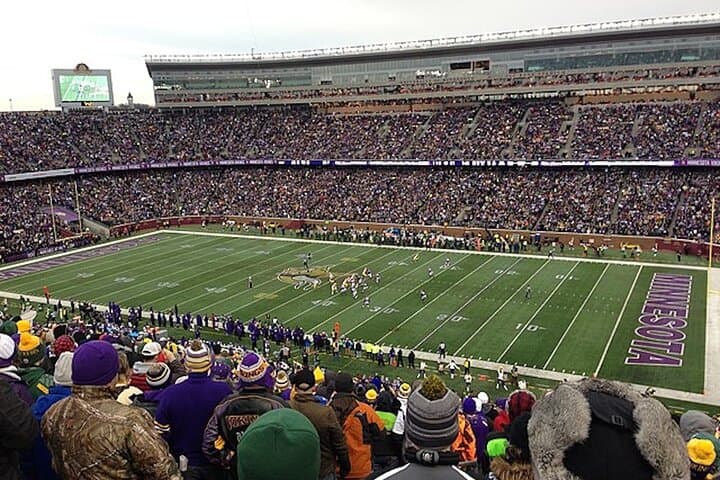
The doors swing open and a wash of purple floods the concourse—horns, chants and the low thud of a packed crowd. US Bank Stadium sits at the edge of downtown Minneapolis, a glass-and-ETFE bowl that funnels city noise into a single roar. From your seat you feel the crowd push and pull like a living thing as the Vikings run onto the turf.
The doors swing open and a wash of purple floods the concourse—horns, chants and the low thud of a packed crowd. US Bank Stadium sits at the edge of downtown Minneapolis, a glass-and-ETFE bowl that funnels city noise into a single roar. From your seat you feel the crowd push and pull like a living thing as the Vikings run onto the turf.
The franchise’s modern era lives in moments: famous players, the move from the Metrodome to this angular 2016 venue, and the ritualized “Skol” clap that unites strangers. Architecturally the stadium favors wide sightlines and a translucent roof that keeps winter wind at bay while admitting northern light. Geology and riverways matter here—just outside, the Mississippi slides through the city and the Stone Arch Bridge frames postgame strolls.
Culture around a game extends beyond kick-off: tailgates and the North Loop’s craft eateries, transit-packed light-rail routes and brisk Minnesota hospitality. Expect loud crowds, practical security screening, and brisk walks between transit stops and gates.
Practical guidance: arrive 45–60 minutes early for security lines and to soak in pregame rituals; use public transit or book parking in advance; dress in layers for chilly fall and winter games; carry a clear bag and a charged phone; and plan for a 3–4 hour event window. Whether you’re in the stands for the play-by-play or the communal pulse of Skol Nation, a Vikings game is a compact urban adventure with predictable logistics and unmistakable atmosphere.