THE ADVENTURE COLLECTIVE® · Independent discovery and booking for outdoor travel

Walk Tongdosa beyond the postcard: a guided day from Busan that pairs pine-forest meditation with visits to historic halls and hilltop hermitages. Expect 6–7 hours of gentle trails, cultural context, and an authentic hanok lunch.
Walk Tongdosa beyond the postcard: a guided day from Busan that pairs pine-forest meditation with visits to historic halls and hilltop hermitages. Expect 6–7 hours of gentle trails, cultural context, and an authentic hanok lunch.
You step through the low stone gate and the air changes—the pine forest exhales a resinous breath that pushes you forward, and the temple roofs emerge like dark islands against a bright mountain slope.
Verified experiences and guided adventures in the surrounding area.
Operated by Hello Info Tour · Yangsan, Gyeongsangnam-do
You step through the low stone gate and the air changes—the pine forest exhales a resinous breath that pushes you forward, and the temple roofs emerge like dark islands against a bright mountain slope.
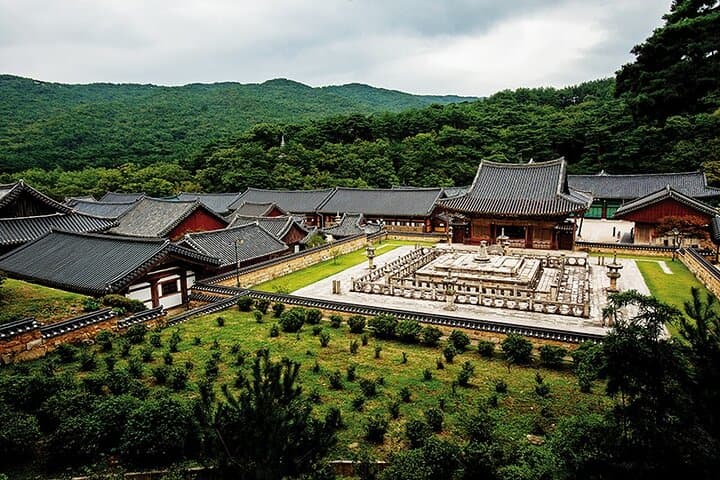
Tongdosa is less a single monument than a living complex: courtyards, low-roofed halls, and hidden hermitages threaded into a forest that Koreans have treated as sacred for centuries. Founded in the 7th century, Tongdosa became one of Korea’s Three Jewel Temples and later earned UNESCO recognition; artifacts and painting styles here trace waves of Korean history and Buddhist devotion. Geologically the site sits on the lower ridges feeding toward Busan, where granitic outcrops and old-growth pines shape narrow trails and cool microclimates.
Culturally, expect quiet rituals—incense, low bells, and monks moving between halls—and modern touches like a hanok café serving bibimbap and traditional desserts that reflect the area’s living culinary culture. The tour typically includes visits to several small hermitages tucked uphill, a guided introduction to 산림욕 (forest bathing), and time to sit on temple benches and watch light shift across tiled roofs.
Practical guidance: plan for a 6–7 hour day with flexible walking; wear grippy shoes for stepped trails and bring layered clothing in case mountain breezes turn chilly. Respect dress and photography rules inside worship halls, carry water, and leave space for slower moments—this is as much a paced, contemplative walk as a cultural outing. Private transport from Busan keeps the day efficient and lets you linger where the forest asks you to.
easy.
6–7 hours.
Suitable for most travelers who can walk on uneven ground for several hours; little technical fitness required.
The experience runs about 6–7 hours with intermittent walking—mostly on paved or well-maintained forest trails and stone steps; there are periods of seated meditation or extended stops.
Key courtyards and some areas are accessible, but many hermitage trails and stepped sections are not; contact the operator if you require full accessibility accommodations.
Yes—this tour includes entrance fees and a hanok-café lunch with dessert as listed in the itinerary.
Photography is generally allowed in exterior courtyards and most outdoor areas, but be respectful: avoid flash and follow posted rules—some inner halls restrict photos during ceremonies.
Tongdosa dates to the 7th century and is one of Korea’s Three Jewel Temples; its artifacts and layout reflect centuries of Korean Buddhist practice.
Visitor impact is managed through designated paths and rules inside worship areas—stay on trails, avoid litter, and follow signage to protect the ancient pines and temple structures.
Hello Info Tour operates guided outdoor trips and adventures with an emphasis on safety, stewardship, and memorable experiences.
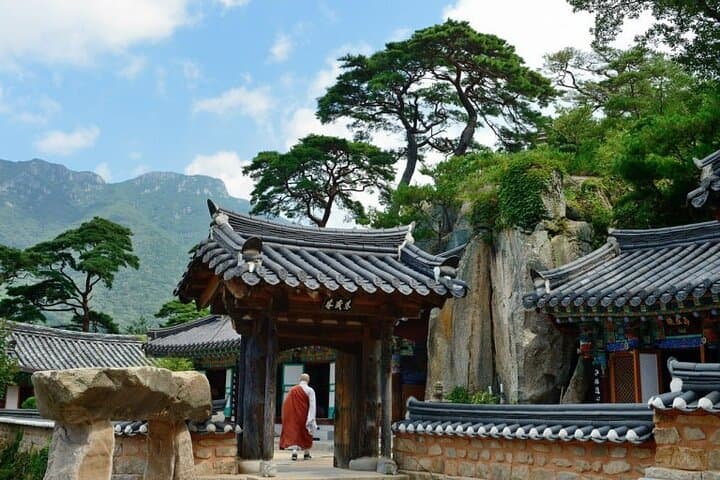
You step through the low stone gate and the air changes—the pine forest exhales a resinous breath that pushes you forward, and the temple roofs emerge like dark islands against a bright mountain slope.
You step through the low stone gate and the air changes—the pine forest exhales a resinous breath that pushes you forward, and the temple roofs emerge like dark islands against a bright mountain slope.
Tongdosa is less a single monument than a living complex: courtyards, low-roofed halls, and hidden hermitages threaded into a forest that Koreans have treated as sacred for centuries. Founded in the 7th century, Tongdosa became one of Korea’s Three Jewel Temples and later earned UNESCO recognition; artifacts and painting styles here trace waves of Korean history and Buddhist devotion. Geologically the site sits on the lower ridges feeding toward Busan, where granitic outcrops and old-growth pines shape narrow trails and cool microclimates.
Culturally, expect quiet rituals—incense, low bells, and monks moving between halls—and modern touches like a hanok café serving bibimbap and traditional desserts that reflect the area’s living culinary culture. The tour typically includes visits to several small hermitages tucked uphill, a guided introduction to 산림욕 (forest bathing), and time to sit on temple benches and watch light shift across tiled roofs.
Practical guidance: plan for a 6–7 hour day with flexible walking; wear grippy shoes for stepped trails and bring layered clothing in case mountain breezes turn chilly. Respect dress and photography rules inside worship halls, carry water, and leave space for slower moments—this is as much a paced, contemplative walk as a cultural outing. Private transport from Busan keeps the day efficient and lets you linger where the forest asks you to.