THE ADVENTURE COLLECTIVE® · Independent discovery and booking for outdoor travel

Witness the intensity and ritual of a Tokyo sumo stable in the early morning. This guided visit places you courtside for training, followed by a short Q&A and photo time with wrestlers.
Witness the intensity and ritual of a Tokyo sumo stable in the early morning. This guided visit places you courtside for training, followed by a short Q&A and photo time with wrestlers.
You arrive before dawn in a neighborhood where shopfronts are still shuttered and the air carries the faint tang of soy and street steam. A guide meets you at Kiyosumi-Shirakawa Station and leads a four-minute walk to the entrance of a sumo stable, where a low wooden doorway frames the practice hall and the wrestlers' breath marks the rhythm of the morning.
Verified experiences and guided adventures in the surrounding area.
Operated by Tokyo Morning Sumo Training Visiting Experience at Stable · Tokyo, Tokyo
You arrive before dawn in a neighborhood where shopfronts are still shuttered and the air carries the faint tang of soy and street steam. A guide meets you at Kiyosumi-Shirakawa Station and leads a four-minute walk to the entrance of a sumo stable, where a low wooden doorway frames the practice hall and the wrestlers' breath marks the rhythm of the morning.
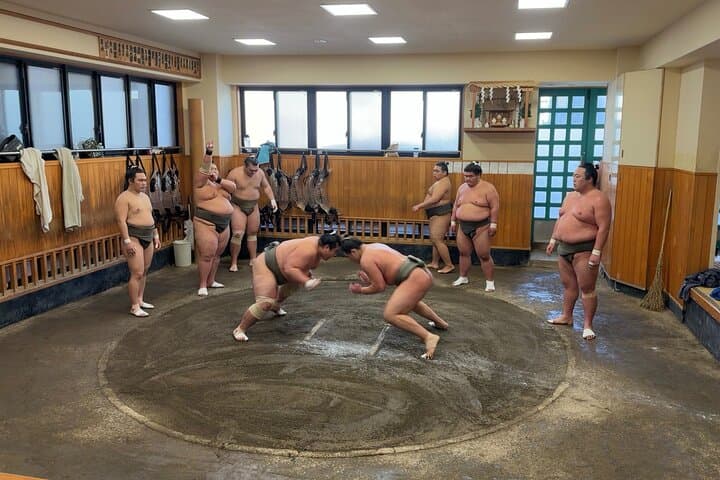
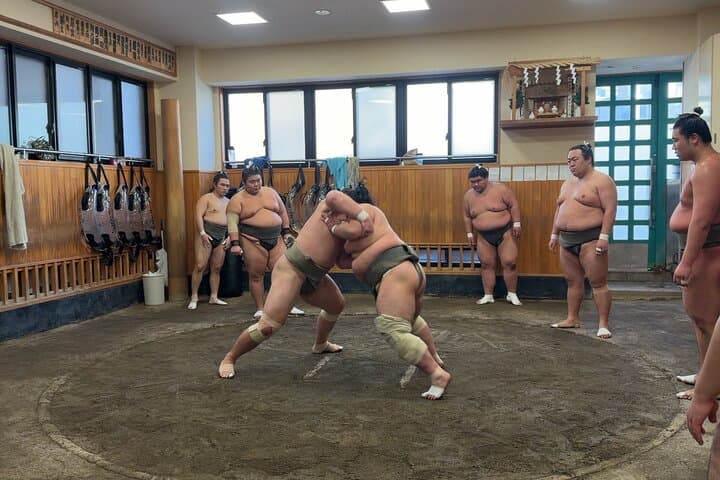
Sumo is centuries old: ritual, sport, and social code wrapped into one. The dohyo—the ring of packed clay and sand—has strict rules: it's a sacred surface, and even spectators observe a strict etiquette. In Tokyo, stables preserve living traditions that date to the Edo period, when wrestlers first trained under master-led hierarchies. The building itself often shows the ordinary urban geology of Tokyo—compact footprints, layered timber, and a history written into narrow alleys and wooden posts.
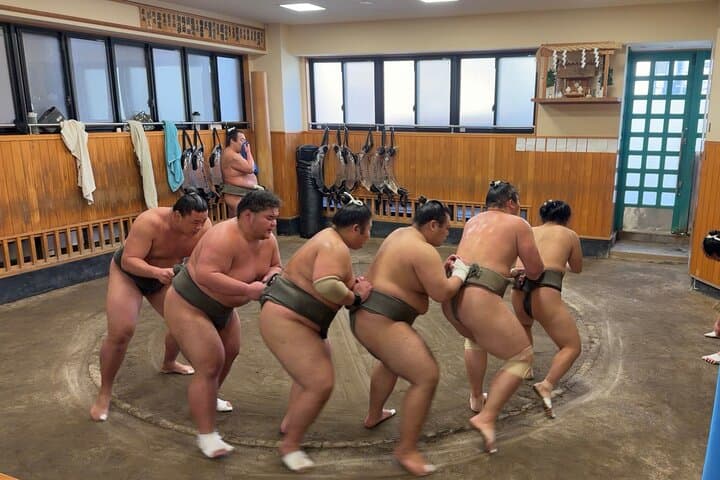
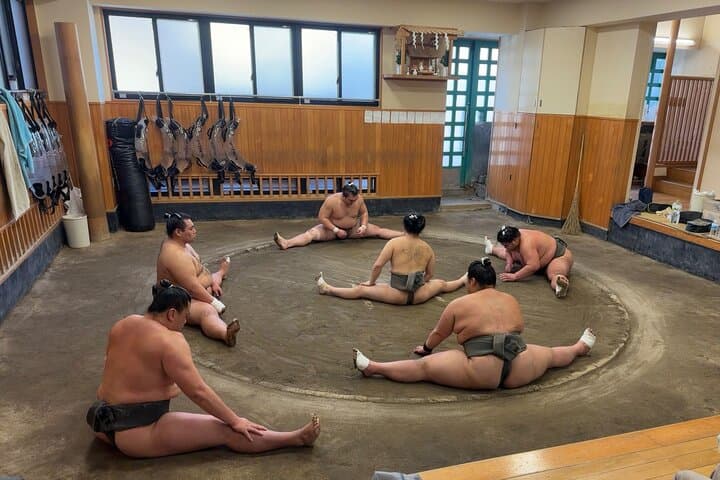
Expect a focused, quiet session: shiko stomps, warm-up calisthenics, and technique drills. Photography without flash is allowed; video and flash are not. After practice there’s time for a short Q&A and staged photos, with the guide translating.
Practical notes: arrive early, wear quiet shoes and conservative clothing, and follow the guide’s instructions exactly—this is as much a cultural visit as a show. The whole experience lasts about 2.5 hours and is suitable for most visitors over 12. Hydrate beforehand (no food or drink inside), switch phones to silent, and plan transit—Kiyosumi-Shirakawa Station is the closest stop.
This morning brings you close to a tradition that is physical, strict, and unexpectedly intimate—an inside look at Japan’s national sport that requires only respect and curiosity.
easy.
2–3 hours.
Minimal physical exertion required; suitable for most fitness levels but requires standing or sitting on low cushions.
Minimum age is 12 years old; children 11 and under are not permitted inside the stable.
Still photos without flash or shutter sounds are allowed, but video recording is strictly prohibited throughout the visit.
The visit involves short walks and sitting on low cushions or chairs; contact the operator ahead for accessibility accommodations and to discuss specific needs.
The total duration is about 150 minutes: meet at 8:15 AM, training from 8:30–~10:15 AM, followed by a photo/Q&A session and return to the station by about 10:40 AM.
Sumo evolved from Shinto rituals and competitive wrestling; professional stables in Tokyo continue hierarchical training methods that solidified during the Edo period.
Stables protect cultural heritage through strict rules and limited visitor numbers—respectful behavior helps preserve both the wrestlers’ focus and the integrity of their traditions.
Tokyo Morning Sumo Training Visiting Experience at Stable operates guided outdoor trips and adventures with an emphasis on safety, stewardship, and memorable experiences.
You arrive before dawn in a neighborhood where shopfronts are still shuttered and the air carries the faint tang of soy and street steam. A guide meets you at Kiyosumi-Shirakawa Station and leads a four-minute walk to the entrance of a sumo stable, where a low wooden doorway frames the practice hall and the wrestlers' breath marks the rhythm of the morning.
You arrive before dawn in a neighborhood where shopfronts are still shuttered and the air carries the faint tang of soy and street steam. A guide meets you at Kiyosumi-Shirakawa Station and leads a four-minute walk to the entrance of a sumo stable, where a low wooden doorway frames the practice hall and the wrestlers' breath marks the rhythm of the morning.
Sumo is centuries old: ritual, sport, and social code wrapped into one. The dohyo—the ring of packed clay and sand—has strict rules: it's a sacred surface, and even spectators observe a strict etiquette. In Tokyo, stables preserve living traditions that date to the Edo period, when wrestlers first trained under master-led hierarchies. The building itself often shows the ordinary urban geology of Tokyo—compact footprints, layered timber, and a history written into narrow alleys and wooden posts.
Expect a focused, quiet session: shiko stomps, warm-up calisthenics, and technique drills. Photography without flash is allowed; video and flash are not. After practice there’s time for a short Q&A and staged photos, with the guide translating.
Practical notes: arrive early, wear quiet shoes and conservative clothing, and follow the guide’s instructions exactly—this is as much a cultural visit as a show. The whole experience lasts about 2.5 hours and is suitable for most visitors over 12. Hydrate beforehand (no food or drink inside), switch phones to silent, and plan transit—Kiyosumi-Shirakawa Station is the closest stop.
This morning brings you close to a tradition that is physical, strict, and unexpectedly intimate—an inside look at Japan’s national sport that requires only respect and curiosity.