THE ADVENTURE COLLECTIVE® · Independent discovery and booking for outdoor travel

Walk from the Capitol’s steps into the Rotunda and the Jefferson Building of the Library of Congress on a two‑hour guided tour. Learn architectural details, key moments in legislative history, and practical tips for making the most of this centrally located Washington experience.
Walk from the Capitol’s steps into the Rotunda and the Jefferson Building of the Library of Congress on a two‑hour guided tour. Learn architectural details, key moments in legislative history, and practical tips for making the most of this centrally located Washington experience.
You step out onto the plaza and Washington’s stone work feels deliberate underfoot — broad steps, engraved names, and a city that was planned to be seen. The tour threads you between the Capitol’s domed silhouette and the Jefferson Building’s gilded interior, moving from open-air monuments to hushed reading rooms.
Verified experiences and guided adventures in the surrounding area.
Operated by DC Guided Tours · Washington, DC
You step out onto the plaza and Washington’s stone work feels deliberate underfoot — broad steps, engraved names, and a city that was planned to be seen. The tour threads you between the Capitol’s domed silhouette and the Jefferson Building’s gilded interior, moving from open-air monuments to hushed reading rooms.
The route follows decades of American architecture and civic ambition. L'Enfant’s 1791 street plan opened sightlines that lead to the Capitol; the Rotunda ceiling holds John Trumbull’s and Constantino Brumidi’s murals that narrate the young republic. Geologically, the Hill sits on the coastal plain above the Potomac — an urban ridge that shaped early roads and drainage, not alpine ridgelines. Culturally, Capitol Hill has been the backdrop to lawmaking, protest, and public ritual for two centuries.
Expect a mix of outdoor walking and secured indoor spaces. Inside the Capitol you’ll pass the Crypt, Rotunda, and sometimes the old chambers; the Jefferson Building of the Library of Congress offers mosaics, marble, and the Gutenberg Bible behind glass. Guides focus on legislative history, landmark cases, and architectural details rather than exhaustive political debate.
Practical guidance: bring a government ID for security screening, wear comfortable shoes, and allow two hours. Mornings are cooler and less crowded; summer afternoons can mean long lines between outdoor stops. Photography rules vary — obey staff and signage. If you want quieter views, request an early time and plan a follow-up visit to the Capitol Grounds or the U.S. Botanic Garden to stretch your legs after the tour.
easy.
2 hours.
Suitable for most fitness levels; able to stand and walk up stairs for short periods
This guided tour includes entry to the Capitol; you still must pass security screening and show ID at the meeting point.
The tour notes stroller access and is generally suitable for wheelchairs for many areas, but some historic spaces have limited accessibility — contact the operator for specifics.
Arrive at least 15 minutes early to clear security and meet at the specified point; 8am tours meet across from the Supreme Court while later tours meet at the Botanic Garden Conservatory.
Large bags may be subject to additional inspection or restricted; travel light and be prepared to check items if required by security.
The Capitol’s core dates to the early 1800s, rebuilt after the 1814 fire; the Library of Congress Jefferson Building opened in 1897 as the nation’s first major decorative public building.
Respect preservation rules inside historic rooms and stay on marked paths on the grounds; high visitor traffic requires following tour group guidance to minimize wear on fragile spaces.
DC Guided Tours operates guided outdoor trips and adventures with an emphasis on safety, stewardship, and memorable experiences.

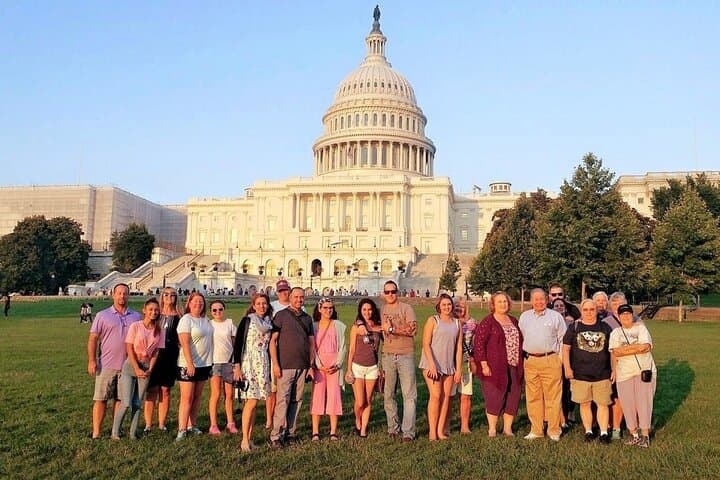
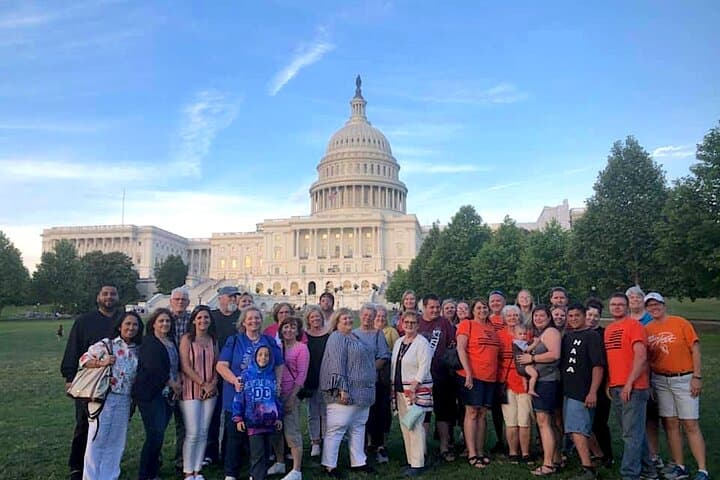
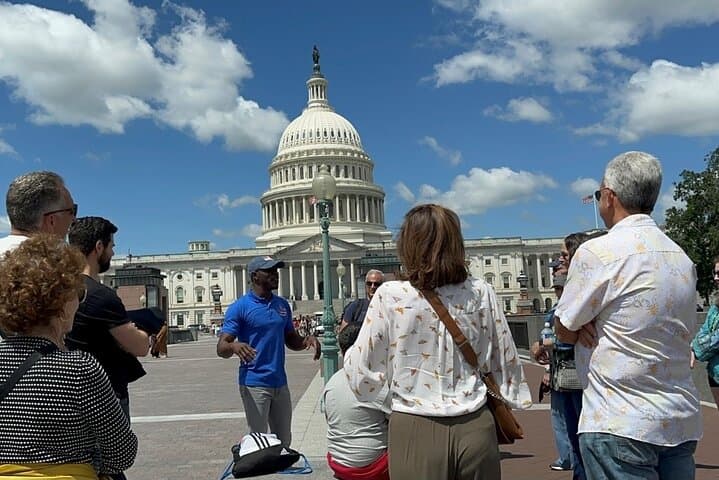
You step out onto the plaza and Washington’s stone work feels deliberate underfoot — broad steps, engraved names, and a city that was planned to be seen. The tour threads you between the Capitol’s domed silhouette and the Jefferson Building’s gilded interior, moving from open-air monuments to hushed reading rooms.
You step out onto the plaza and Washington’s stone work feels deliberate underfoot — broad steps, engraved names, and a city that was planned to be seen. The tour threads you between the Capitol’s domed silhouette and the Jefferson Building’s gilded interior, moving from open-air monuments to hushed reading rooms.
The route follows decades of American architecture and civic ambition. L'Enfant’s 1791 street plan opened sightlines that lead to the Capitol; the Rotunda ceiling holds John Trumbull’s and Constantino Brumidi’s murals that narrate the young republic. Geologically, the Hill sits on the coastal plain above the Potomac — an urban ridge that shaped early roads and drainage, not alpine ridgelines. Culturally, Capitol Hill has been the backdrop to lawmaking, protest, and public ritual for two centuries.
Expect a mix of outdoor walking and secured indoor spaces. Inside the Capitol you’ll pass the Crypt, Rotunda, and sometimes the old chambers; the Jefferson Building of the Library of Congress offers mosaics, marble, and the Gutenberg Bible behind glass. Guides focus on legislative history, landmark cases, and architectural details rather than exhaustive political debate.
Practical guidance: bring a government ID for security screening, wear comfortable shoes, and allow two hours. Mornings are cooler and less crowded; summer afternoons can mean long lines between outdoor stops. Photography rules vary — obey staff and signage. If you want quieter views, request an early time and plan a follow-up visit to the Capitol Grounds or the U.S. Botanic Garden to stretch your legs after the tour.