THE ADVENTURE COLLECTIVE® · Independent discovery and booking for outdoor travel

Spend three hours inside the U.S. Capitol, the Library of Congress, and the Supreme Court with a licensed guide. This small-group tour includes reserved interiors and focused historical commentary for visitors who want a concise, in-depth look at America's civic core.
Spend three hours inside the U.S. Capitol, the Library of Congress, and the Supreme Court with a licensed guide. This small-group tour includes reserved interiors and focused historical commentary for visitors who want a concise, in-depth look at America's civic core.
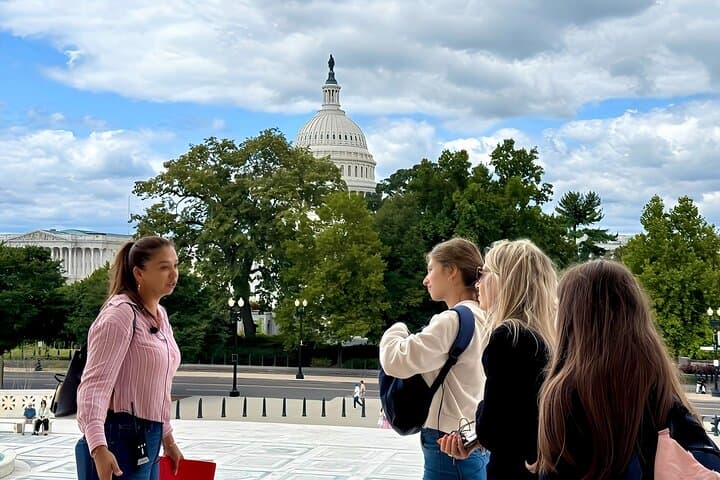
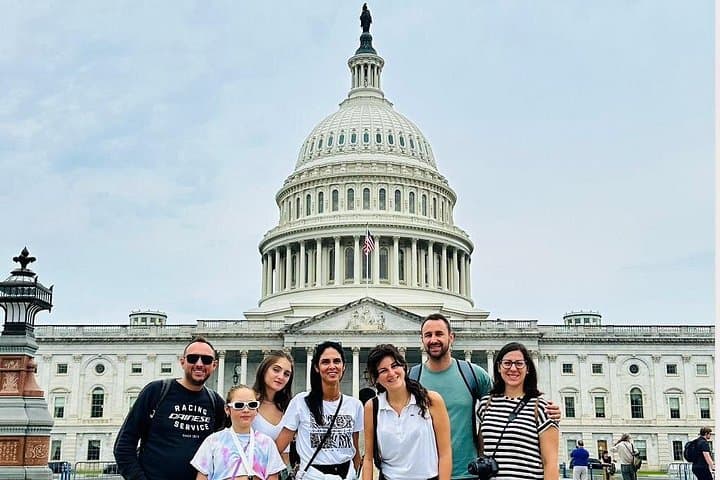
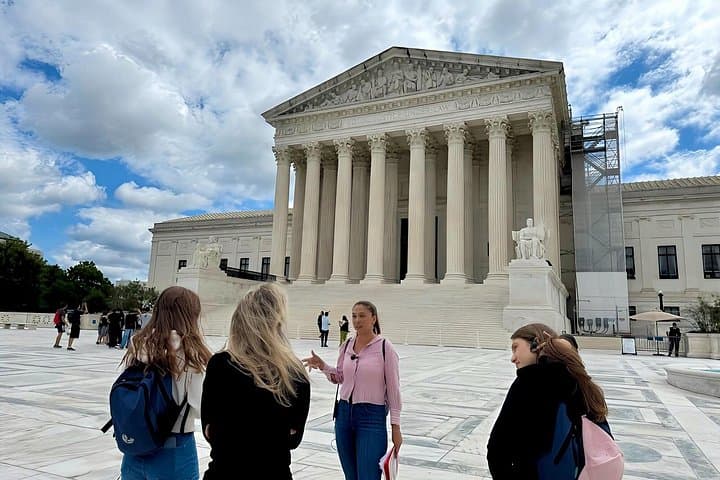
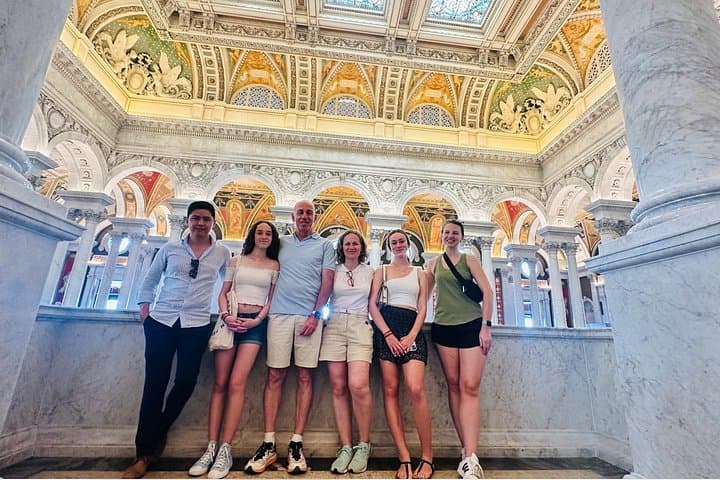
You meet at the Thomas Jefferson Building's Neptune Fountain, marble glinting and footsteps echoing, and step into a Washington where wood and stone keep the country's stories. The tour moves from the Capitol's domed rotunda—its murals and copper dome visible from many points on the Hill—to the Library of Congress galleries, where carved ceilings, gilt ornament and a Gutenberg Bible sit behind quiet glass. The final stop is the Supreme Court: broad steps, Doric columns, friezes that speak to law and civic debate.
Verified experiences and guided adventures in the surrounding area.
Operated by EXPLORE DC LLC · Washington, DC
You meet at the Thomas Jefferson Building's Neptune Fountain, marble glinting and footsteps echoing, and step into a Washington where wood and stone keep the country's stories. The tour moves from the Capitol's domed rotunda—its murals and copper dome visible from many points on the Hill—to the Library of Congress galleries, where carved ceilings, gilt ornament and a Gutenberg Bible sit behind quiet glass. The final stop is the Supreme Court: broad steps, Doric columns, friezes that speak to law and civic debate.
Capitol Hill is more than architecture; it's an urban landmark shaped by 18th- and 19th-century planning, federal expansion, and the Mall's axial geometry. The Library of Congress, founded in 1800, houses collections that chart America’s print culture; the Supreme Court building, completed in 1935, projects a classical ideal of justice. The district occupies a gentle ridge above the Potomac and was historically lined with marshes and turn-of-the-century rowhouses that served staff and legislators.
Practical details shape the visit: this is a three-hour guided walking tour with reserved admission to interiors and small-group commentary. Expect periods of standing, security screening, and camera rules in certain rooms. Bring a government-issued photo ID for Capitol entry; plan to arrive 15–20 minutes early to clear security. Comfortable shoes and a light layer for varying indoor temperatures keep the experience focused on the sites, not the checklist.
The route is compact—short walks between landmarks—but rich in visual detail and civic history, making it an efficient, informative way to read Washington’s institutions up close.
easy.
3 hours.
Suitable for most fitness levels; requires standing and short walks between buildings.
Yes—visitors are required to show a valid government-issued photo ID for entry and security screening.
Yes—the tour includes reserved admissions to the Capitol and the Library of Congress as stated in the itinerary.
The tour notes stroller accessibility for infants and small children, but some rooms have limited space—confirm in advance if traveling with a stroller.
Photography rules vary by room—your guide will explain where photography is allowed and where it is restricted.
Capitol Hill was established in the late 18th century as the seat of Congress; the Library of Congress expanded its collections rapidly after 1800, becoming one of the world’s largest reference libraries.
Historic interiors are protected by conservation programs that control humidity, light, and visitor access to preserve woodwork, murals, and rare books.
EXPLORE DC LLC operates guided outdoor trips and adventures with an emphasis on safety, stewardship, and memorable experiences.
You meet at the Thomas Jefferson Building's Neptune Fountain, marble glinting and footsteps echoing, and step into a Washington where wood and stone keep the country's stories. The tour moves from the Capitol's domed rotunda—its murals and copper dome visible from many points on the Hill—to the Library of Congress galleries, where carved ceilings, gilt ornament and a Gutenberg Bible sit behind quiet glass. The final stop is the Supreme Court: broad steps, Doric columns, friezes that speak to law and civic debate.
You meet at the Thomas Jefferson Building's Neptune Fountain, marble glinting and footsteps echoing, and step into a Washington where wood and stone keep the country's stories. The tour moves from the Capitol's domed rotunda—its murals and copper dome visible from many points on the Hill—to the Library of Congress galleries, where carved ceilings, gilt ornament and a Gutenberg Bible sit behind quiet glass. The final stop is the Supreme Court: broad steps, Doric columns, friezes that speak to law and civic debate.
Capitol Hill is more than architecture; it's an urban landmark shaped by 18th- and 19th-century planning, federal expansion, and the Mall's axial geometry. The Library of Congress, founded in 1800, houses collections that chart America’s print culture; the Supreme Court building, completed in 1935, projects a classical ideal of justice. The district occupies a gentle ridge above the Potomac and was historically lined with marshes and turn-of-the-century rowhouses that served staff and legislators.
Practical details shape the visit: this is a three-hour guided walking tour with reserved admission to interiors and small-group commentary. Expect periods of standing, security screening, and camera rules in certain rooms. Bring a government-issued photo ID for Capitol entry; plan to arrive 15–20 minutes early to clear security. Comfortable shoes and a light layer for varying indoor temperatures keep the experience focused on the sites, not the checklist.
The route is compact—short walks between landmarks—but rich in visual detail and civic history, making it an efficient, informative way to read Washington’s institutions up close.