THE ADVENTURE COLLECTIVE® · Independent discovery and booking for outdoor travel

Step into Downpatrick’s reimagined Saint Patrick Centre—an engaging 60–90 minute exhibition and IMAX presentation that traces Patrick’s life from Roman Britain to Irish missionary routes. Practical tips for timing, accessibility and nearby sites included.
Step into Downpatrick’s reimagined Saint Patrick Centre—an engaging 60–90 minute exhibition and IMAX presentation that traces Patrick’s life from Roman Britain to Irish missionary routes. Practical tips for timing, accessibility and nearby sites included.
You push through the glass doors and the room changes scale—the voice of Ciaran Hinds guides you back 1,600 years as video panels arrange the past like pages on a table. Light moves across sculptures; a large-format film fills the IMAX screen. The exhibition places you beside the young Roman, the slave on Slemish, and the missionary whose story traveled by ship and monastery.
Verified experiences and guided adventures in the surrounding area.
Operated by The Saint Patrick Centre · Downpatrick, County Down
You push through the glass doors and the room changes scale—the voice of Ciaran Hinds guides you back 1,600 years as video panels arrange the past like pages on a table. Light moves across sculptures; a large-format film fills the IMAX screen. The exhibition places you beside the young Roman, the slave on Slemish, and the missionary whose story traveled by ship and monastery.
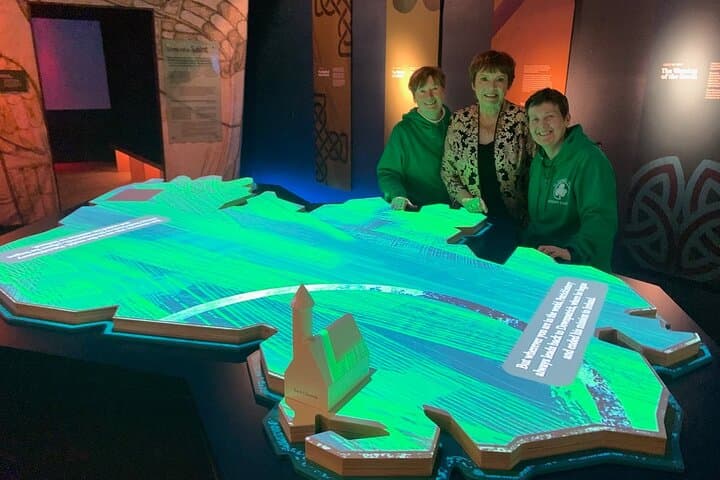
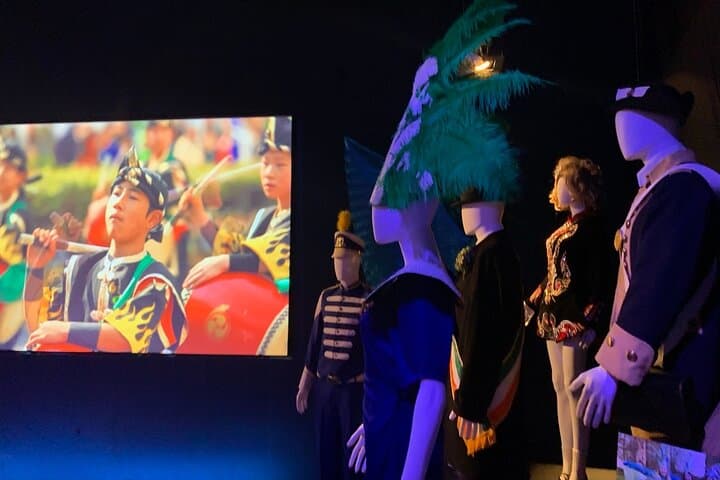
Downpatrick sits on glacial drumlins and quiet marshes; the town grew around the medieval cathedral that claims St Patrick’s grave. The Centre uses oral narration, bold graphics and scale models to explain late Roman Britain, sixth-century missionary routes, and how Irish monasteries became cultural hubs across Dark Age Europe. You’ll encounter artifacts, dramatic reconstructions and contextual displays linking landscape, faith and migration.
Practical guidance is straightforward: plan 60–90 minutes, arrive in the morning to avoid school groups, and pair the visit with Down Cathedral and Inch Abbey a short drive away. Mobile or printed tickets are accepted and the site is fully wheelchair accessible—strollers and service animals are permitted. Audio and film elements are suitable for family groups but expect some dimly lit galleries and large-screen sound during the IMAX presentation. Photography is allowed in most areas but check signage for exhibit-specific restrictions.
Local cafes and a small museum shop make it easy to extend the visit; public transport serves the town, and Belfast is the nearest major city for overnight stays. The Centre’s interpretation aims to be both historical and cinematic—engaging for casual visitors and useful as a primer for exploring County Down’s wider early-medieval sites.
easy.
1–1.5 hours.
Suitable for all fitness levels; primarily indoor, standing and short walks between galleries.
Plan 60–90 minutes to see the full exhibition and watch the IMAX presentation; longer if you visit nearby historical sites.
Mobile or paper tickets are accepted; book in advance for preferred times—tickets are sold per booking.
Yes. All areas and surfaces are wheelchair accessible, strollers are allowed, and specialized infant seats are available.
For a full refund, cancel at least 24 hours before the scheduled visit; no refund within 24 hours of the booking time.
Downpatrick developed around a medieval cathedral reputed to be St Patrick’s burial site; the town has been a Christian pilgrimage focus since the Middle Ages.
The Centre emphasizes responsible tourism—stay on marked paths at nearby sites and respect fragile churchyard monuments to protect archaeological surfaces.
The Saint Patrick Centre operates guided outdoor trips and adventures with an emphasis on safety, stewardship, and memorable experiences.
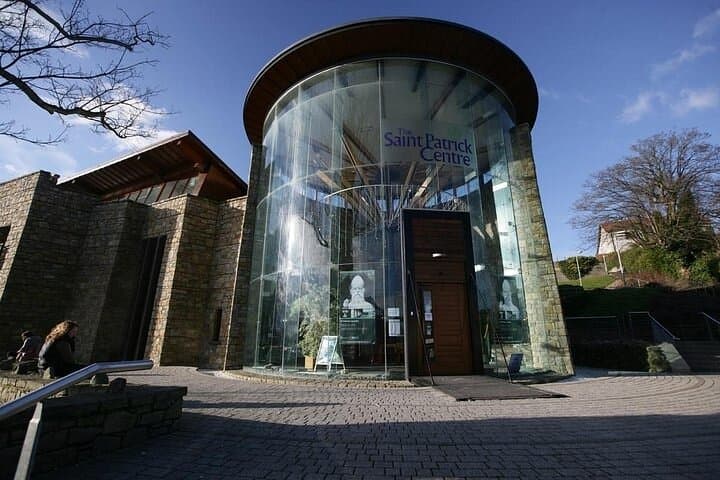
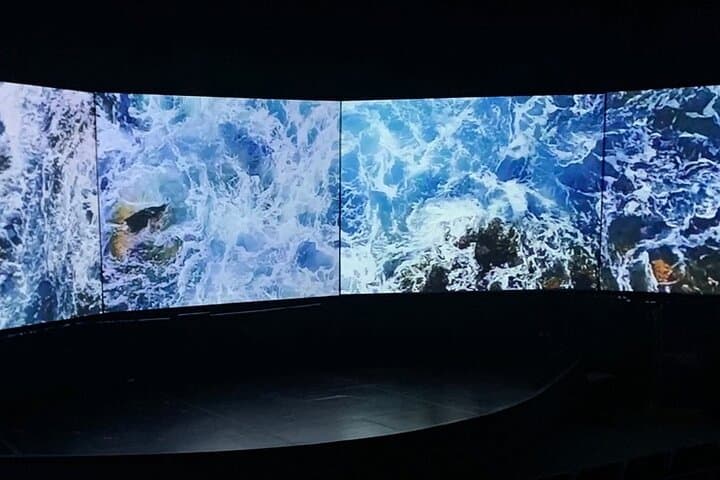
You push through the glass doors and the room changes scale—the voice of Ciaran Hinds guides you back 1,600 years as video panels arrange the past like pages on a table. Light moves across sculptures; a large-format film fills the IMAX screen. The exhibition places you beside the young Roman, the slave on Slemish, and the missionary whose story traveled by ship and monastery.
You push through the glass doors and the room changes scale—the voice of Ciaran Hinds guides you back 1,600 years as video panels arrange the past like pages on a table. Light moves across sculptures; a large-format film fills the IMAX screen. The exhibition places you beside the young Roman, the slave on Slemish, and the missionary whose story traveled by ship and monastery.
Downpatrick sits on glacial drumlins and quiet marshes; the town grew around the medieval cathedral that claims St Patrick’s grave. The Centre uses oral narration, bold graphics and scale models to explain late Roman Britain, sixth-century missionary routes, and how Irish monasteries became cultural hubs across Dark Age Europe. You’ll encounter artifacts, dramatic reconstructions and contextual displays linking landscape, faith and migration.
Practical guidance is straightforward: plan 60–90 minutes, arrive in the morning to avoid school groups, and pair the visit with Down Cathedral and Inch Abbey a short drive away. Mobile or printed tickets are accepted and the site is fully wheelchair accessible—strollers and service animals are permitted. Audio and film elements are suitable for family groups but expect some dimly lit galleries and large-screen sound during the IMAX presentation. Photography is allowed in most areas but check signage for exhibit-specific restrictions.
Local cafes and a small museum shop make it easy to extend the visit; public transport serves the town, and Belfast is the nearest major city for overnight stays. The Centre’s interpretation aims to be both historical and cinematic—engaging for casual visitors and useful as a primer for exploring County Down’s wider early-medieval sites.