THE ADVENTURE COLLECTIVE® · Independent discovery and booking for outdoor travel

Explore the National Atomic Testing Museum’s unusual collection of Cold War artifacts, from the Genie missile to reactor hardware. This guide previews what to expect and practical tips for a focused 60–120 minute visit in Las Vegas.
Explore the National Atomic Testing Museum’s unusual collection of Cold War artifacts, from the Genie missile to reactor hardware. This guide previews what to expect and practical tips for a focused 60–120 minute visit in Las Vegas.
You step through glass doors and into a place that holds a quiet, precise kind of power: rows of labeled cases, a real air-to-air Genie missile angled toward the ceiling, and a full-scale reactor component that once pushed the US rocket program forward.
Verified experiences and guided adventures in the surrounding area.
Operated by Atomic Museum · Las Vegas, Nevada
You step through glass doors and into a place that holds a quiet, precise kind of power: rows of labeled cases, a real air-to-air Genie missile angled toward the ceiling, and a full-scale reactor component that once pushed the US rocket program forward.
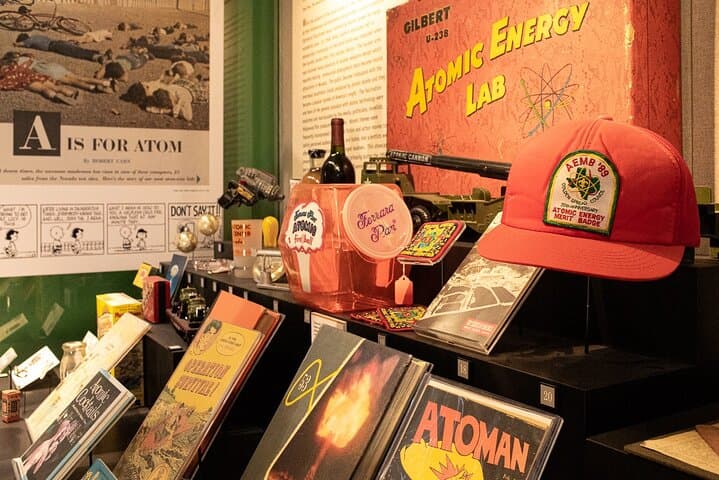
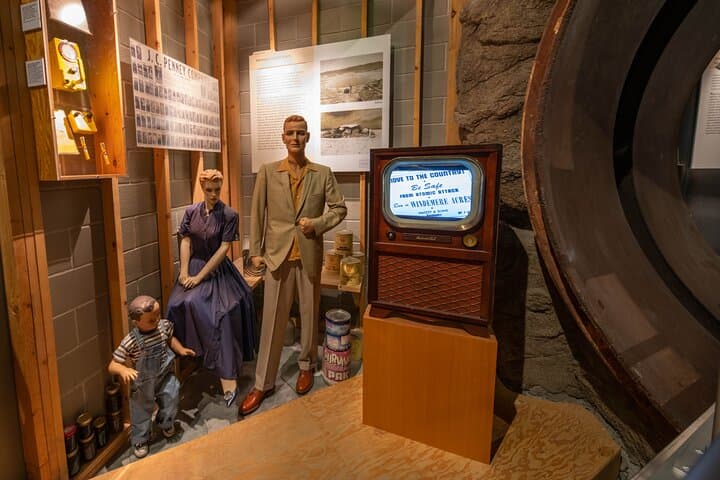
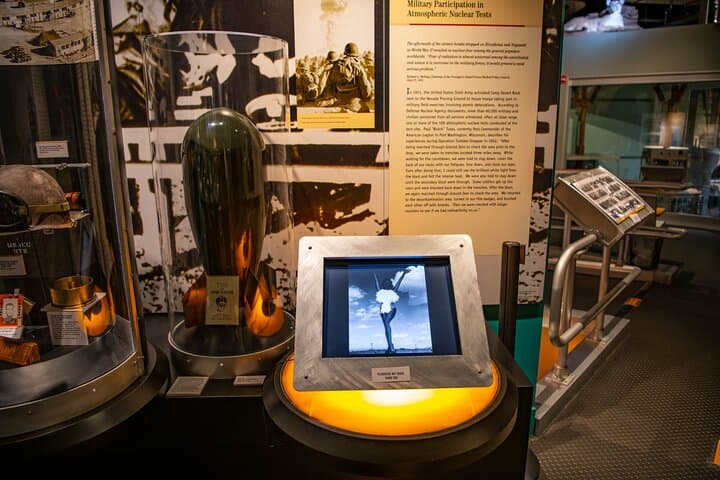
The National Atomic Testing Museum sits on the east edge of Las Vegas and frames the city’s postwar boom through the hard light of science and military hardware. Exhibits trace the Nevada Test Site’s role in Cold War strategy, showing everything from the Davy Crockett launcher and backpack-style devices to displays about civil defense, fallout monitoring, and the communities affected downwind. Geology and decades of desert testing intersect in dioramas and maps that show how terrain and distance shaped test placement and evacuation planning.
Culturally the museum bridges military, scientific and local narratives: oral histories and photographs place technicians, soldiers and Las Vegas-area workers into the story while congressional designation as a private national museum in 2012 underlines its public-education mission.
Practical notes: plan 60–120 minutes; exhibits are accessible, with free parking and mobile tickets accepted. Photography is generally allowed but check signage for restricted artifacts. Wear comfortable shoes—some sections are spread out—and allow time to read the contextual panels that connect hardware to policy and to local environmental impacts. Visits are best in the morning to avoid Strip crowds; the museum’s interpretive approach rewards a slow walk-through and questions about how technology shaped the region and the nation.
easy.
1–2 hours.
Suitable for all fitness levels; requires only standing and walking at a gentle pace
Most visitors spend 60–120 minutes; budget more time if you want to read all panels or participate in special programs.
Yes—free parking is included and mobile or paper tickets are accepted for admission.
Yes—the facility is wheelchair and stroller accessible with ramps and level surfaces throughout.
Photography is generally allowed without flash, but some artifacts may have restrictions—follow posted signs in each gallery.
Designated a private national museum by Congress in 2012, the museum preserves the history of the Nevada Test Site and its national role in atomic testing.
The museum focuses on preservation of delicate artifacts and educational outreach about environmental impacts, encouraging minimal-contact viewing and interpretive programming that explains long-term site stewardship.
Atomic Museum operates guided outdoor trips and adventures with an emphasis on safety, stewardship, and memorable experiences.
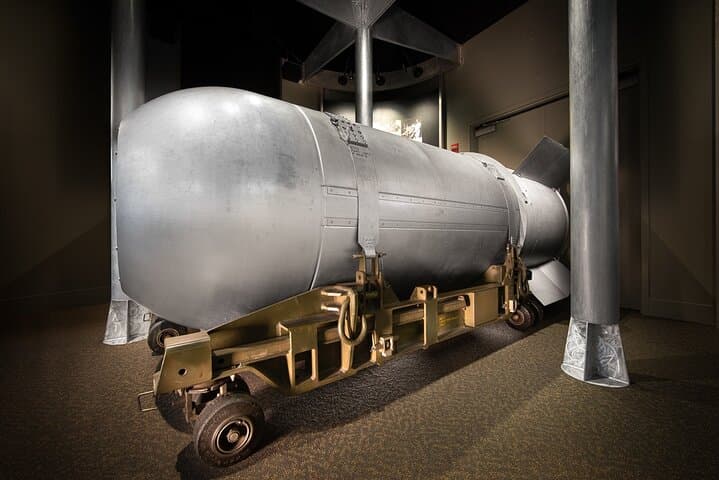
You step through glass doors and into a place that holds a quiet, precise kind of power: rows of labeled cases, a real air-to-air Genie missile angled toward the ceiling, and a full-scale reactor component that once pushed the US rocket program forward.
You step through glass doors and into a place that holds a quiet, precise kind of power: rows of labeled cases, a real air-to-air Genie missile angled toward the ceiling, and a full-scale reactor component that once pushed the US rocket program forward.
The National Atomic Testing Museum sits on the east edge of Las Vegas and frames the city’s postwar boom through the hard light of science and military hardware. Exhibits trace the Nevada Test Site’s role in Cold War strategy, showing everything from the Davy Crockett launcher and backpack-style devices to displays about civil defense, fallout monitoring, and the communities affected downwind. Geology and decades of desert testing intersect in dioramas and maps that show how terrain and distance shaped test placement and evacuation planning.
Culturally the museum bridges military, scientific and local narratives: oral histories and photographs place technicians, soldiers and Las Vegas-area workers into the story while congressional designation as a private national museum in 2012 underlines its public-education mission.
Practical notes: plan 60–120 minutes; exhibits are accessible, with free parking and mobile tickets accepted. Photography is generally allowed but check signage for restricted artifacts. Wear comfortable shoes—some sections are spread out—and allow time to read the contextual panels that connect hardware to policy and to local environmental impacts. Visits are best in the morning to avoid Strip crowds; the museum’s interpretive approach rewards a slow walk-through and questions about how technology shaped the region and the nation.