THE ADVENTURE COLLECTIVE® · Independent discovery and booking for outdoor travel

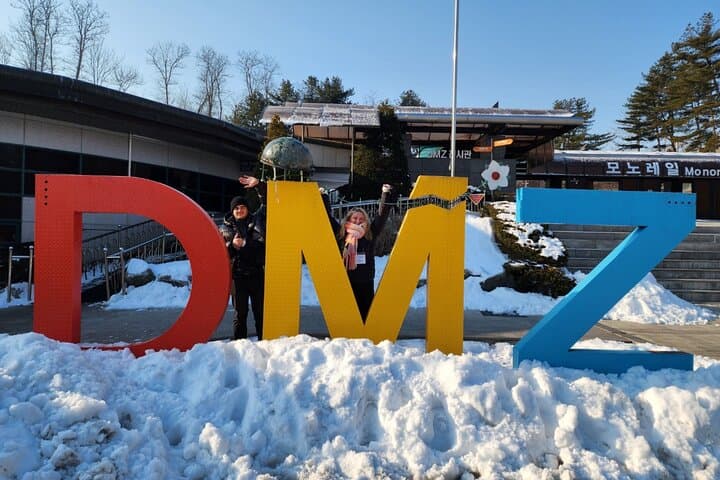
Board a day tour from Seoul to the DMZ to walk the Third Tunnel, scan North Korea from Dora Observatory, and finish at the War Memorial of Korea—an intense, informative day that blends frontline history with clear practical requirements.
Board a day tour from Seoul to the DMZ to walk the Third Tunnel, scan North Korea from Dora Observatory, and finish at the War Memorial of Korea—an intense, informative day that blends frontline history with clear practical requirements.
A low-slung bus pulls out of Seoul before dawn, the city thinning into rice paddies and watchtowers. Roadside signs give way to gates and concrete; barbed wire edges the horizon like a challenge. By the time you reach Imjingak Pyeonghwa Nuri Park, the air feels charged with history—sonic traces of trains, memorial altars, and a steam locomotive frozen with shrapnel.
Verified experiences and guided adventures in the surrounding area.
Operated by YEHA TOUR · Paju, Gyeonggi-do
A low-slung bus pulls out of Seoul before dawn, the city thinning into rice paddies and watchtowers. Roadside signs give way to gates and concrete; barbed wire edges the horizon like a challenge. By the time you reach Imjingak Pyeonghwa Nuri Park, the air feels charged with history—sonic traces of trains, memorial altars, and a steam locomotive frozen with shrapnel.
This full-day loop stitches together 20th-century history and front-line geography. The DMZ exists because of the 1953 armistice; its scarred infrastructure—bridges of freedom, Mangbaedan altar, and the steam engine at Jangdan—tells stories of separation and return. The Third Infiltration Tunnel, dug covertly and discovered in 1978, is a study in geology and intent: drill marks, dynamite holes, and a slight northward gradient intended to drain water away. From the Dora Observatory binoculars pick out a propaganda village and the linear geometry of military zones.
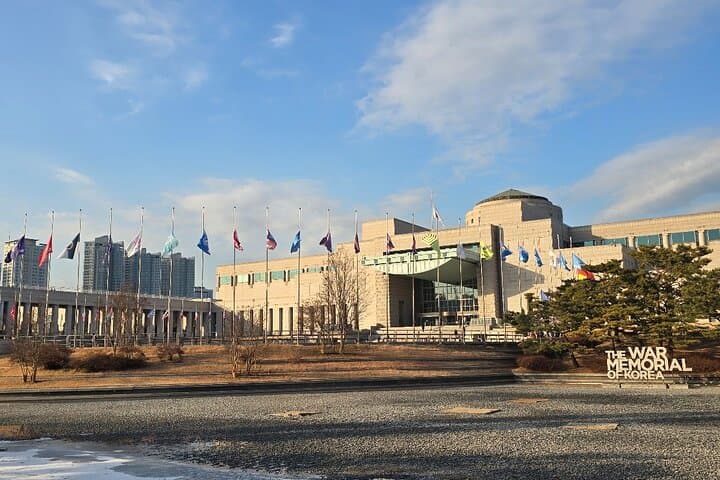
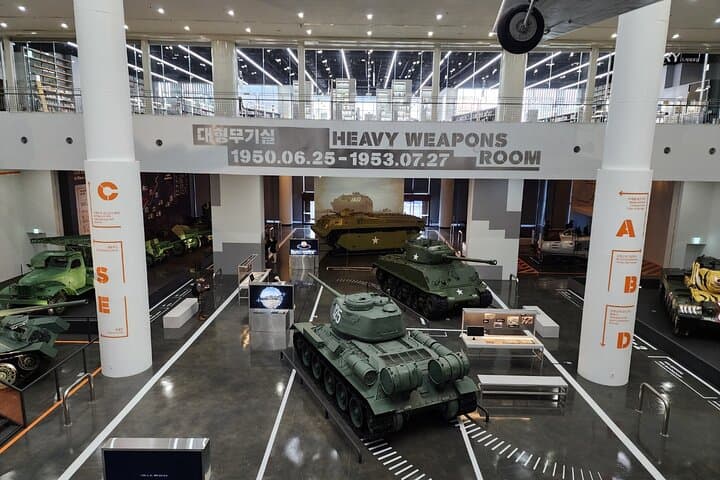
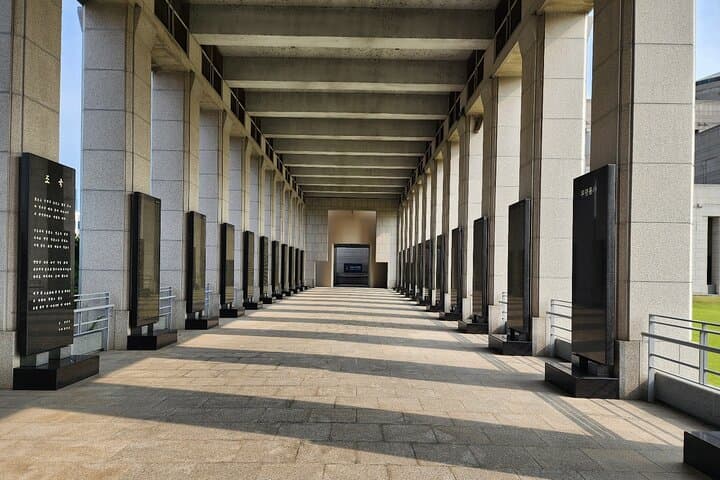
Culturally, the area is raw: Magbaedan remains a focal point for displaced families, and the War Memorial of Korea in Seoul contextualizes conflict with artifacts, maps, and personal accounts.
Practical guidance: bring your passport (mandatory for DMZ entry), wear sturdy shoes for narrow, sloping passages in the tunnel, and expect security checks and photo restrictions. The itinerary moves quickly—plan for an 8–9 hour day with long periods standing and walking. Carry water, a compact wind layer, and patience; military activity can delay or reroute visits. The experience pairs sober reflection with clear, observable evidence of Cold War engineering—an educational day for travelers prepared for both history and the logistics of visiting a sensitive border zone.
moderate.
8–9 hours.
Moderate fitness—able to climb stairs and walk through narrow, sloped tunnel sections and stand for extended periods.
Yes—your passport is mandatory for DMZ entry and will be checked at military checkpoints; travelers without it cannot enter.
No—photography is restricted in certain areas; follow your guide and posted signs, especially near military installations and observation posts.
It requires stooping and walking on a sloped, narrow passage—reasonable mobility and comfortable shoes are necessary, but specialized fitness isn’t required.
Tours may be delayed or canceled without refund in some cases; operators typically offer rescheduling or alternate itineraries if the minimum group size or security conditions prevent access.
The Korean Demilitarized Zone was established by the 1953 armistice and remains a heavily fortified buffer; the Third Tunnel was discovered in 1978 and is tangible evidence of North Korean infiltration efforts.
Restricted public access has inadvertently created valuable habitat for migratory species; visitors should stay on designated paths, avoid disturbing wildlife, and follow guide instructions to minimize impact.
YEHA TOUR operates guided outdoor trips and adventures with an emphasis on safety, stewardship, and memorable experiences.
A low-slung bus pulls out of Seoul before dawn, the city thinning into rice paddies and watchtowers. Roadside signs give way to gates and concrete; barbed wire edges the horizon like a challenge. By the time you reach Imjingak Pyeonghwa Nuri Park, the air feels charged with history—sonic traces of trains, memorial altars, and a steam locomotive frozen with shrapnel.
A low-slung bus pulls out of Seoul before dawn, the city thinning into rice paddies and watchtowers. Roadside signs give way to gates and concrete; barbed wire edges the horizon like a challenge. By the time you reach Imjingak Pyeonghwa Nuri Park, the air feels charged with history—sonic traces of trains, memorial altars, and a steam locomotive frozen with shrapnel.
This full-day loop stitches together 20th-century history and front-line geography. The DMZ exists because of the 1953 armistice; its scarred infrastructure—bridges of freedom, Mangbaedan altar, and the steam engine at Jangdan—tells stories of separation and return. The Third Infiltration Tunnel, dug covertly and discovered in 1978, is a study in geology and intent: drill marks, dynamite holes, and a slight northward gradient intended to drain water away. From the Dora Observatory binoculars pick out a propaganda village and the linear geometry of military zones.
Culturally, the area is raw: Magbaedan remains a focal point for displaced families, and the War Memorial of Korea in Seoul contextualizes conflict with artifacts, maps, and personal accounts.
Practical guidance: bring your passport (mandatory for DMZ entry), wear sturdy shoes for narrow, sloping passages in the tunnel, and expect security checks and photo restrictions. The itinerary moves quickly—plan for an 8–9 hour day with long periods standing and walking. Carry water, a compact wind layer, and patience; military activity can delay or reroute visits. The experience pairs sober reflection with clear, observable evidence of Cold War engineering—an educational day for travelers prepared for both history and the logistics of visiting a sensitive border zone.