THE ADVENTURE COLLECTIVE® · Independent discovery and booking for outdoor travel

Drive into a landscape where Cold War scars meet thriving wetlands. This full-day private tour visits the Second Tunnel, Cheorwon Peace Observatory and Woljeongri Station for a close, guided look at history, nature and the contested border.
Drive into a landscape where Cold War scars meet thriving wetlands. This full-day private tour visits the Second Tunnel, Cheorwon Peace Observatory and Woljeongri Station for a close, guided look at history, nature and the contested border.
The road into Cheorwon tightens and the lowlands open like a held breath—rice fields give way to flooded wetlands where cranes stalk and reedbeds murmur. From the vehicle you’ll register at the DMZ Cheorwon Peace Center, then follow a lead car into the civilian controlled area, a place where history and habitat sit side by side.
Verified experiences and guided adventures in the surrounding area.
Operated by Korea Season Tour · Cheorwon, Gangwon-do
The road into Cheorwon tightens and the lowlands open like a held breath—rice fields give way to flooded wetlands where cranes stalk and reedbeds murmur. From the vehicle you’ll register at the DMZ Cheorwon Peace Center, then follow a lead car into the civilian controlled area, a place where history and habitat sit side by side.
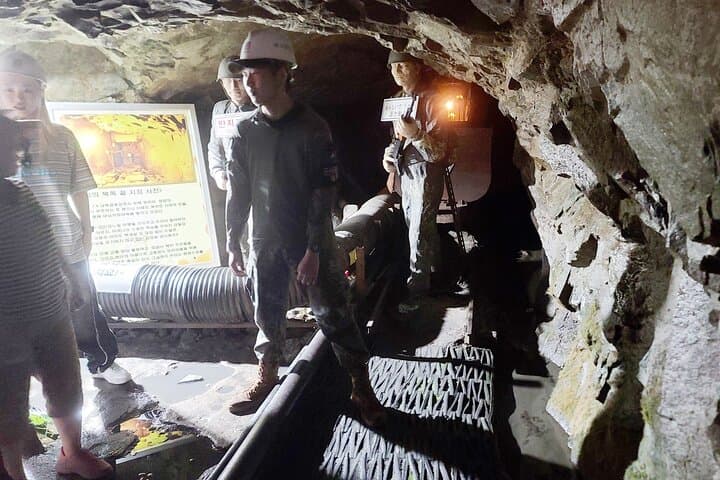
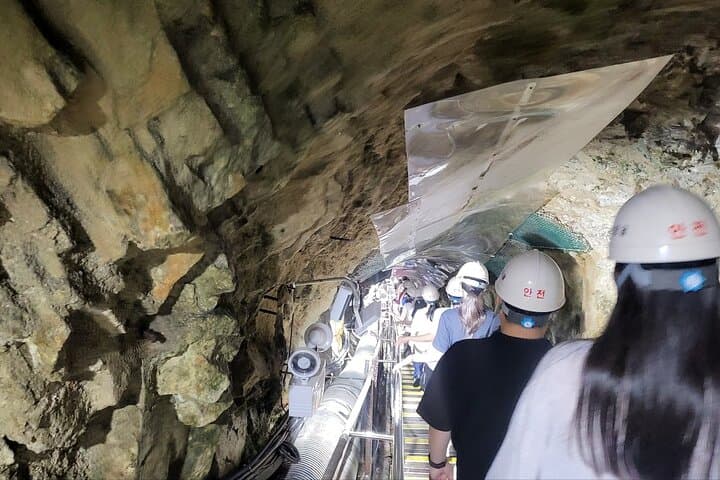
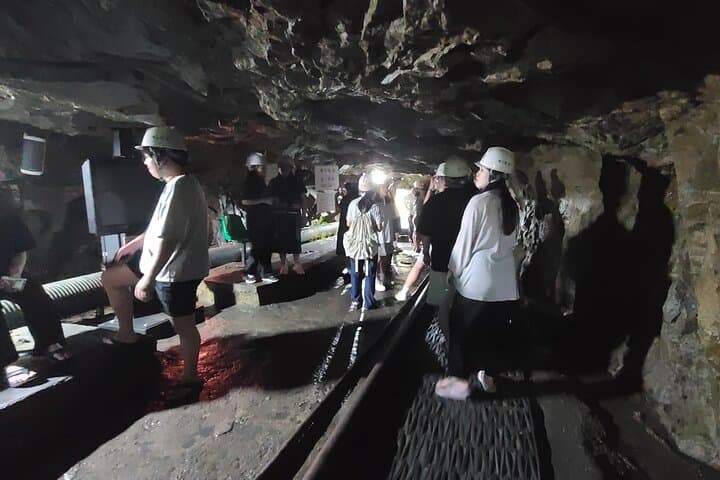
This tour threads recent history with visible geology: the Second Tunnel, discovered in 1975, was dug beneath the ridge with hard-packed bedrock that kept its purpose hidden for years. The DMZ itself dates to the 1953 armistice and has since become an accidental refuge for migratory birds and resilient flora. At the Cheorwon Peace Observatory visitors look across Pyeonggang tableland and the propaganda village—landscapes that map political divisions as clearly as contours and river channels.
Woljeongri Station, quieter than the observatory, still shows the scars of the Korean War—rusted rail and a bombed train car that anchors the human story to the terrain. Expect interpretive signage, short walks and a low-impact route through sensitive wetlands where cranes and waterfowl command quiet attention.
Practical guidance: wear closed-toe shoes for the tunnel and layers—wind and sun trade places quickly on exposed ridgelines. Bring identification, a charged camera and a refillable water bottle (bottled water is provided). Security screenings are strict; follow guide directions and stay on designated paths to protect both the environment and your access to these fragile, moving frontiers.
easy.
8 hours.
Suitable for most fitness levels; involves walking, short stair climbs and standing during observation periods.
Yes—guests must present valid government-issued identification (passport recommended) at the Cheorwon Peace Center for registration.
Yes—this itinerary is low-impact and suitable for most ages, but the tunnel includes some stairs and confined spaces that may be uncomfortable for very young children or those with mobility limitations.
No—the observatory offers visual access across the DMZ only; crossing the military demarcation line is not permitted on this tour.
Tours generally run in light rain, but access can be adjusted for safety; follow the operator’s guidance and cancellation policy for full details.
The DMZ was established after the 1953 armistice; tunnels like the Second Tunnel were discovered as evidence of infiltration plans during the Cold War era.
Decades of restricted human access have made parts of the DMZ an important habitat for migratory birds—visitors should stay on paths, avoid disturbing wildlife and follow guide instructions to minimize impact.
Korea Season Tour operates guided outdoor trips and adventures with an emphasis on safety, stewardship, and memorable experiences.
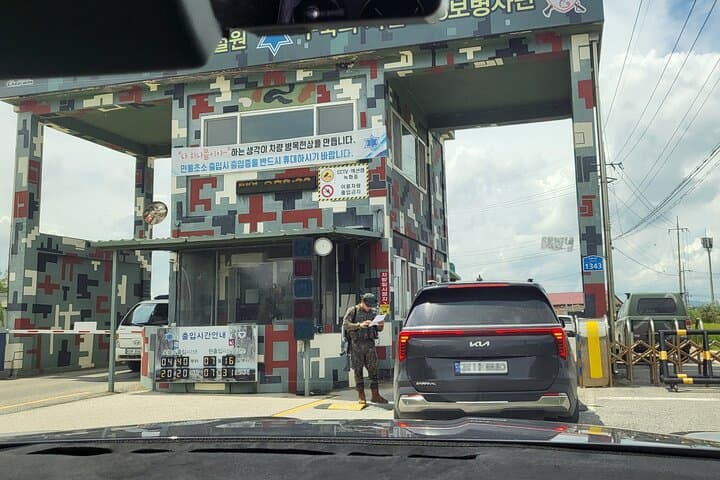
The road into Cheorwon tightens and the lowlands open like a held breath—rice fields give way to flooded wetlands where cranes stalk and reedbeds murmur. From the vehicle you’ll register at the DMZ Cheorwon Peace Center, then follow a lead car into the civilian controlled area, a place where history and habitat sit side by side.
The road into Cheorwon tightens and the lowlands open like a held breath—rice fields give way to flooded wetlands where cranes stalk and reedbeds murmur. From the vehicle you’ll register at the DMZ Cheorwon Peace Center, then follow a lead car into the civilian controlled area, a place where history and habitat sit side by side.
This tour threads recent history with visible geology: the Second Tunnel, discovered in 1975, was dug beneath the ridge with hard-packed bedrock that kept its purpose hidden for years. The DMZ itself dates to the 1953 armistice and has since become an accidental refuge for migratory birds and resilient flora. At the Cheorwon Peace Observatory visitors look across Pyeonggang tableland and the propaganda village—landscapes that map political divisions as clearly as contours and river channels.
Woljeongri Station, quieter than the observatory, still shows the scars of the Korean War—rusted rail and a bombed train car that anchors the human story to the terrain. Expect interpretive signage, short walks and a low-impact route through sensitive wetlands where cranes and waterfowl command quiet attention.
Practical guidance: wear closed-toe shoes for the tunnel and layers—wind and sun trade places quickly on exposed ridgelines. Bring identification, a charged camera and a refillable water bottle (bottled water is provided). Security screenings are strict; follow guide directions and stay on designated paths to protect both the environment and your access to these fragile, moving frontiers.