THE ADVENTURE COLLECTIVE® · Independent discovery and booking for outdoor travel

A focused 2.5-hour walk through the British Museum’s top pieces with a professional guide. Learn quick context for the Rosetta Stone, Parthenon Marbles and Lewis Chessmen, then explore on your own.
A focused 2.5-hour walk through the British Museum’s top pieces with a professional guide. Learn quick context for the Rosetta Stone, Parthenon Marbles and Lewis Chessmen, then explore on your own.
Step into the cool, echoing atrium of the British Museum and feel the pace of modern London fall away. Sunlight from the glass roof pools on stone floors as your small group threads between galleries; the Rosetta Stone waits like a key, the Parthenon marbles keep a steady gaze, and a room of carved Lewis Chessmen suggests quieter northern courts.
Verified experiences and guided adventures in the surrounding area.
Operated by Privatour - Bespoke Experiences by Local Experts · London, England
Step into the cool, echoing atrium of the British Museum and feel the pace of modern London fall away. Sunlight from the glass roof pools on stone floors as your small group threads between galleries; the Rosetta Stone waits like a key, the Parthenon marbles keep a steady gaze, and a room of carved Lewis Chessmen suggests quieter northern courts.
The British Museum opened to the public in 1759 and grew from private collections into one of the world’s largest repositories of human material culture. Geology and craft meet here: Pentelic marble from Athens, Egyptian granodiorite of the Rosetta Stone, and medieval walrus ivory of the Lewis Chessmen each carry a physical story of place and technique. The collection traces trade, conquest, religion and invention across 6,000 years and offers a concentrated view of changing cultures and contested histories.
On a guided highlights tour you get orientation and context: why the Rosetta Stone mattered to linguistics, how Assyrian reliefs depict royal hunts, and what Samurai armor reveals about feudal Japan. Guides frame objects within global histories while pointing out conservation details—restoration methods, display cases and lighting choices that preserve fragile material.
Practical guidance: tours last about 2.5 hours and suit most fitness levels; wear comfortable shoes and plan for standing and walking between rooms. Bring a charged phone for photos where permitted (no flash), and use public transport—Holborn, Tottenham Court Road and Russell Square are all within easy walking distance. The small-group format (up to eight) makes this a focused introduction; afterward you can linger in galleries that sparked your curiosity.
easy.
2–3 hours.
Suitable for most fitness levels; requires walking and some standing but no technical exertion.
General admission to the British Museum is free; this guided experience is a booked tour with a reserved space—keep your mobile ticket handy.
Yes; the tour is family-friendly, but guardians should be prepared for 2.5 hours of walking and moments of quiet in galleries.
Photography without flash is generally allowed in permanent galleries, but some objects and temporary exhibitions may restrict photos—follow the guide’s instructions.
The British Museum provides step-free entry, lifts and accessible facilities; notify booking of any special requirements so the guide can accommodate you.
Founded in 1753 from Sir Hans Sloane’s collection, the museum was among the first public national museums and rapidly expanded through donations, excavations and acquisitions during the 18th and 19th centuries.
The museum invests in conservation labs and controlled-display environments to stabilize materials; visitors can help by avoiding flash photography and respecting barriers.
Privatour - Bespoke Experiences by Local Experts operates guided outdoor trips and adventures with an emphasis on safety, stewardship, and memorable experiences.
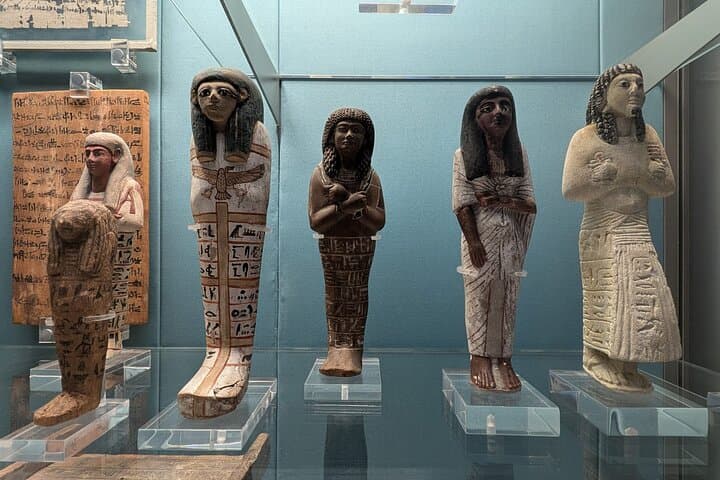
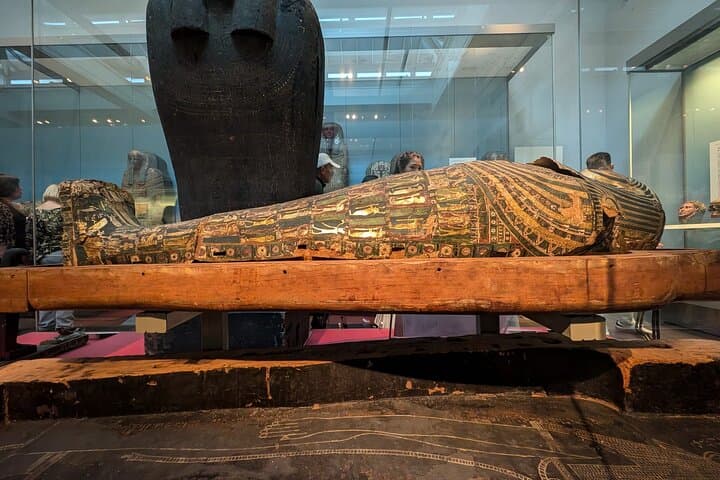
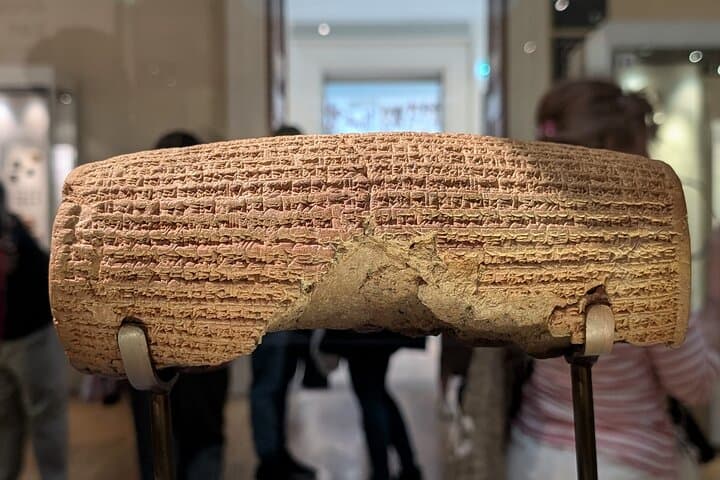
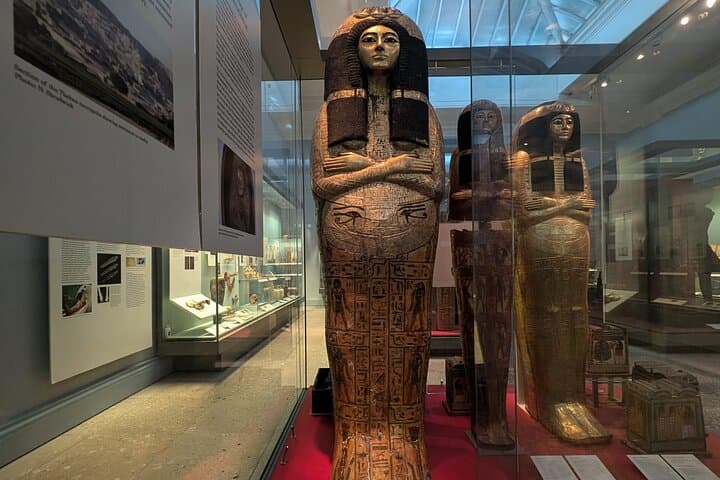
Step into the cool, echoing atrium of the British Museum and feel the pace of modern London fall away. Sunlight from the glass roof pools on stone floors as your small group threads between galleries; the Rosetta Stone waits like a key, the Parthenon marbles keep a steady gaze, and a room of carved Lewis Chessmen suggests quieter northern courts.
Step into the cool, echoing atrium of the British Museum and feel the pace of modern London fall away. Sunlight from the glass roof pools on stone floors as your small group threads between galleries; the Rosetta Stone waits like a key, the Parthenon marbles keep a steady gaze, and a room of carved Lewis Chessmen suggests quieter northern courts.
The British Museum opened to the public in 1759 and grew from private collections into one of the world’s largest repositories of human material culture. Geology and craft meet here: Pentelic marble from Athens, Egyptian granodiorite of the Rosetta Stone, and medieval walrus ivory of the Lewis Chessmen each carry a physical story of place and technique. The collection traces trade, conquest, religion and invention across 6,000 years and offers a concentrated view of changing cultures and contested histories.
On a guided highlights tour you get orientation and context: why the Rosetta Stone mattered to linguistics, how Assyrian reliefs depict royal hunts, and what Samurai armor reveals about feudal Japan. Guides frame objects within global histories while pointing out conservation details—restoration methods, display cases and lighting choices that preserve fragile material.
Practical guidance: tours last about 2.5 hours and suit most fitness levels; wear comfortable shoes and plan for standing and walking between rooms. Bring a charged phone for photos where permitted (no flash), and use public transport—Holborn, Tottenham Court Road and Russell Square are all within easy walking distance. The small-group format (up to eight) makes this a focused introduction; afterward you can linger in galleries that sparked your curiosity.