THE ADVENTURE COLLECTIVE® · Independent discovery and booking for outdoor travel

Walk through South Africa’s charged past on a three‑ to four‑hour guided tour of the Apartheid Museum in Gold Reef City. This guided visit layers film, artefacts and oral histories into a clear chronology and practical context for understanding apartheid and the transition to democracy.
Walk through South Africa’s charged past on a three‑ to four‑hour guided tour of the Apartheid Museum in Gold Reef City. This guided visit layers film, artefacts and oral histories into a clear chronology and practical context for understanding apartheid and the transition to democracy.
A low concrete façade and a pair of rusted steel doors mark the approach to the Apartheid Museum, where quiet exhibits press in around you and film footage fills the rooms with voices from a fractured past.
Verified experiences and guided adventures in the surrounding area.
Operated by Stephenson Adventures · Johannesburg, Gauteng
A low concrete façade and a pair of rusted steel doors mark the approach to the Apartheid Museum, where quiet exhibits press in around you and film footage fills the rooms with voices from a fractured past.
Opened in 2001 within the Gold Reef City precinct, the museum charts South Africa’s 20th‑century political history—laws, passbooks, propaganda posters and the testimonies of those who resisted. The curatorial arc is chronological and visceral: segregation’s legal scaffolding, the daily indignities endured by non‑white South Africans, and the long campaign toward democratic transition.
Geology and urban change appear in the margins: the museum sits on Johannesburg’s goldfields, where mining reshaped landscapes and labor patterns that fed the apartheid system. Cultural layers are evident in multimedia displays, oral histories and rotating temporary exhibits that highlight community memory and contemporary reflections.
Visitors can expect three to four hours of paced, sometimes intense viewing; the guided format adds commentary that situates artifacts and film clips in social context. Practical guidance matters—allow time between rooms, sit through the audiovisual elements, and follow the guide’s route to get the clearest narrative.
Accessibility is straightforward: ramped routes and wheelchair access are provided, and the site is well signed inside Gold Reef City. For planning, bring a bottle of water, allow for security screening, and choose a morning or late‑afternoon slot to avoid midday tour crowds.
easy.
3–4 hours.
Suitable for most fitness levels; mainly walking and standing with seating areas available
The guided visit typically lasts 3–4 hours, depending on group pace and time spent at temporary exhibits.
Yes—ramps, accessible routes and transport options are available; notify booking of mobility needs to arrange assistance.
Still photography is generally permitted for personal use, but flash and tripods may be restricted—observe signage and staff instructions.
Older children and teens will gain from the exhibits; some content is intense and may be upsetting for young children—use discretion.
Opened in 2001, the Apartheid Museum documents South Africa’s institutionalized racial segregation and the social movements that dismantled it.
The museum focuses on preserving fragile documents and audiovisual records; visitors are asked to respect display rules and to avoid touching artifacts to reduce wear.
Stephenson Adventures operates guided outdoor trips and adventures with an emphasis on safety, stewardship, and memorable experiences.
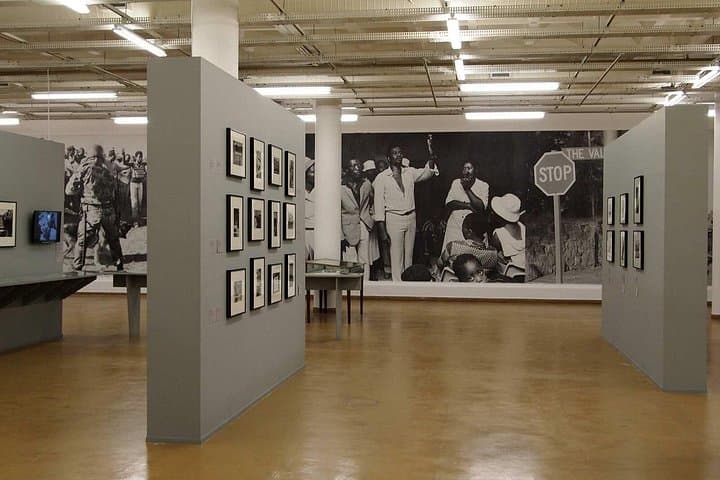
A low concrete façade and a pair of rusted steel doors mark the approach to the Apartheid Museum, where quiet exhibits press in around you and film footage fills the rooms with voices from a fractured past.
A low concrete façade and a pair of rusted steel doors mark the approach to the Apartheid Museum, where quiet exhibits press in around you and film footage fills the rooms with voices from a fractured past.
Opened in 2001 within the Gold Reef City precinct, the museum charts South Africa’s 20th‑century political history—laws, passbooks, propaganda posters and the testimonies of those who resisted. The curatorial arc is chronological and visceral: segregation’s legal scaffolding, the daily indignities endured by non‑white South Africans, and the long campaign toward democratic transition.
Geology and urban change appear in the margins: the museum sits on Johannesburg’s goldfields, where mining reshaped landscapes and labor patterns that fed the apartheid system. Cultural layers are evident in multimedia displays, oral histories and rotating temporary exhibits that highlight community memory and contemporary reflections.
Visitors can expect three to four hours of paced, sometimes intense viewing; the guided format adds commentary that situates artifacts and film clips in social context. Practical guidance matters—allow time between rooms, sit through the audiovisual elements, and follow the guide’s route to get the clearest narrative.
Accessibility is straightforward: ramped routes and wheelchair access are provided, and the site is well signed inside Gold Reef City. For planning, bring a bottle of water, allow for security screening, and choose a morning or late‑afternoon slot to avoid midday tour crowds.