THE ADVENTURE COLLECTIVE® · Independent discovery and booking for outdoor travel

Explore Oman’s largest mosque with a guided visit that blends architecture, faith and civic history. This practical guide explains what to expect, how to prepare and the best time to visit for respectful, informative access.
Explore Oman’s largest mosque with a guided visit that blends architecture, faith and civic history. This practical guide explains what to expect, how to prepare and the best time to visit for respectful, informative access.
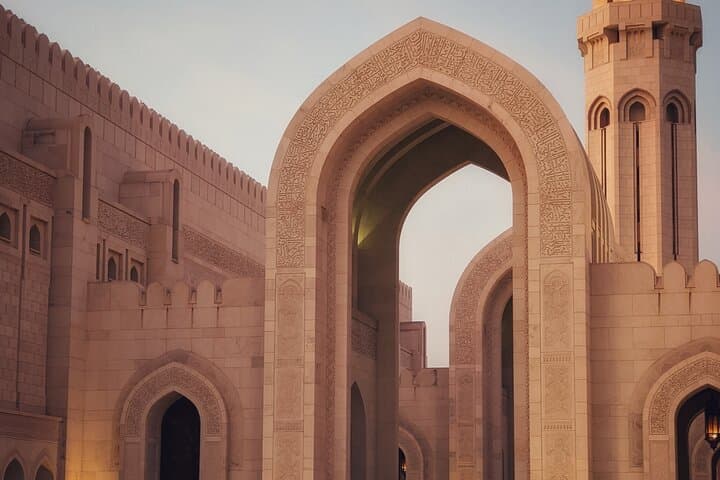
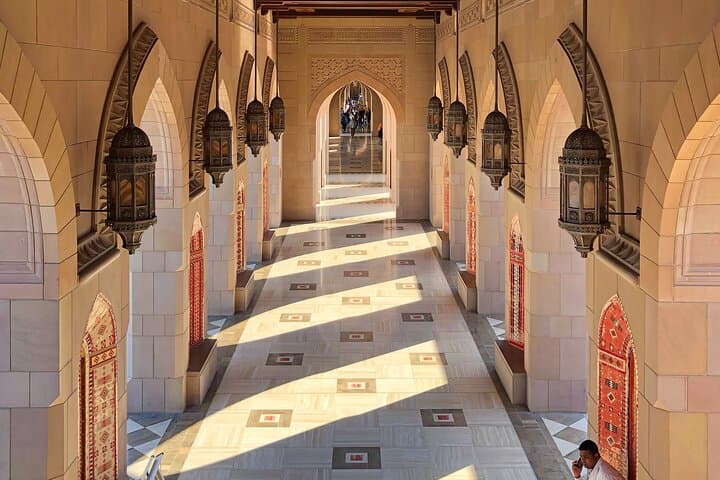
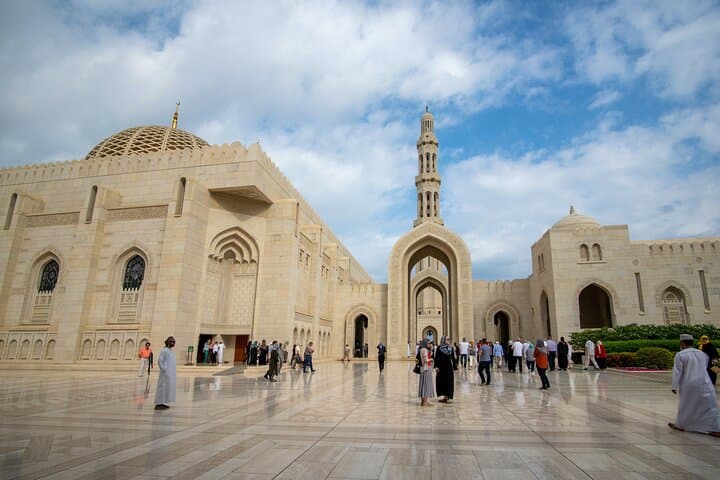
Morning light hits the mosque’s domes and the prayer carpet’s colors seem to glow through the arches — arriving here feels like stepping into a living room of Omani civic pride. The Sultan Qaboos Grand Mosque sits on a broad lawn at the edge of Muscat, its courtyards and minarets drawing attention from the city’s low-rise skyline.
Verified experiences and guided adventures in the surrounding area.
Operated by Oman Tour · Muscat, Muscat Governorate
Morning light hits the mosque’s domes and the prayer carpet’s colors seem to glow through the arches — arriving here feels like stepping into a living room of Omani civic pride. The Sultan Qaboos Grand Mosque sits on a broad lawn at the edge of Muscat, its courtyards and minarets drawing attention from the city’s low-rise skyline.
Built by royal commission and formally opened in 2001, the mosque was designed to reflect modern Omani architecture while preserving traditional Islamic detail. The site accommodates more than 20,000 worshippers and houses one of the world’s largest hand-woven carpets and an ornate chandelier in the main prayer hall. The stone and marble facades tell a quiet geological story of locally quarried limestone and imported marble, while interior motifs reference regional craft traditions and calligraphy.
A guided visit frames these elements into cultural context: how the mosque functions as a place of worship, a community library and a center for learning. Guides explain prayer schedules, gendered spaces, and the rules of etiquette that govern photography, dress and movement.
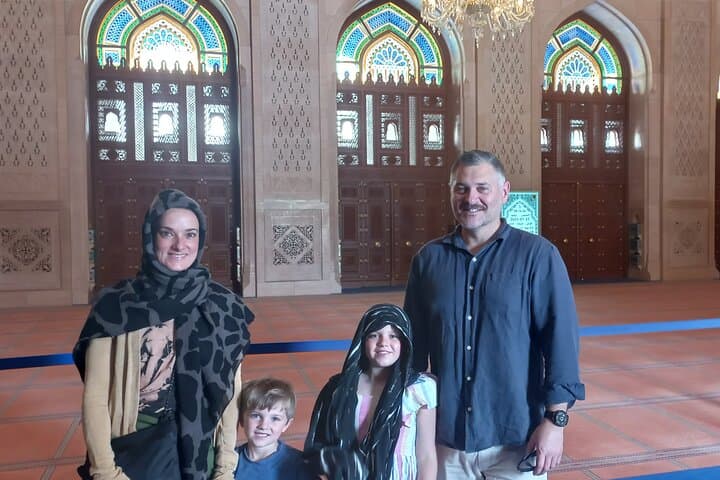
Practical guidance comes next: visits are brief (about 90–95 minutes with transport included), best scheduled in the morning when the mosque opens to non-worshippers, and require modest, conservative clothing; women are asked to cover heads and remove shoes before entering carpeted areas. The route is largely level and wheelchair accessible, but surfaces can be cool and slick on marble — bring a light layer and step carefully. Stay hydrated, keep conversations low, and allow time for quiet photos outside the main prayer times.
easy.
1.5–2 hours.
Suitable for most fitness levels; involves short walks on flat, paved surfaces and a few steps
Yes — the mosque opens to non-Muslim visitors during set morning hours outside prayer times; guided tours often follow those visiting windows.
Modest clothing covering shoulders and knees is required; women should cover their hair. Some tours provide robes or scarves if needed.
Yes — the complex and many indoor areas are wheelchair accessible, though guests may encounter short steps or thresholds in some places.
Photography is permitted in many public areas, but avoid photographing worshippers and follow any posted signs or guide instructions, particularly during services.
Commissioned by Sultan Qaboos and opened in 2001, the mosque represents modern Omani identity and includes one of the country’s most significant contemporary monuments and prayer facilities.
The mosque’s upkeep is intensive — visitors are asked to limit waste, use provided bins and follow rules that protect stonework and textiles from damage.
Oman Tour operates guided outdoor trips and adventures with an emphasis on safety, stewardship, and memorable experiences.
Morning light hits the mosque’s domes and the prayer carpet’s colors seem to glow through the arches — arriving here feels like stepping into a living room of Omani civic pride. The Sultan Qaboos Grand Mosque sits on a broad lawn at the edge of Muscat, its courtyards and minarets drawing attention from the city’s low-rise skyline.
Morning light hits the mosque’s domes and the prayer carpet’s colors seem to glow through the arches — arriving here feels like stepping into a living room of Omani civic pride. The Sultan Qaboos Grand Mosque sits on a broad lawn at the edge of Muscat, its courtyards and minarets drawing attention from the city’s low-rise skyline.
Built by royal commission and formally opened in 2001, the mosque was designed to reflect modern Omani architecture while preserving traditional Islamic detail. The site accommodates more than 20,000 worshippers and houses one of the world’s largest hand-woven carpets and an ornate chandelier in the main prayer hall. The stone and marble facades tell a quiet geological story of locally quarried limestone and imported marble, while interior motifs reference regional craft traditions and calligraphy.
A guided visit frames these elements into cultural context: how the mosque functions as a place of worship, a community library and a center for learning. Guides explain prayer schedules, gendered spaces, and the rules of etiquette that govern photography, dress and movement.
Practical guidance comes next: visits are brief (about 90–95 minutes with transport included), best scheduled in the morning when the mosque opens to non-worshippers, and require modest, conservative clothing; women are asked to cover heads and remove shoes before entering carpeted areas. The route is largely level and wheelchair accessible, but surfaces can be cool and slick on marble — bring a light layer and step carefully. Stay hydrated, keep conversations low, and allow time for quiet photos outside the main prayer times.