THE ADVENTURE COLLECTIVE® · Independent discovery and booking for outdoor travel

Explore Ramallah with a private guide who unpacks 20th-century Palestinian history, visits Yasser Arafat’s tomb and the Mahmoud Darwish Museum, and shares a traditional lunch. This five-hour tour blends political context with hands-on cultural moments.
Explore Ramallah with a private guide who unpacks 20th-century Palestinian history, visits Yasser Arafat’s tomb and the Mahmoud Darwish Museum, and shares a traditional lunch. This five-hour tour blends political context with hands-on cultural moments.
You step out of the private vehicle onto a busy Ramallah street and the city presses in — stone facades, honking taxis, and vendors calling out over the hum. The guide leads you up a short rise toward the compound where Yasser Arafat’s tomb sits, a concrete marker that anchors a century of modern Palestinian history.
Verified experiences and guided adventures in the surrounding area.
Operated by Behind the wall is Palestine · Ramallah, Ramallah and al-Bireh Governorate
You step out of the private vehicle onto a busy Ramallah street and the city presses in — stone facades, honking taxis, and vendors calling out over the hum. The guide leads you up a short rise toward the compound where Yasser Arafat’s tomb sits, a concrete marker that anchors a century of modern Palestinian history.
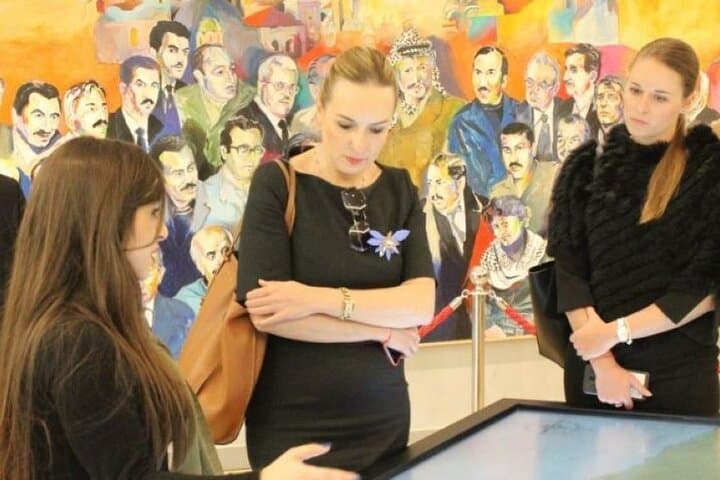
Ramallah occupies the central highlands of the West Bank, carved from limestone ridges and terraces that have guided settlement patterns for millennia. The tour moves from the contemporary political exhibits of a museum tracing events from the early 20th century to 2004, to the quieter Mahmoud Darwish Museum: a small house-turned-gallery with a garden and city view that frames the poet’s work in everyday life.
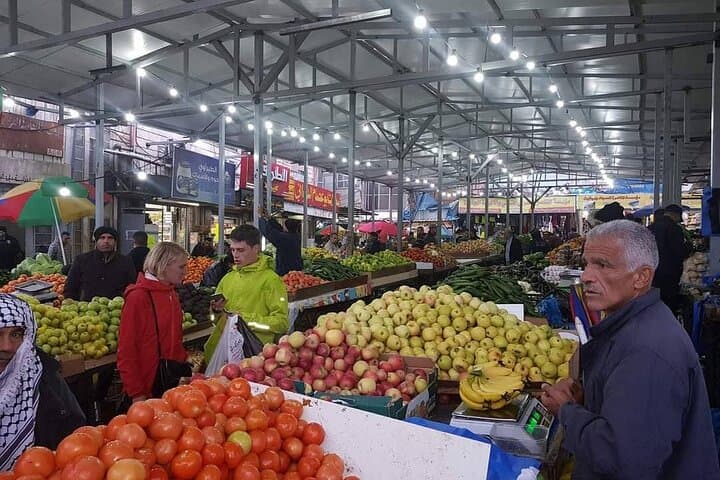
Cultural markers arrive in food and pace — a lunch of musakhan or maqloba, strong Turkish-style coffee, and shared desserts like knafeh. The market streets nearby reveal the city’s rhythm: olive oil, spices, and handwritten signs. Photography is common but ask before shooting people; the political nature of some sites also warrants sensitivity.
Practical guidance: this is a low-impact, mostly urban walk with short vehicle transfers. Expect 5 hours total, with museum time and a home-style lunch. Bring a copy of ID/passport, wear modest, breathable clothing and sturdy shoes for uneven pavements. Cash (Israeli shekels and small bills) is useful for markets and tips. Check opening hours ahead: museums and private sites can close for local holidays or events.
The tour is both a primer on contemporary Palestinian politics and a hands-on living-culture experience — focused, historical, and best approached with curiosity and respect.
easy.
5 hours.
Suitable for most fitness levels — primarily walking on city streets with short vehicle transfers
Yes — the provider indicates wheelchair-accessible transport and sites, but confirm specific access needs when booking.
Guides commonly speak Arabic and English; request other languages in advance and confirm availability.
Bring passport and visa documents if required by your nationality; the operator requests passport details at booking.
Lunch is provided and traditional dishes are served — inform the operator of dietary restrictions at booking so they can adapt the meal.
Ramallah grew from a 16th-century agricultural village into a political and cultural center; the tour highlights 20th-century events and the site of Yasser Arafat’s tomb.
Support local businesses and minimize waste by using refillable water bottles; many historic neighborhoods are sensitive to litter and over-tourism.
Behind the wall is Palestine operates guided outdoor trips and adventures with an emphasis on safety, stewardship, and memorable experiences.

You step out of the private vehicle onto a busy Ramallah street and the city presses in — stone facades, honking taxis, and vendors calling out over the hum. The guide leads you up a short rise toward the compound where Yasser Arafat’s tomb sits, a concrete marker that anchors a century of modern Palestinian history.
You step out of the private vehicle onto a busy Ramallah street and the city presses in — stone facades, honking taxis, and vendors calling out over the hum. The guide leads you up a short rise toward the compound where Yasser Arafat’s tomb sits, a concrete marker that anchors a century of modern Palestinian history.
Ramallah occupies the central highlands of the West Bank, carved from limestone ridges and terraces that have guided settlement patterns for millennia. The tour moves from the contemporary political exhibits of a museum tracing events from the early 20th century to 2004, to the quieter Mahmoud Darwish Museum: a small house-turned-gallery with a garden and city view that frames the poet’s work in everyday life.
Cultural markers arrive in food and pace — a lunch of musakhan or maqloba, strong Turkish-style coffee, and shared desserts like knafeh. The market streets nearby reveal the city’s rhythm: olive oil, spices, and handwritten signs. Photography is common but ask before shooting people; the political nature of some sites also warrants sensitivity.
Practical guidance: this is a low-impact, mostly urban walk with short vehicle transfers. Expect 5 hours total, with museum time and a home-style lunch. Bring a copy of ID/passport, wear modest, breathable clothing and sturdy shoes for uneven pavements. Cash (Israeli shekels and small bills) is useful for markets and tips. Check opening hours ahead: museums and private sites can close for local holidays or events.
The tour is both a primer on contemporary Palestinian politics and a hands-on living-culture experience — focused, historical, and best approached with curiosity and respect.