THE ADVENTURE COLLECTIVE® · Independent discovery and booking for outdoor travel

Trace Prague’s 20th-century arc on a four-hour guided walk that pairs the Museum of Communism with a preserved Cold War nuclear shelter. Expect archival exhibits, street-level history and a tactile look at surveillance-era life.
Trace Prague’s 20th-century arc on a four-hour guided walk that pairs the Museum of Communism with a preserved Cold War nuclear shelter. Expect archival exhibits, street-level history and a tactile look at surveillance-era life.
A crisp, gray morning in Prague sets the tone: tram bells punctuate wide avenues, and brutalist apartment blocks throw long shadows across the pavement as the guide leads the group toward the Museum of Communism. The city’s layered history—Imperial, wartime, socialist, democratic—feels immediate here; buildings themselves act as chapters in the story.
Verified experiences and guided adventures in the surrounding area.
Operated by Prague Best Experience · Prague, Prague
A crisp, gray morning in Prague sets the tone: tram bells punctuate wide avenues, and brutalist apartment blocks throw long shadows across the pavement as the guide leads the group toward the Museum of Communism. The city’s layered history—Imperial, wartime, socialist, democratic—feels immediate here; buildings themselves act as chapters in the story.
The tour moves from archival displays to concrete reality. At the Museum of Communism visitors read propaganda posters, see everyday household artifacts and learn about censorship, rationing and surveillance that defined Czechoslovakia after 1948. Geology yields to geopolitics as the route traces streets shaped by 19th‑century urban plans; later Soviet-era interventions left stamped concrete and standardized housing blocks that still dominate parts of the skyline.
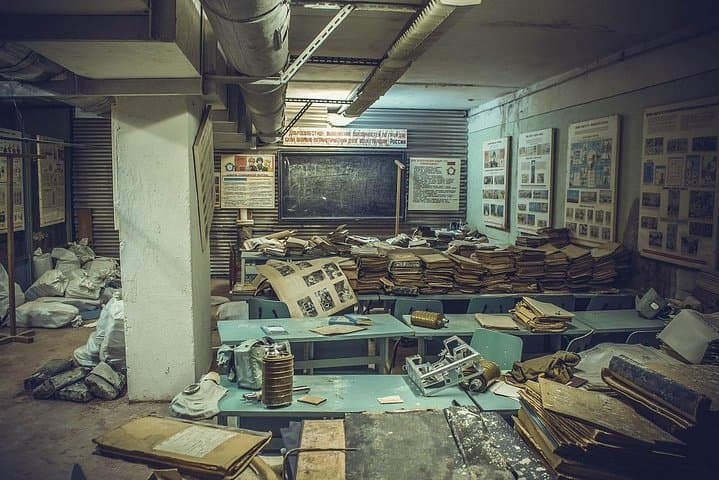
Culturally the walk links to the Velvet Revolution of 1989—sites where students gathered, slogans rose and the push for democratic reform took hold. The Cold War section culminates with access to a preserved nuclear shelter: low-ceilinged, modular spaces built for survival that make abstract history tactile.
Practically, expect four hours of walking at an easy pace with stops for exhibits and commentary. Wear sturdy shoes for uneven pavements, bring a refillable water bottle and a compact daypack. Public-transport pickup is common and restrooms are available near museum sites. Photography is generally allowed in public areas but may be restricted in some exhibits or the bunker—follow the guide’s instructions. The experience balances measured history with visceral places — a focused, informative city walk for anyone curious about Prague’s 20th‑century turning points.
easy.
4 hours.
Suitable for those who can stand and walk for several hours; basic mobility and steady balance recommended
The tour lasts about four hours and includes several hours of walking between museums and historical sites at an easy pace.
The bunker is preserved for visitors and safe, but it has narrow stairways and low ceilings; travelers with mobility or spinal issues should check accessibility before booking.
Photography is generally allowed in museum public spaces but some exhibits or areas of the bunker may prohibit flash or photos—follow the guide’s instructions.
Hotel pickup is included; the operator will confirm a pick-up point during booking and may use nearby public-transport stops in central Prague.
Czechoslovakia became a communist state in 1948 and remained under Soviet influence until the non-violent Velvet Revolution in 1989 brought democratic change.
Many Cold War sites are preserved as museums; visitors are asked to respect original structures—no graffiti, keep to marked paths and avoid touching fragile artifacts.
Prague Best Experience operates guided outdoor trips and adventures with an emphasis on safety, stewardship, and memorable experiences.
A crisp, gray morning in Prague sets the tone: tram bells punctuate wide avenues, and brutalist apartment blocks throw long shadows across the pavement as the guide leads the group toward the Museum of Communism. The city’s layered history—Imperial, wartime, socialist, democratic—feels immediate here; buildings themselves act as chapters in the story.
A crisp, gray morning in Prague sets the tone: tram bells punctuate wide avenues, and brutalist apartment blocks throw long shadows across the pavement as the guide leads the group toward the Museum of Communism. The city’s layered history—Imperial, wartime, socialist, democratic—feels immediate here; buildings themselves act as chapters in the story.
The tour moves from archival displays to concrete reality. At the Museum of Communism visitors read propaganda posters, see everyday household artifacts and learn about censorship, rationing and surveillance that defined Czechoslovakia after 1948. Geology yields to geopolitics as the route traces streets shaped by 19th‑century urban plans; later Soviet-era interventions left stamped concrete and standardized housing blocks that still dominate parts of the skyline.
Culturally the walk links to the Velvet Revolution of 1989—sites where students gathered, slogans rose and the push for democratic reform took hold. The Cold War section culminates with access to a preserved nuclear shelter: low-ceilinged, modular spaces built for survival that make abstract history tactile.
Practically, expect four hours of walking at an easy pace with stops for exhibits and commentary. Wear sturdy shoes for uneven pavements, bring a refillable water bottle and a compact daypack. Public-transport pickup is common and restrooms are available near museum sites. Photography is generally allowed in public areas but may be restricted in some exhibits or the bunker—follow the guide’s instructions. The experience balances measured history with visceral places — a focused, informative city walk for anyone curious about Prague’s 20th‑century turning points.